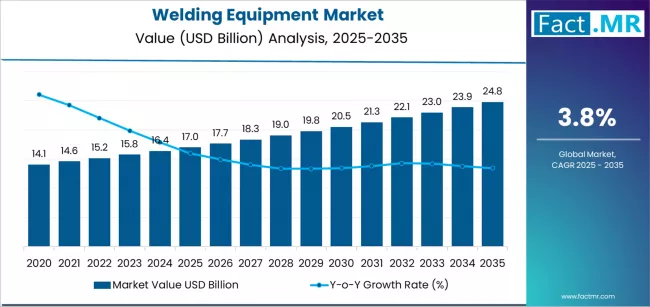
The Welding Equipment Market continues to expand as industries worldwide rely on advanced joining technologies to support manufacturing, construction, automotive production, and infrastructure development. Welding plays a fundamental role in modern industry, enabling the fabrication and assembly of metal structures, machinery, and components. As industrial automation advances and infrastructure investments increase, demand for efficient, durable, and high-performance welding equipment is steadily rising.
The evolution of welding technologies, combined with the growing emphasis on productivity and precision, is reshaping the competitive landscape. From traditional arc welding systems to automated and robotic welding solutions, the market reflects a strong shift toward innovation and operational efficiency.
Market Overview
Welding equipment encompasses a broad range of machines and tools used to fuse materials, primarily metals and thermoplastics. Common types include arc welding equipment, resistance welding systems, laser welding machines, and gas welding units. Supporting consumables such as electrodes, filler materials, and protective gear also form an integral part of the industry ecosystem.
Market growth is largely driven by expanding construction activities, increasing automotive production, and rising demand for heavy machinery. Industrial manufacturers are investing in modern welding solutions to enhance output quality, reduce defects, and improve operational safety. Additionally, the shift toward lightweight materials in automotive and aerospace applications is encouraging the adoption of advanced welding techniques capable of handling complex alloys and thinner components.
Automation is becoming a defining trend in the welding equipment market. Robotic welding systems are increasingly deployed in manufacturing plants to achieve consistent weld quality, minimize human error, and enhance production speed. This transformation supports industries aiming to optimize cost structures and maintain competitive advantage.
Regional Insights
North America represents a significant share of the welding equipment market, supported by strong industrial infrastructure and continuous investment in manufacturing modernization. The presence of established automotive and aerospace sectors further contributes to regional demand.
Europe follows closely, driven by technological innovation and a focus on sustainable manufacturing practices. Industries in the region are integrating automated welding systems to improve efficiency and comply with stringent environmental and safety regulations.
Asia-Pacific is emerging as a key growth region due to rapid industrialization, urban development, and expanding automotive production. Countries across the region are investing heavily in infrastructure projects, including transportation networks and energy facilities, thereby increasing the demand for advanced welding solutions. Other regions are also witnessing steady growth as construction and industrial activities gain momentum.
Key Trends & Forecast
Adoption of Robotic and Automated Welding Systems
Automation is transforming welding operations across industries. Robotic systems provide higher accuracy, repeatability, and productivity while reducing labor dependency and workplace hazards.
Advancements in Laser and Hybrid Welding Technologies
Laser welding equipment is gaining traction due to its precision, speed, and suitability for lightweight materials. Hybrid systems that combine multiple welding techniques are also becoming more common in complex manufacturing processes.
Focus on Energy Efficiency and Sustainability
Manufacturers are developing energy-efficient welding machines that reduce power consumption and emissions. Eco-friendly solutions align with global sustainability initiatives and regulatory requirements.
Integration of Smart Monitoring Systems
Digitalization is influencing the welding equipment market through real-time monitoring and data analytics. Smart welding machines equipped with sensors enable predictive maintenance, improved quality control, and optimized production workflows.
Rising Demand from Infrastructure and Renewable Energy Projects
Large-scale infrastructure and renewable energy installations require robust welding solutions for structural components, pipelines, and support frameworks. This trend is expected to sustain long-term market expansion.
Applications & End-Use Outlook
Welding equipment serves a wide range of industries due to its versatility and essential function in fabrication processes:
Construction and Infrastructure
The construction sector relies on welding equipment for assembling steel frameworks, bridges, pipelines, and high-rise structures. Growing urbanization continues to drive demand in this segment.
Automotive Manufacturing
Automotive manufacturers utilize advanced welding technologies to assemble vehicle bodies and components. The shift toward electric vehicles and lightweight materials is encouraging the adoption of precision welding systems.
Aerospace and Defense
In aerospace applications, welding equipment must meet strict quality and safety standards. Advanced welding technologies support the fabrication of aircraft structures and defense equipment.
Energy and Power Generation
Welding plays a critical role in building power plants, oil and gas pipelines, and renewable energy installations. Durable and high-performance equipment ensures structural integrity and operational reliability.
Shipbuilding and Heavy Machinery
Shipyards and heavy equipment manufacturers depend on welding systems for large-scale metal fabrication and assembly processes. Robust welding solutions are essential for handling thick materials and complex structures.
Competitive Landscape
The welding equipment market is highly competitive, characterized by technological innovation and product diversification. Leading companies focus on enhancing machine performance, improving durability, and integrating advanced control systems to meet evolving customer demands.
Strategic initiatives such as mergers, partnerships, and distribution network expansion are common approaches to strengthen market presence. Research and development investments remain crucial, particularly in developing automated and energy-efficient solutions.
Manufacturers are also emphasizing training programs and after-sales services to support customers in optimizing equipment performance. Providing comprehensive service solutions helps build long-term relationships and reinforces brand loyalty in a competitive marketplace.
Challenges and Opportunities
Despite positive growth prospects, the welding equipment market faces certain challenges. High initial investment costs for advanced automated systems may limit adoption among small-scale enterprises. Additionally, fluctuations in raw material prices can impact manufacturing expenses and profit margins.
The industry also faces a shortage of skilled welders in some regions, prompting greater reliance on automated systems. While this presents a challenge, it simultaneously creates opportunities for robotic welding adoption and workforce training programs.
Emerging markets offer significant growth potential as infrastructure projects and industrial development accelerate. Continuous technological innovation, combined with increasing demand for precision and sustainability, is expected to create new opportunities for market expansion.
Conclusion
The Welding Equipment Market remains a cornerstone of global industrial and infrastructure development. As manufacturing processes become more advanced and demand for high-quality fabrication increases, welding technologies are evolving to meet modern performance standards.
Automation, digital integration, and energy efficiency are reshaping the industry, driving innovation and improving productivity across sectors. From construction and automotive manufacturing to renewable energy and aerospace applications, welding equipment continues to enable critical industrial operations.
Access to comprehensive market insights and industry analysis can help businesses identify growth opportunities, understand competitive dynamics, and make informed strategic decisions within the rapidly evolving welding equipment landscape.
Browse Full Report – https://www.factmr.com/report/welding-equipment-market