The global Nitrous Oxide Minimized Fertilizer Regime Market is poised for substantial growth through 2036 as agricultural producers, policymakers, and input suppliers prioritize solutions that improve nitrogen use efficiency while reducing greenhouse gas emissions. Nitrous oxide — a potent agricultural greenhouse gas — is primarily generated during nitrogen fertilizer transformations in soil. Minimizing its release is central to climate-smart farming practices and sustainable nutrient management.
Nitrous oxide minimized fertilizer regimes encompass optimized fertilizer formulations, application timing strategies, and nitrogen stabilization technologies designed to reduce nitrogen losses through volatilization, leaching, and microbial transformations. These regimes may include enhanced efficiency fertilizers, urease and nitrification inhibitors, controlled-release products, and tailored application plans that align nitrogen availability with crop demand. By reducing emissions and improving nutrient use efficiency, these regimes support yield performance, input cost savings, and environmental sustainability.
Market Outlook (2026–2036)
-
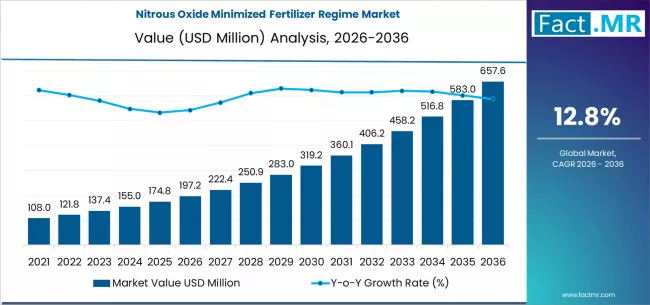
Market Value in 2026: USD 410.6 Million
-
Market Value in 2036: USD 982.4 Million
-
Forecast CAGR (2026–2036): 9.4%
-
Leading Product Category: Enhanced Efficiency Fertilizers
-
Dominant Crop Segment: Cereals and Grains
-
Primary Sales Channel: Ag-Retailers and Precision Advisory Services
The anticipated growth highlights increasing adoption of nitrous oxide reduction strategies as part of broader efforts to support sustainable agriculture and regulatory compliance.
To access the complete data tables and in-depth insights, request a Discount On The Report here: https://www.factmr.com/connectus/sample?flag=S&rep_id=13181
Market Overview
Agricultural soils contribute a significant portion of nitrous oxide emissions, driven by microbial processes acting on applied nitrogen fertilizers. Conventional fertilizer practices often result in excess nitrogen being transformed into nitrous oxide, reducing effective nutrient availability for crops and contributing to environmental impact.
Nitrous oxide minimized fertilizer regimes seek to reduce these losses by extending the period during which nitrogen remains available for plant uptake. Enhanced efficiency fertilizers release nitrogen gradually, while urease and nitrification inhibitors slow down microbial conversions that lead to nitrous oxide formation. Combined with precision application timing and placement techniques, these regimes help synchronize nutrient supply with crop uptake patterns.
By improving nitrogen dynamics in the root zone, growers can achieve better yield outcomes, lower input waste, and support environmental stewardship goals.
Key Market Drivers
1. Regulatory Pressure and Climate Action Goals
Governments and environmental authorities are increasingly including agricultural emissions in climate mitigation strategies. Policies aimed at reducing greenhouse gas emissions from farming practices are encouraging adoption of optimized nutrient regimens that limit nitrous oxide release.
2. Emphasis on Sustainable and Low-Emission Agriculture
Sustainability commitments from agri-businesses, food companies, and producers are driving demand for nutrient solutions that reduce emissions, conserve resources, and contribute to environmental performance benchmarks.
3. Growth of Precision Agriculture Technologies
Precision tools — including soil tests, crop sensors, and variable rate applicators — enable more accurate fertilizer placement and timing. These technologies support nitrous oxide minimized fertilizer regimens by aligning nitrogen application with actual crop needs and environmental conditions.
4. Rising Input Costs and Efficiency Incentives
With fertilizer representing a major input cost, growers are seeking strategies that improve nitrogen use efficiency and reduce wasted nutrients. Minimizing nitrous oxide emissions often corresponds with more efficient nutrient use, lowering overall fertilizer requirements.
Market Segmentation Insights
By Product Type:
-
Enhanced Efficiency Fertilizers
-
Urease Inhibitor-Based Solutions
-
Nitrification Inhibitor Programs
-
Controlled-Release Fertilizers
-
Stabilized Fertilizer Blends
By Crop Type:
-
Cereals and Grains
-
Oilseeds and Pulses
-
Horticultural Crops
-
Forage and Pasture Crops
-
Specialty Crops
By Sales Channel:
-
Ag-Retailers
-
Precision Agriculture Service Providers
-
Soil and Crop Advisory Networks
-
Cooperatives
Regional Demand Dynamics
North America is expected to lead the market due to widespread adoption of precision farming practices, established agronomic advisory networks, and active implementation of sustainability initiatives aimed at reducing agricultural emissions.
Europe represents a key regional market, propelled by stringent environmental policies, nutrient management plans, and climate targets. Integrated support programs and adoption incentives for low-emission nutrient strategies further strengthen the market.
Asia Pacific is anticipated to grow rapidly as agricultural intensification continues and environmental concerns rise. Increasing awareness of nitrous oxide emissions and investment in advanced nutrient management practices support uptake across major crop systems.
Latin America and Middle East & Africa are emerging markets where gradual adoption of enhanced efficiency fertilizers and inhibitor technologies is taking place as agronomic support infrastructure expands.
Competitive Landscape
The nitrous oxide minimized fertilizer regime market is moderately competitive, featuring global and regional fertilizer manufacturers, specialty nutrient technology providers, and precision agriculture solution firms. Companies focus on developing advanced fertilizer technologies, improving stabilization chemistries, and offering integrated nutrient regimens tailored to specific crops, soils, and climatic conditions.
Innovation efforts include enhancing product consistency, broadening soil and crop compatibility, and integrating digital advisory tools to support efficient application timing and placement. Strategic partnerships with ag-retailers, extension services, and research institutions help accelerate product adoption and demonstrate field performance.
Future Outlook
The Nitrous Oxide Minimized Fertilizer Regime Market is expected to sustain strong growth through 2036 as agriculture seeks effective ways to reduce greenhouse gas emissions while maintaining productivity. Continued advancements in fertilizer technologies, broader adoption of precision nutrient management tools, and regulatory emphasis on climate-friendly farming practices will drive market expansion.
By enabling growers to better align nitrogen supply with crop needs and reduce emissions, nitrous oxide minimized fertilizer regimes are becoming essential components of climate-smart agriculture and sustainable nutrient management strategies worldwide.
Browse Full Report: https://www.factmr.com/report/nitrous-oxide-minimized-fertilizer-regime-market