Global HPV Associated Disorders Market Set to Reach USD 21.49 Billion in 2026 Amid Rising Focus on Early Diagnosis and Targeted Therapeutics
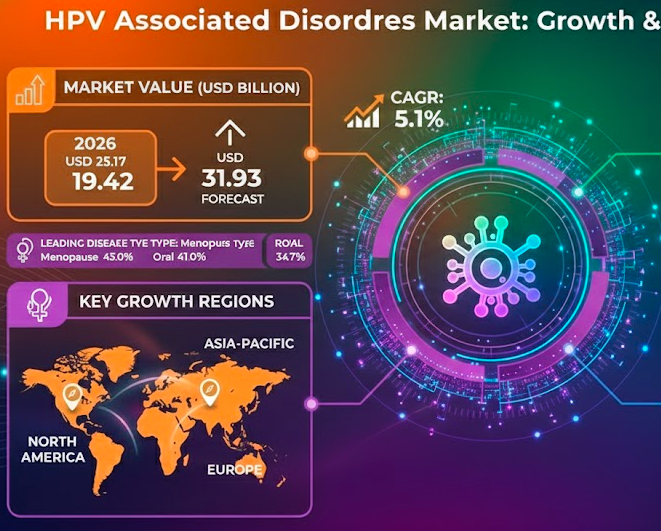
The global HPV associated disorders market is undergoing a significant transformation, with projections estimating a market valuation of USD 21.49 billion in 2026. Driven by a shift toward molecular diagnostics, the expansion of gender-neutral vaccination programs, and the emergence of precision therapeutics, the industry is expected to maintain a steady compound annual growth rate (CAGR) of 4.8% through 2035.
As healthcare systems worldwide prioritize the elimination of cervical cancer and other HPV-linked malignancies, the integration of high-sensitivity PCR assays and therapeutic immunomodulators is reshaping clinical pathways. Industry leaders and analysts note that while North America currently holds a dominant 47% market share, the Asia-Pacific region is emerging as the fastest-growing sector due to localized manufacturing and expanded public health initiatives in China and India.
Strategic Market Dynamics and Growth Drivers
The growth of the HPV associated disorders market is anchored by several critical factors that address both prevention and late-stage disease management:
-
Evolution of Molecular Diagnostics: Traditional Pap tests are increasingly being augmented or replaced by HPV DNA and mRNA testing. These technologies offer higher specificity, allowing for the detection of high-risk genotypes before cellular abnormalities manifest.
-
Precision and Personalized Medicine: Advances in genomics are enabling clinicians to tailor treatment regimens based on specific HPV strains and patient genetic profiles, particularly for oropharyngeal and anal cancers.
-
Vaccine Accessibility and Innovation: The transition to a single-dose schedule in over 89 countries has significantly reduced supply chain barriers. Furthermore, the 2025 launch of next-generation nonavalent vaccines in emerging markets is expected to bridge previous coverage gaps.
-
Expansion of Therapeutic Pipelines: Beyond prophylaxis, the market is seeing a surge in late-stage clinical trials for therapeutic vaccines (such as VGX-3100) and topical antivirals designed to treat existing precancerous lesions.
Addressing Global Health Disparities
Despite technical advancements, the market faces challenges related to infrastructure in low- and middle-income countries (LMICs), where nearly 94% of cervical cancer deaths still occur. To combat this, international organizations and pharmaceutical leaders are focusing on:
-
Affordable Local Production: Scaling up manufacturing in regions like India and China to lower the per-dose cost of quadrivalent and nonavalent vaccines.
-
Point-of-Care (POC) Testing: Deploying decentralized molecular diagnostic tools that do not require extensive laboratory setups, facilitating screening in rural and underserved areas.
The convergence of digital pathology, AI-driven triage, and expanded immunization is not just a commercial opportunity; it is a public health imperative, states a leading market analyst. We are moving from a reactive treatment model to a proactive, data-driven prevention ecosystem.
Future Outlook: 2026 and Beyond
Looking ahead, the market is expected to reach USD 32.92 billion by 2035. This long-term growth will be sustained by the rising incidence of HPV-positive oropharyngeal cancers in men and the implementation of gender-neutral vaccination policies. Companies such as Merck & Co., GlaxoSmithKline, F. Hoffmann-La Roche, and Inovio Pharmaceuticals remain at the forefront of this evolution, focusing on strategic partnerships and portfolio diversification to address unmet medical needs.
Browse Full Report : https://www.factmr.com/report/hpv-associated-disorders-market
About the HPV Associated Disorders Market Report
This press release is based on the latest epidemiological data and market intelligence regarding Human Papillomavirus (HPV) Associated Disorders. The findings provide an in-depth analysis of treatment practices, emerging drug candidates, and geographic market trends across the Seven Major Markets (7MM) and developing regions.