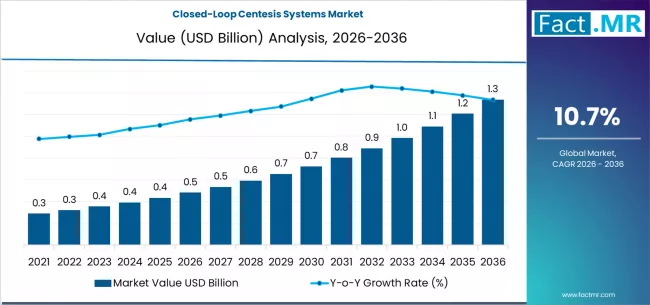
The global Closed-Loop Centesis Systems Market is expected to witness robust growth over the next decade, driven by the rising prevalence of fluid-related medical conditions and increasing adoption of minimally invasive interventional procedures. Closed-loop centesis systems are designed to enable controlled, sterile, and efficient removal of excess bodily fluids such as pleural effusions and ascites, significantly improving procedural safety and patient outcomes.
Centesis procedures are widely performed in patients suffering from liver cirrhosis, heart failure, cancer-related effusions, renal disorders, and infectious diseases. Traditional open or manual drainage methods pose risks such as infection, uncontrolled fluid removal, procedural variability, and healthcare worker exposure. Closed-loop centesis systems address these challenges by integrating sealed fluid pathways, controlled vacuum or gravity-assisted drainage, and enhanced safety mechanisms, making them increasingly preferred in modern clinical settings.
Market Outlook (2026–2036)
-
Estimated Market Value (2026): USD 0.48 Billion
-
Projected Market Value (2036): USD 1.34 Billion
-
Forecast CAGR (2026–2036): 10.7%
-
Leading System Type: Vacuum-Assisted Closed-Loop Systems
-
Key Applications: Thoracentesis and Paracentesis
-
Primary End Users: Hospitals and Ambulatory Surgical Centers
The market’s expansion reflects a strong clinical shift toward standardized, safer, and more efficient fluid drainage solutions that reduce complications and improve workflow efficiency.
To access the complete data tables and in-depth insights, request a Discount On The Report here: https://www.factmr.com/connectus/sample?flag=S&rep_id=13396
Market Overview
Closed-loop centesis systems are medical devices engineered to facilitate controlled removal of excess fluid from body cavities while maintaining a sealed environment throughout the procedure. These systems typically incorporate drainage catheters, vacuum canisters or regulated suction units, one-way valves, and disposable tubing sets. By eliminating open exposure during fluid evacuation, closed-loop systems significantly reduce infection risk, spillage, and procedural inconsistencies.
These systems are increasingly used for thoracentesis to manage pleural effusions and for paracentesis in patients with ascites. Their ability to provide predictable drainage volumes and controlled pressure makes them especially valuable in high-risk or critically ill patient populations.
Key Market Drivers
1. Rising Incidence of Chronic and Life-Threatening Conditions
The growing global burden of liver disease, cardiovascular disorders, oncology-related complications, and infectious diseases has led to an increase in diagnostic and therapeutic centesis procedures. This rising procedural volume directly supports demand for safer and more efficient drainage systems.
2. Growing Preference for Minimally Invasive and Standardized Procedures
Healthcare providers are increasingly adopting minimally invasive techniques that reduce patient discomfort, shorten hospital stays, and minimize procedural risks. Closed-loop centesis systems align with these objectives by offering controlled fluid removal with reduced variability and enhanced safety.
3. Improved Patient Safety and Infection Control
Closed-loop systems help reduce exposure to bodily fluids, lowering infection risk for both patients and healthcare workers. Enhanced infection control measures are a major factor driving adoption, particularly in high-volume hospitals and outpatient care facilities.
4. Expansion of Outpatient and Ambulatory Care Settings
As healthcare systems move procedures away from inpatient hospitals toward ambulatory surgical centers and specialty clinics, demand is rising for compact, easy-to-use centesis systems that support efficient outpatient workflows.
Market Segmentation Insights
By System Type:
-
Vacuum-Assisted Closed-Loop Systems: Provide precise control over fluid removal and are widely used in acute and high-risk cases.
-
Gravity-Based Closed-Loop Systems: Suitable for controlled, low-pressure drainage procedures.
-
Hybrid Systems: Combine active and passive drainage capabilities for flexible clinical use.
By Application:
-
Thoracentesis: Represents the largest application segment due to the high prevalence of pleural effusions in cardiopulmonary and oncology patients.
-
Paracentesis: Widely used for ascites management, particularly in patients with liver disease.
By End User:
-
Hospitals
-
Ambulatory Surgical Centers
-
Specialty Clinics
-
Emergency and Critical Care Units
Regional Demand Dynamics
North America is expected to maintain a leading position due to advanced healthcare infrastructure, high procedure volumes, and strong emphasis on patient safety and clinical efficiency.
Europe represents a mature market supported by established clinical protocols, widespread use of minimally invasive interventions, and robust regulatory frameworks focused on infection control and procedural standardization.
Asia Pacific is anticipated to register the fastest growth over the forecast period, driven by expanding healthcare access, increasing prevalence of chronic diseases, and rising adoption of advanced medical devices in emerging economies.
Regions such as Latin America and Middle East & Africa are gradually witnessing increased adoption as healthcare systems invest in procedural modernization and infection-prevention technologies.
Competitive Landscape
The closed-loop centesis systems market is moderately competitive, with manufacturers focusing on product innovation, safety enhancements, and ergonomic design improvements. Key strategies include development of disposable kits, improved vacuum regulation technologies, and user-friendly systems tailored for outpatient environments.
Manufacturers are also emphasizing clinician training, procedural standardization, and post-procedure support to strengthen adoption and long-term customer relationships.
Future Outlook
The Closed-Loop Centesis Systems Market is expected to continue its upward trajectory through 2036, supported by rising procedural volumes, growing focus on patient safety, and expanding adoption of minimally invasive care models. As healthcare providers prioritize infection control, efficiency, and improved patient outcomes, closed-loop centesis systems will play an increasingly critical role in modern interventional medicine.
Browse Full Report: https://www.factmr.com/report/closed-loop-centesis-systems-market