Movement disorders represent a broad group of neurological conditions that impair voluntary or involuntary motor activity, significantly affecting patient mobility, independence, and quality of life. As awareness of neurological health continues to rise, the movement disorder market is gaining momentum, driven by advances in diagnostics, therapeutics, and long-term disease management strategies. Conditions such as Parkinson’s disease, Huntington’s disease, dystonia, essential tremor, and Tourette syndrome are increasingly becoming a focus for healthcare systems, pharmaceutical developers, and medical device manufacturers worldwide.
The growing emphasis on early diagnosis, personalized treatment approaches, and improved patient outcomes is shaping the evolution of the movement disorder market. Healthcare stakeholders are increasingly prioritizing innovative solutions that address both motor and non-motor symptoms, highlighting the need for comprehensive and patient-centric care models.
Market Overview
The movement disorder market encompasses a wide range of therapeutic drugs, surgical interventions, diagnostic tools, and supportive care solutions designed to manage neurological motor dysfunction. Pharmacological treatments remain the cornerstone of disease management, focusing on symptom control, disease progression slowing, and quality-of-life improvement. Alongside medications, medical devices such as neurostimulation systems and wearable monitoring technologies are playing a growing role in treatment planning and long-term management.
The market is also influenced by advancements in neuroscience research, increasing healthcare expenditure on neurological disorders, and expanding access to specialized care. Continuous innovation in drug delivery systems, combination therapies, and minimally invasive procedures is enabling more effective management of complex movement disorders.
Key Drivers Shaping the Market
Several factors are accelerating growth across the movement disorder market. Rising awareness among patients and healthcare professionals has led to higher diagnosis rates and earlier intervention. The expanding aging population, which is more susceptible to neurodegenerative conditions, is another significant contributor to sustained market demand.
Technological progress in neuroimaging, biomarker identification, and digital health platforms is improving diagnostic accuracy and treatment personalization. Additionally, growing investments in research and development are fostering the emergence of novel therapies targeting disease mechanisms rather than just symptoms. Increased collaboration between academic institutions, pharmaceutical companies, and healthcare providers is further strengthening innovation pipelines.
Regional Insights
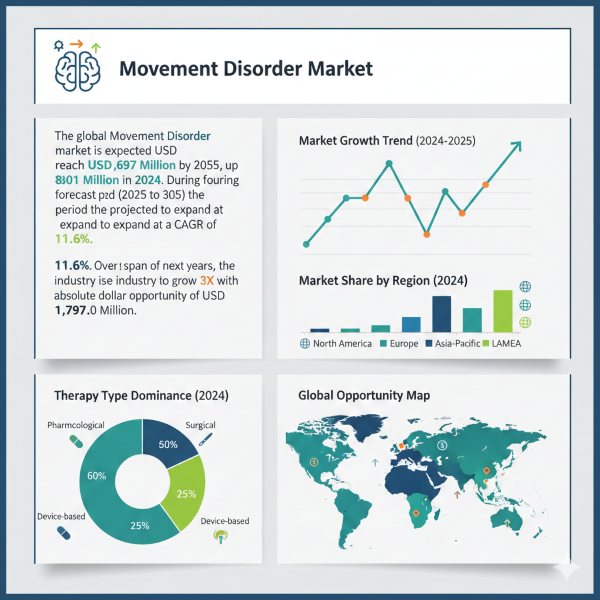
Developed healthcare markets continue to lead in the adoption of advanced movement disorder treatments, supported by robust healthcare infrastructure, higher neurological care awareness, and strong reimbursement frameworks. These regions benefit from early access to innovative drugs, surgical technologies, and specialized neurology centers.
Meanwhile, emerging economies are witnessing steady improvements in diagnosis rates and treatment accessibility. Expanding healthcare infrastructure, rising disposable incomes, and increasing public health initiatives focused on neurological disorders are helping bridge treatment gaps. As awareness campaigns and physician training programs expand, these regions are expected to play a more prominent role in the global movement disorder landscape.
Key Trends and Industry Developments
One of the most prominent trends in the movement disorder market is the shift toward personalized and precision medicine. Treatment strategies are increasingly tailored to individual disease stages, genetic profiles, and symptom patterns. Digital therapeutics and wearable devices are also gaining traction, enabling continuous patient monitoring and data-driven treatment optimization.
Another notable trend is the growing role of minimally invasive surgical interventions, particularly for patients with advanced or treatment-resistant symptoms. Advances in neuromodulation technologies are improving therapeutic outcomes while reducing procedural risks. In parallel, non-pharmacological approaches such as physiotherapy, occupational therapy, and speech therapy are being integrated into holistic care models.
The market is also witnessing increased focus on patient engagement and long-term disease management. Educational platforms, telemedicine services, and remote consultation tools are enhancing treatment adherence and improving access to specialist care.
Applications and End-Use Outlook
Movement disorder treatments are widely utilized across hospitals, specialty neurology clinics, rehabilitation centers, and homecare settings. Hospitals and specialized clinics remain central to diagnosis and advanced treatment delivery, particularly for surgical interventions and complex cases.
Home-based care and outpatient management are gaining importance as treatment models shift toward long-term disease control and patient convenience. The integration of digital health tools is enabling remote symptom tracking, medication management, and follow-up care, reducing the burden on healthcare facilities while improving patient outcomes.
Competitive Landscape
The movement disorder market features a mix of established pharmaceutical companies, medical device manufacturers, and emerging biotechnology firms. Industry players are actively focusing on product innovation, strategic partnerships, and pipeline expansion to strengthen their market position. Ongoing clinical research and regulatory approvals continue to shape competitive dynamics, with an emphasis on safety, efficacy, and long-term benefits.
Conclusion
The movement disorder market is evolving rapidly as healthcare systems prioritize neurological health and patient-centric care. Advances in therapeutics, diagnostics, and digital health solutions are transforming how movement disorders are diagnosed and managed. As awareness grows and technology continues to advance, the market is poised to play a critical role in improving quality of life for individuals living with neurological motor disorders. Access to comprehensive market intelligence and strategic insights remains essential for stakeholders seeking to navigate this complex and expanding landscape.
Browse Full Report – https://www.factmr.com/report/329/movement-disorder-market