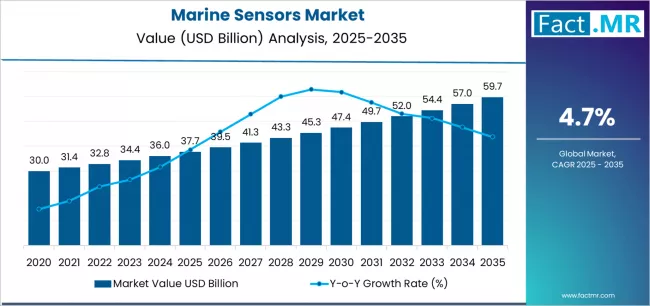
The marine sensors market is experiencing notable growth as maritime industries increasingly adopt advanced technologies to improve safety, efficiency, and environmental monitoring. Marine sensors are essential components in modern vessels and offshore systems, providing real-time data on navigation, weather conditions, water quality, and equipment performance. As global trade expands and maritime infrastructure evolves, the demand for reliable sensing technologies continues to rise. These sensors are playing a critical role in supporting smarter maritime operations while helping organizations comply with stringent safety and environmental regulations.
Market Overview
Marine sensors are specialized devices designed to collect and transmit data from marine environments. They measure parameters such as temperature, pressure, salinity, motion, depth, and acoustic signals, enabling operators to make informed decisions in complex and often unpredictable ocean conditions.
The increasing digitalization of maritime operations has transformed ships and offshore platforms into connected ecosystems where sensors feed data into integrated monitoring systems. This shift is encouraging shipping companies, naval forces, and research institutions to invest in advanced sensing technologies that enhance operational visibility and reduce risks. As maritime activities become more data-driven, marine sensors are emerging as indispensable tools across commercial and defense sectors.
Key Market Drivers
Growing Emphasis on Maritime Safety
Safety remains a top priority for the global maritime industry. Marine sensors support navigation by detecting obstacles, monitoring vessel stability, and providing accurate positioning data. These capabilities help prevent collisions, groundings, and other incidents that could endanger crew members and cargo.
With international regulations mandating improved safety standards, vessel operators are increasingly equipping ships with advanced sensor systems. The integration of automated alerts and predictive maintenance features further strengthens operational reliability, making sensors a valuable investment.
Expansion of Offshore Exploration and Energy Projects
Offshore oil, gas, and renewable energy projects rely heavily on precise environmental data. Marine sensors help monitor underwater conditions, structural integrity, and weather patterns, enabling safer exploration and production activities.
The growing focus on offshore wind farms has also created new opportunities for sensor deployment. Accurate data collection is essential for site assessment, installation, and ongoing maintenance of these energy assets. As countries diversify their energy portfolios, the need for dependable marine sensing solutions is expected to increase.
Rise of Autonomous and Smart Vessels
Automation is reshaping the maritime sector, with autonomous and semi-autonomous vessels gaining attention for their potential to enhance efficiency and reduce human error. Marine sensors form the backbone of these intelligent systems by supplying continuous environmental and operational data.
From radar and sonar to motion and proximity sensors, these technologies enable vessels to navigate safely with minimal intervention. The progression toward smart shipping is likely to accelerate sensor adoption in the years ahead.
Environmental Monitoring and Compliance
Protecting marine ecosystems has become a global priority, prompting stricter environmental regulations. Marine sensors are widely used to track water quality, detect pollution, and monitor ecological changes. This data helps authorities and organizations respond quickly to environmental threats while supporting long-term conservation efforts.
Research institutions also depend on sensors to study oceanographic patterns and climate-related changes, further expanding their application scope.
Key Trends Shaping the Market
Integration with IoT and Data Analytics:
The adoption of Internet of Things (IoT) technologies is enhancing the functionality of marine sensors. Connected devices allow seamless data transmission to centralized platforms where advanced analytics generate actionable insights. This connectivity improves decision-making and operational efficiency.
Miniaturization and Enhanced Durability:
Manufacturers are focusing on developing compact sensors capable of withstanding harsh marine environments. Improved materials and design innovations are extending product lifespans while reducing maintenance requirements.
Growth in Multi-Parameter Sensors:
Modern marine sensors increasingly combine multiple measurement capabilities into a single device. This consolidation simplifies installation, lowers costs, and provides a more comprehensive understanding of marine conditions.
Adoption in Scientific Research:
Oceanographic research is becoming more sophisticated, driving demand for high-precision sensors. These tools enable scientists to gather accurate data from remote and deep-sea locations, advancing our understanding of marine ecosystems.
Regional Insights
North America remains a prominent market, supported by technological innovation, strong naval investments, and advanced offshore infrastructure. The region’s emphasis on maritime security and environmental monitoring continues to encourage sensor adoption.
Europe demonstrates steady growth due to its focus on sustainable maritime practices and renewable energy projects, particularly offshore wind developments. Regulatory frameworks promoting safety and environmental responsibility further support the market.
Asia-Pacific is emerging as a high-growth region, driven by expanding shipbuilding activities, increasing seaborne trade, and rising investments in maritime modernization. Countries with extensive coastlines are prioritizing technologies that enhance navigation and coastal surveillance.
Other regions are gradually increasing their adoption of marine sensors as they strengthen maritime capabilities and invest in ocean-based industries.
Competitive Landscape
The marine sensors market features a diverse mix of established technology providers and specialized manufacturers. Companies are concentrating on research and development to deliver sensors with higher accuracy, improved connectivity, and enhanced resistance to extreme conditions.
Strategic collaborations, product innovations, and capacity expansions are common strategies used to maintain competitiveness. Providers are also focusing on customizable solutions tailored to specific maritime applications, helping them address evolving customer requirements.
Challenges and Opportunities
Despite promising growth prospects, the market faces certain challenges. High installation and maintenance costs can pose barriers for smaller operators, while technical complexities may require skilled personnel for effective deployment. Additionally, sensors must withstand corrosive saltwater environments and extreme pressures, necessitating robust engineering.
However, these challenges are encouraging innovation. Advances in materials, wireless communication, and energy-efficient designs are expected to lower operational costs and improve reliability. As digital transformation accelerates across maritime industries, new opportunities for sensor integration will continue to emerge.
Conclusion
The marine sensors market is becoming a cornerstone of modern maritime operations, enabling safer navigation, efficient resource management, and improved environmental stewardship. As industries embrace digitalization and automation, the importance of accurate, real-time data will only grow.
With expanding applications across shipping, defense, offshore energy, and scientific research, marine sensors are set to play a vital role in shaping the future of ocean-based activities. Continued technological progress and strategic investments will ensure that these devices remain essential tools in building a smarter, safer, and more sustainable maritime ecosystem.
Browse Full Report – https://www.factmr.com/report/3624/marine-sensors-market