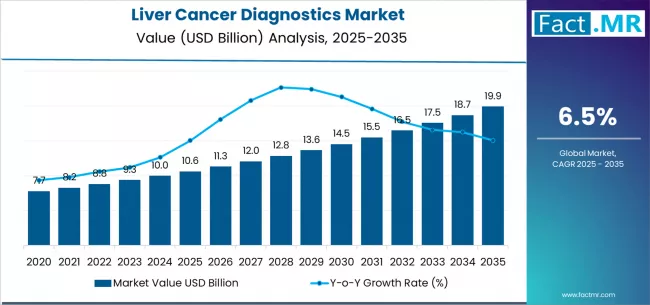
The liver cancer diagnostics market is evolving rapidly as healthcare providers prioritize early detection, accurate staging, and personalized treatment strategies. Liver cancer, particularly hepatocellular carcinoma, presents significant clinical challenges due to its late diagnosis and complex progression. Advances in laboratory testing, imaging technologies, and molecular diagnostics are enabling healthcare systems to improve patient outcomes, streamline treatment protocols, and enhance the efficacy of clinical interventions.
Market Overview:
Liver cancer diagnostics encompasses laboratory tests, imaging modalities, and endoscopy & biopsy procedures to detect, monitor, and characterize liver tumors. Laboratory tests, including biomarker analysis and molecular profiling, are central to early detection and prognosis assessment. Imaging technologies such as CT scans, MRI, ultrasound, and AI-enhanced imaging provide non-invasive visualization of tumors, facilitating accurate diagnosis and treatment planning. Endoscopy and biopsy procedures offer definitive tissue confirmation and enable targeted therapeutic strategies.
The integration of molecular diagnostics and biomarker-based testing into routine clinical practice has transformed liver cancer management. These innovations allow clinicians to identify disease at earlier stages, personalize treatment plans, monitor therapeutic response, and detect recurrence more effectively. Additionally, AI-assisted imaging platforms are improving diagnostic precision and operational efficiency in oncology care centers.
Regional Insights:
Asia Pacific is a key growth region for liver cancer diagnostics due to high prevalence of hepatitis infections, rising healthcare expenditures, and expanding diagnostic infrastructure. China, Japan, and India are witnessing increased adoption of advanced laboratory and imaging technologies. North America and Europe maintain strong market presence driven by established healthcare systems, advanced oncology networks, and high adoption of precision medicine approaches. Emerging regions, including Latin America and the Middle East & Africa, are gradually integrating sophisticated diagnostics through hospital networks and research partnerships, further broadening market opportunities.
Key Market Trends:
- Laboratory Testing Dominance:Laboratory tests, particularly biomarker-based assays, are increasingly preferred for early detection, staging, and treatment monitoring.
- AI-Enhanced Imaging:Artificial intelligence is enhancing CT, MRI, and ultrasound diagnostics by providing high-resolution tumor characterization and predictive analysis.
- Molecular Profiling and Precision Medicine:Integration of genetic and molecular information supports personalized treatment, improving patient outcomes.
- Non-Invasive Diagnostics:Liquid biopsy technologies and advanced imaging reduce the need for invasive procedures, enhancing patient comfort and safety.
- Rising Oncology Research Investments:Growth in clinical trials, pharmaceutical research, and biomarker discovery is expanding demand for specialized diagnostic solutions.
Applications & End-Use Outlook:
Liver cancer diagnostics are applied across diverse healthcare settings:
- Hospitals & Diagnostic Laboratories:Core end-users for laboratory tests, imaging, and biopsy procedures, offering comprehensive cancer care services.
- Pharmaceutical & CRO Laboratories:Diagnostics support drug development, clinical trials, and biomarker discovery for targeted therapies.
- Academic & Research Institutes:Research facilities utilize advanced diagnostic platforms for oncology studies, molecular profiling, and translational medicine.
Challenges:
Despite technological advancements, the market faces challenges including high diagnostic costs, limited access to advanced imaging in developing regions, and reimbursement complexities for novel biomarker tests. Smaller laboratories may face difficulties in acquiring sophisticated molecular testing platforms and training personnel to operate these systems effectively. Additionally, disparities in healthcare infrastructure across regions influence diagnostic adoption rates.
Future Outlook:
The liver cancer diagnostics market is poised for steady growth driven by rising global cancer prevalence, increasing focus on early detection, and adoption of precision oncology approaches. Laboratory testing is expected to expand further due to its reliability in molecular characterization and biomarker-guided therapy selection. Imaging and AI-assisted platforms will continue to enhance diagnostic accuracy, while non-invasive procedures gain traction for patient-centric care. Collaboration between diagnostic companies, healthcare providers, and research institutions will foster innovation, enabling new molecular markers, multi-omics integration, and point-of-care solutions. These developments are expected to make liver cancer diagnostics more accessible, accurate, and tailored to individual patient needs.
Conclusion:
The liver cancer diagnostics market plays a critical role in improving patient outcomes through early detection, precise staging, and personalized treatment strategies. Advancements in laboratory tests, imaging technologies, and molecular profiling are transforming traditional diagnostic pathways and enabling integration with precision medicine programs. As adoption expands across hospitals, research institutes, and pharmaceutical laboratories, the market is set to become a cornerstone of effective liver cancer management, supporting evidence-based treatment decisions and enhanced clinical care worldwide.
Browse Full Report – https://www.factmr.com/report/73/liver-cancer-diagnostics-market