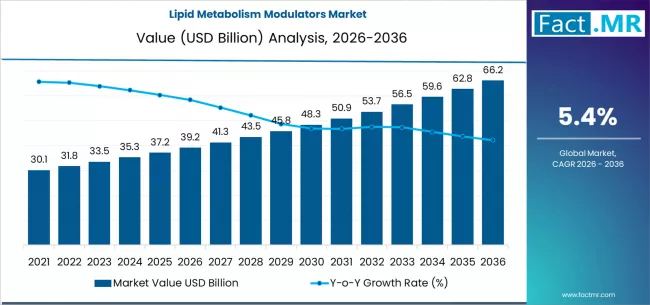
The Global Lipid Metabolism Modulators Market is projected to witness significant expansion over the next decade, driven by rising cardiovascular disease prevalence, an aging global population, and continued innovation in lipid-lowering therapies. According to a recent industry analysis by Fact.MR, the market is estimated to grow from approximately USD 39.2 billion in 2026 to USD 66.2 billion by 2036, registering a steady compound annual growth rate (CAGR) of 5.4% during the forecast period.
Lipid metabolism modulators are pharmaceutical agents designed to regulate cholesterol and other lipid levels in the body. These drugs play a pivotal role in managing conditions such as hypercholesterolemia and mixed dyslipidemia, which are major contributors to heart disease and stroke risk worldwide. By influencing pathways related to lipid synthesis, absorption, and transport, these modulators help reduce atherogenic lipoproteins like low-density lipoprotein cholesterol (LDL-C), ultimately lowering cardiovascular risk.
Market Highlights & Key Drivers
Several factors are expected to support the sustained growth of the lipid metabolism modulators market over the coming years:
-
Rising Cardiovascular Disease Burden: Cardiovascular disorders remain among the leading causes of mortality globally. Dyslipidemia continues to be a major risk factor, driving long-term demand for lipid-lowering therapies.
-
Advancements in Drug Development: While statins remain the first line of treatment, newer therapies such as PCSK9 inhibitors are gaining acceptance, especially among patients who are statin-intolerant or require aggressive lipid reduction.
-
Growing Preventive Healthcare Awareness: Increased screening programs and early diagnosis of cholesterol-related disorders are encouraging timely treatment and wider adoption of lipid metabolism modulators.
To access the complete data tables and in-depth insights, request a Discount On The Report here: https://www.factmr.com/connectus/sample?flag=S&rep_id=13525
Statins Maintain Dominance Amid Innovation
Among all drug classes, statins continue to dominate the global market, accounting for around 36.1% of total revenue in 2026. Their strong position is supported by proven clinical efficacy, broad physician acceptance, and widespread availability as cost-effective generic medications.
At the same time, innovation in lipid-lowering therapies is reshaping the competitive landscape. Advanced agents, including PCSK9 inhibitors and emerging novel modulators, offer alternative mechanisms of action and improved outcomes for high-risk patient populations.
Hypercholesterolemia Remains the Leading Application
From an application standpoint, hypercholesterolemia represents the largest market segment, contributing nearly 68.4% of overall demand in 2026. The high prevalence of elevated LDL-C levels across both developed and developing regions continues to drive the need for effective lipid management solutions.
The growing emphasis on preventive cardiology and long-term cholesterol control further strengthens the outlook for this segment.
Retail Pharmacies Drive Market Access
In terms of distribution channels, retail pharmacies account for approximately 45.6% of market volume. Their widespread presence, ease of access, and ability to support chronic medication refills make them a key point of contact for patients managing lipid-related conditions.
Meanwhile, hospital pharmacies and online pharmacies are gaining traction, particularly for specialty drugs and advanced therapies. Digital health adoption and home-delivery models are expected to further influence purchasing behavior in the coming years.
Regional Outlook: Asia Pacific Shows Strong Momentum
While North America and Western Europe continue to represent mature markets with stable growth, the Asia Pacific region is expected to register faster expansion. Countries such as India and China are projected to experience robust growth due to rising healthcare investments, increasing awareness of cardiovascular health, and expanding access to diagnostic services.
In established markets, continued guideline adoption and reimbursement support for innovative lipid therapies are expected to sustain demand.
Competitive Landscape
The global lipid metabolism modulators market remains highly competitive, with key pharmaceutical companies including AstraZeneca, Amgen, Pfizer, Novartis, and Sanofi actively engaged in product development, clinical research, and strategic partnerships.
Ongoing innovation, combined with efforts to improve patient outcomes and therapy adherence, is expected to shape competitive strategies across the market.
Conclusion
The lipid metabolism modulators market is poised for steady growth through 2036, supported by increasing cardiovascular disease prevalence, continuous pharmaceutical innovation, and expanding healthcare access worldwide. As demand for effective lipid management solutions rises, industry stakeholders are well positioned to capitalize on emerging opportunities across both established and high-growth regions.
Browse Full Report: https://www.factmr.com/report/lipid-metabolism-modulators-market