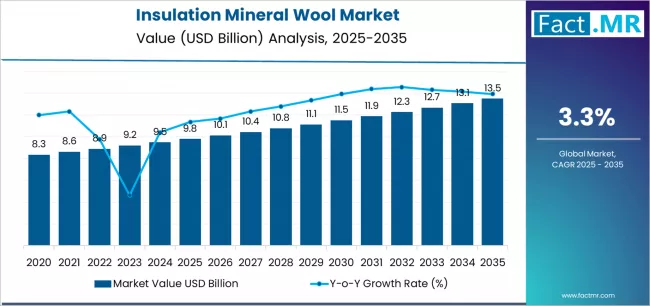
The global insulation mineral wool market is set for steady expansion over the next decade, supported by rising construction activity, tightening energy-efficiency regulations, and increasing adoption of sustainable building materials. According to a new analysis by Fact.MR, the market is projected to grow from USD 9,800.0 million in 2025 to approximately USD 13,500.0 million by 2035, registering an absolute growth of USD 3,700.0 million over the forecast period. This growth reflects a CAGR of 3.3% from 2025 to 2035.
The accelerating focus on thermal insulation, fire safety, and soundproofing across residential, commercial, and industrial infrastructure is significantly strengthening global demand for mineral wool insulation solutions.
Browse Full Report: https://www.factmr.com/report/insulation-mineral-wool-market
Strategic Market Drivers
Energy-Efficient Construction Fuels Market Growth
Governments worldwide are enforcing stricter building energy codes and sustainability standards to reduce carbon emissions. Mineral wool insulation—known for its excellent thermal resistance and durability—plays a vital role in improving building energy performance.
Rising investments in green buildings, retrofitting of existing structures, and net-zero construction initiatives are directly contributing to increased mineral wool adoption.
Urbanization and Infrastructure Development
Rapid urbanization, especially in emerging economies, is driving demand for high-performance insulation materials in:
- Residential housing projects
- Commercial buildings
- Industrial facilities
- Public infrastructure
Mineral wool’s fire-resistant and acoustic insulation properties make it a preferred choice for modern construction.
Fire Safety Regulations Boost Adoption
Mineral wool insulation is non-combustible and can withstand extremely high temperatures, making it essential for meeting fire safety standards in high-rise buildings, industrial plants, and transportation infrastructure.
Growing awareness of fire hazards and stricter safety norms are accelerating demand across global markets.
Sustainability and Recycling Advantages
Manufactured largely from natural stone or recycled slag, mineral wool aligns well with circular economy goals. Its recyclability and long service life are key factors supporting adoption amid rising environmental concerns.
Regional Growth Highlights
Europe: Strong Regulatory Support
Europe leads the global mineral wool market due to:
- Stringent EU energy-efficiency directives
- Aggressive carbon reduction targets
- High renovation and retrofitting activity
Germany, France, the U.K., and Nordic countries remain major contributors.
North America: Retrofitting and Green Buildings
The U.S. and Canada are witnessing rising demand driven by:
- Building renovation projects
- Adoption of energy-efficient insulation
- Growth in commercial construction
Federal and state-level incentives for sustainable construction further support market growth.
East Asia: Expanding Construction Sector
China, Japan, and South Korea are experiencing strong demand due to:
- Rapid urban development
- Expansion of industrial facilities
- Increasing focus on fire-resistant construction materials
Emerging Markets: Infrastructure Boom
India, Southeast Asia, the Middle East, and Latin America are showing steady growth due to:
- Infrastructure modernization
- Rising housing demand
- Industrial expansion
- Government-backed energy conservation initiatives
Market Segmentation Insights
By Product Type
- Stone Wool – Dominant segment due to superior fire resistance and thermal performance
- Glass Wool – Widely used for cost-effective insulation and soundproofin
By Application
- Building & Construction – Largest segment driven by residential and commercial projects
- Industrial – Used in power plants, refineries, and manufacturing facilities
- HVAC Systems – Growing adoption for thermal and acoustic insulation
By End Use
- Residential
- Commercial
- Industrial
Challenges Impacting Market Growth
High Installation and Material Costs
Compared to conventional insulation materials, mineral wool has higher upfront costs, which may limit adoption in price-sensitive markets.
Health and Handling Concerns
Improper handling during installation can cause skin and respiratory irritation, requiring protective measures and skilled labor.
Competition from Alternative Insulation Materials
Foam-based insulation and other lightweight materials offer ease of installation and may challenge mineral wool adoption in certain applications.
Competitive Landscape
The insulation mineral wool market is moderately consolidated, with manufacturers focusing on:
- Product innovation
- Lightweight and high-density insulation solutions
- Sustainable and recycled raw materials
- Expansion in emerging markets
Key Companies Profiled
- ROCKWOOL Group
- Owens Corning
- Knauf Insulation
- Saint-Gobain
- Johns Manville
- Kingspan Group
- Paroc Group
Recent Developments
- 2024: Leading manufacturers expanded production capacity to meet growing demand for sustainable insulation
- 2023: Increased use of mineral wool in green-certified commercial buildings
- 2022: Product innovation focused on improved acoustic insulation and easier installation
Future Outlook: Steady Growth Driven by Sustainable Construction
Over the next decade, the insulation mineral wool market will benefit from:
- Global push toward energy-efficient buildings
- Expansion of urban infrastructure
- Rising emphasis on fire safety
- Growth in renovation and retrofitting projects
- Increased use of recyclable construction materials
As sustainability, safety, and energy efficiency become central to construction strategies, the global insulation mineral wool market is positioned for stable, long-term growth through 2035.