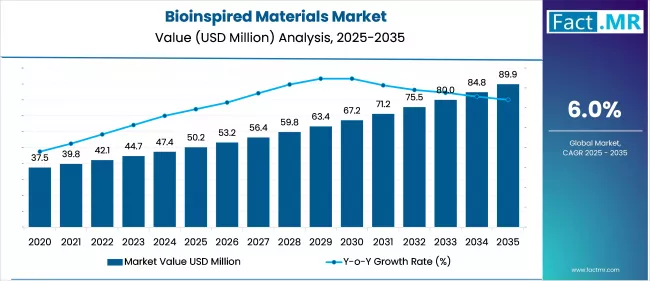
The global bioinspired materials sector is entering a period of rapid expansion, fueled by growing R&D investments, accelerating commercialization, and increasing demand across healthcare, manufacturing, energy, and environmental applications. The bioinspired materials market is projected to grow from USD 46.2 billion in 2024 to USD 112.5 billion by 2032, registering a compound annual growth rate (CAGR) of 11.7%.
Bioinspired materials—engineered to mimic structures, properties, and functions found in nature—are emerging as a critical foundation for next-generation innovation. These materials are enabling advancements such as self-healing polymers, energy-efficient coatings, adaptive sensors, lightweight composites, biocompatible implants, and scalable sustainable manufacturing techniques.
Market Growth Driven by Sustainability and High-Performance Innovation
Across industries, companies are seeking materials that increase performance while reducing environmental impact. Recent surveys indicate:
-
74% of manufacturers are increasing investment in nature-inspired materials to meet sustainability goals.
-
63% of biomedical engineering firms report accelerating adoption of bioinspired polymers and nanomaterials for implants, tissue scaffolds, and drug delivery systems.
-
52% of aerospace and automotive suppliers indicate a shift toward lightweight bioinspired composites to reduce fuel consumption and carbon emissions.
The surge is powered by recognition that biological systems offer optimized and energy-efficient solutions. From gecko-inspired adhesion technologies used in robotics to lotus-leaf-inspired hydrophobic coatings applied in electronics and automotive finishes, companies are converting natural principles into scalable products.
Healthcare Sector Leading Commercial Adoption
Healthcare remains the dominant market segment, accounting for 32.5% of global revenue in 2024. The rising need for advanced biomaterials is driven by:
-
Growth in minimally invasive surgical devices
-
Higher demand for biocompatible and antimicrobial surfaces
-
Increased utilization of bioinspired scaffolds in regenerative medicine
-
Expansion in prosthetics and implantable devices
Clinical trials indicate that bioinspired implant coatings reduce postoperative infection risks by up to 47%, while tissue-engineered scaffolds demonstrate 35–60% faster cellular regeneration rates compared to traditional synthetic models.
Manufacturing and Robotics Seeing New Momentum
The manufacturing sector is expected to register the fastest CAGR, projected at 13.4% through 2032. Analysts attribute this to:
-
Rapid integration of self-healing materials in high-stress manufacturing environments
-
Adoption of biological pattern-optimization for additive manufacturing
-
Use of bioinspired soft robotics in production automation
Self-healing polymers—modeled after biological wound-healing processes—are estimated to reduce equipment downtime by 20–40% and extend component lifecycle by up to 60%, creating significant operational advantages for industrial users.
Energy and Environmental Applications Expand
Bioinspired materials are reshaping clean energy and environmental engineering. Companies are leveraging:
-
Leaf-mimicking photovoltaic surfaces, improving solar energy efficiency by 8–15%
-
Nacre-inspired composites for protective energy storage casings
-
Bioinspired membrane technologies that reduce desalination energy consumption by up to 27%
These materials enable low-energy, high-performance solutions, directly supporting sustainability goals.
Corporate and Academic R&D Investment Surges
Global R&D spending on bioinspired technologies surpassed USD 8.9 billion in 2024, growing 12% year-over-year.
Additional trends include:
-
Patent filings in bioinspired materials rising 18%
-
University-industry partnerships growing 23%, reflecting intensified interest in commercializing breakthroughs
Innovation hubs in North America, Europe, and Asia are accelerating the pipeline, especially in high-value categories such as nanostructured coatings, eco-composites, and biomedical devices.
Browse Full Report : https://www.factmr.com/report/bioinspired-materials-market
Key Market Trends Shaping the Future
Current analytics reveal several directional trends:
1. Surge in Self-Healing Materials
Driven by demand for durability and cost efficiency in automotive, construction, and electronics.
2. Nature-Optimized Structural Composites
Inspired by bone, shell, and plant structures, delivering exceptional mechanical strength at reduced weight.
3. Bioinspired Surface Engineering
Advanced hydrophobic, anti-icing, anti-fouling, and antimicrobial coatings.
4. Expansion of Soft Robotics
Drawing from biological motion mechanics, enabling safer, adaptive automation.
5. Sustainable Material Substitutions
Replacing petroleum-based materials with biodegradable, low-toxicity alternatives.
Industry Outlook
Analysts predict that the next decade will be defined by a shift from conceptual biomimicry toward fully industrialized, scalable bioinspired technologies. Growing environmental regulations, increased healthcare needs, and demand for high-performance materials will propel sustained market expansion.
As industries continue to prioritize circular-economy principles and nature-based engineering methods, bioinspired materials are positioned to become a cornerstone of global innovation.