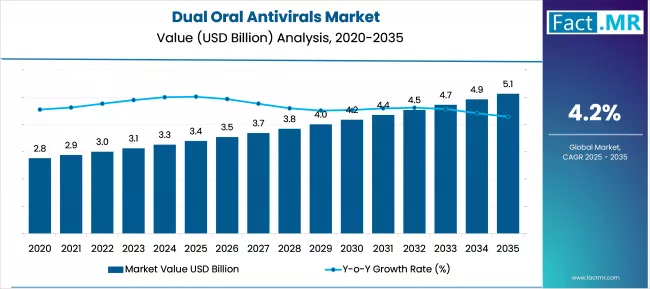
The global dual oral antivirals market is expected to expand steadily over the next decade as healthcare providers and patients increasingly adopt simplified two-drug oral regimens that enhance treatment adherence and clinical outcomes. In 2025, the dual oral antivirals market is valued at USD 3.4 billion, and it is projected to reach USD 5.1 billion by 2035, representing an absolute increase of USD 1.7 billion over the forecast period. This growth corresponds to a compound annual growth rate (CAGR) of approximately 4.2% between 2025 and 2035, supported by ongoing clinical innovation, broader access to antiviral therapies, and the rising burden of chronic viral infections.
Dual oral antivirals typically combine two active antiviral agents into a single therapeutic regimen, offering patients reduced pill burden, simplified dosing schedules, and improved compliance compared with traditional multi-pill strategies. These therapies are increasingly preferred in chronic viral suppression and sustained virologic response applications, particularly for conditions such as HIV infection and hepatitis C management.
Quick Market Snapshot (2025–2035)
-
Market Value (2025): USD 3.4 billion
-
Market Forecast Value (2035): USD 5.1 billion
-
Market Forecast CAGR: 4.2%
-
Leading Therapeutic Area: Chronic Viral Suppression
-
Dominant Drug Format: Fixed-Dose Combination Oral Therapies
-
Key Growth Regions: North America, Western Europe, East Asia
-
Primary Drivers: Rising incidence of chronic viral diseases, improved treatment adherence with simplified regimens, and increased access to antiviral medications
To access the complete data tables and in-depth insights, request a Discount On The Report here: https://www.factmr.com/connectus/sample?flag=S&rep_id=11215
Market Overview
The dual oral antivirals market includes therapeutic combinations designed to target viral infections through complementary mechanisms of action. By co-formulating multiple active agents into a single oral dosage, these therapies aim to improve patient compliance, maintain effective viral suppression, and reduce the likelihood of drug resistance. This approach is particularly valuable in chronic conditions such as HIV infection, where lifelong therapy is required, and fixed-dose combinations enhance ease of administration.
Fixed-dose combination pills are among the fastest-growing drug mechanisms, offering clinicians and patients simpler dosing and reduced regimen complexity. These formulations support consistent pharmacokinetic exposure and help lower the risk of missed doses, especially in resource-limited settings.
Key Demand Drivers
Rising Incidence of Chronic Viral Diseases
The global incidence of chronic viral infections such as HIV continues to influence demand for effective, patient-friendly treatment options. Dual oral antivirals address the need for sustained viral suppression while improving quality of life for patients on long-term therapy.
Simplified Regimens Boost Patient Compliance
Dual oral antiviral combinations reduce the complexity of traditional multi-pill regimens, enhancing treatment adherence and clinical outcomes. Simplification of therapy is particularly valuable in outpatient and long-term care scenarios.
Innovation in Antiviral Formulations
Pharmaceutical development is increasingly focused on fixed-dose combinations and long-acting oral formulations. These innovations support extended treatment intervals, improved pharmacokinetics, and enhanced patient convenience, helping accelerate market adoption.
Supportive Healthcare Access and Policies
Healthcare systems and regulatory authorities are promoting broader access to effective antiviral therapies, facilitating availability of fixed-dose and combination oral regimens across different markets. This regulatory support helps expand adoption and commercial growth.
Market Segmentation Insights
By Therapeutic Indication
-
Chronic Viral Suppression (e.g., HIV): Largest segment due to ongoing treatment needs and vast clinical application
-
Sustained Virologic Response (e.g., Hepatitis C): Growing segment driven by advances in curative therapies
-
Acute Viral Infections and Emerging Indications: Increasing research focus on novel antiviral combinations
By Drug Format
-
Fixed-Dose Combination Tablets: Lead growth due to simplified dosing and broad clinical acceptance
-
Mechanism Pairing Strategies: Combine different antiviral mechanisms to enhance efficacy and reduce resistance
By End User
-
Hospitals and Specialty Clinics: Primary administration point for dual oral antivirals
-
Retail and Specialty Pharmacies: Expanding availability of outpatient antiviral regimens
-
Long-Term Care and Homecare Settings: Support chronic management and patient compliance
Regional Demand Dynamics
North America
North America leads the dual oral antivirals market due to advanced healthcare infrastructure, high treatment adoption rates, and significant clinical research funding. Public and private initiatives focused on viral disease management further support regional demand.
Western Europe
Western Europe shows steady growth driven by established healthcare systems, favorable reimbursement frameworks, and wide adoption of innovative antiviral therapies. The region’s focus on chronic disease management enhances market penetration.
East Asia
East Asia is emerging as a key growth region as healthcare access improves, pharmaceutical manufacturing capacity increases, and patient awareness of simplified antiviral regimens builds, particularly in large population centers.
Competitive Landscape Overview
The dual oral antivirals market is characterized by pharmaceutical companies developing and commercializing combination therapy portfolios. Key players are investing in research and development to advance fixed-dose combinations and long-acting oral formulations to capture broader patient segments and enhance therapeutic efficacy. Emerging biotech firms are also contributing niche antiviral combinations and novel drug delivery technologies to the market landscape.
Future Outlook
The dual oral antivirals market is expected to sustain moderate growth through 2035, supported by simplified regimens, innovative formulations, and expanded access across regions. Continued focus on improving patient adherence, reducing drug resistance, and broadening therapeutic applications will support long-term expansion. As public health strategies continue to incorporate antiviral therapies into comprehensive care pathways, dual oral antivirals are poised to play a significant role in effective and patient-centric viral disease management.
Browse Full Report: https://www.factmr.com/report/dual-oral-antivirals-market