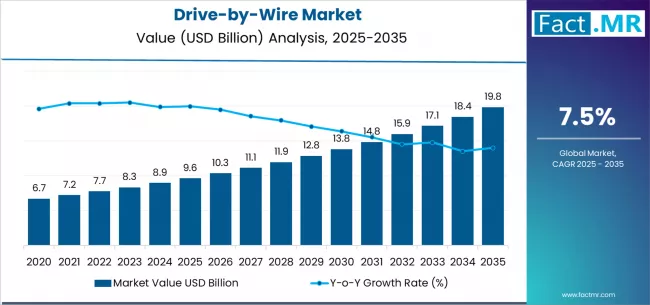
The Drive-by-Wire Market is gaining remarkable traction as the automotive industry transitions toward electrification, automation, and advanced vehicle intelligence. Drive-by-wire technology replaces traditional mechanical and hydraulic control systems with electronic controls, enabling improved precision, reduced vehicle weight, and enhanced safety. As modern vehicles increasingly incorporate advanced driver-assistance systems (ADAS) and autonomous capabilities, drive-by-wire systems are becoming a critical component in next-generation mobility solutions.
From passenger cars to commercial vehicles, manufacturers are integrating electronic throttle, brake-by-wire, steer-by-wire, and shift-by-wire systems to improve performance and driving experience. The growing emphasis on fuel efficiency, emission reduction, and connected vehicle technologies further accelerates demand for drive-by-wire systems globally.
Market Overview
Drive-by-wire systems eliminate mechanical linkages between the driver’s controls and vehicle actuators, replacing them with electronic sensors, control units, and actuators. These systems transmit driver input signals electronically to execute braking, steering, acceleration, or gear shifting functions.
The adoption of drive-by-wire technology supports lightweight vehicle design by removing bulky mechanical components. This contributes to improved fuel efficiency and optimized battery performance in electric vehicles. Additionally, electronic control systems enable seamless integration with vehicle safety features, enhancing overall reliability and responsiveness.
As automotive manufacturers prioritize digital transformation and vehicle electrification, drive-by-wire technology is evolving from a premium feature to a mainstream requirement.
Key Market Drivers
Rising Adoption of Electric Vehicles (EVs)
Electric vehicles rely heavily on electronic control systems. Drive-by-wire technology aligns perfectly with EV architecture, enabling smoother integration of battery management and propulsion systems while reducing mechanical complexity.
Growth of Autonomous and Connected Vehicles
Autonomous driving technologies depend on precise electronic control of steering, braking, and acceleration. Drive-by-wire systems provide the foundation for advanced vehicle automation, supporting adaptive cruise control, lane-keeping assistance, and collision avoidance systems.
Increasing Focus on Vehicle Safety
Modern drive-by-wire systems incorporate redundant electronic controls and fail-safe mechanisms, enhancing safety performance. Integration with advanced safety systems helps prevent accidents and improve driver confidence.
Demand for Lightweight and Fuel-Efficient Vehicles
By replacing mechanical components with electronic systems, manufacturers reduce vehicle weight, contributing to improved fuel economy and reduced emissions.
Product Segmentation
The drive-by-wire market can be segmented based on system type, vehicle type, component, and application.
- By System Type: Throttle-by-wire, brake-by-wire, steer-by-wire, and shift-by-wire. Throttle-by-wire systems are widely adopted in modern vehicles, while steer-by-wire is gaining traction in premium and autonomous models.
- By Vehicle Type: Passenger vehicles, commercial vehicles, and electric vehicles. Passenger cars account for a significant share due to rising demand for advanced features and improved driving comfort.
- By Component: Electronic control units (ECUs), sensors, actuators, and communication systems.
- By Application: OEM installations and aftermarket solutions.
Each segment reflects technological advancement and increasing consumer expectations for intelligent mobility.
Regional Insights
North America
North America remains a prominent market driven by early adoption of advanced automotive technologies and strong presence of electric vehicle manufacturers. Innovation in autonomous driving solutions further supports demand.
Europe
Europe is characterized by stringent emission regulations and a strong push toward electrification. Automotive manufacturers in the region are investing heavily in drive-by-wire systems to comply with environmental standards and enhance vehicle performance.
Asia-Pacific
Asia-Pacific is emerging as a dynamic market, supported by expanding automotive production and rapid adoption of electric vehicles. Countries in the region are investing in smart mobility solutions and advanced manufacturing technologies.
Middle East & Africa and Latin America
While adoption is relatively gradual, increasing automotive modernization and infrastructure development are expected to create growth opportunities in these regions.
Key Trends Shaping the Market
Integration with Advanced Driver-Assistance Systems (ADAS)
Drive-by-wire systems are increasingly integrated with ADAS features, enabling precise vehicle control and improved road safety.
Shift Toward Steer-by-Wire Technology
Steer-by-wire eliminates the mechanical steering column, allowing for enhanced design flexibility and better driving dynamics. This trend is particularly significant in electric and autonomous vehicles.
Redundancy and Cybersecurity Enhancements
As vehicles become more connected, manufacturers are focusing on cybersecurity and redundant electronic systems to prevent malfunctions and cyber threats.
Digitalization and Software-Defined Vehicles
The automotive industry is transitioning toward software-driven architectures. Drive-by-wire systems support over-the-air updates and performance optimization through digital platforms.
Competitive Landscape
The drive-by-wire market is highly competitive, with global automotive technology providers investing in research and development to enhance system reliability and performance. Companies focus on partnerships with vehicle manufacturers to integrate customized solutions into new vehicle platforms.
Innovation remains central to competitive differentiation. Manufacturers emphasize advanced sensor technologies, improved electronic control units, and scalable system architectures to meet evolving automotive requirements. Strategic collaborations and technological alliances are shaping the competitive dynamics of the market.
Applications & End-Use Outlook
Drive-by-wire systems are extensively used in:
- Passenger Vehicles: Enhancing comfort, fuel efficiency, and safety features.
- Electric Vehicles: Supporting electronic architecture and battery optimization.
- Commercial Vehicles: Improving operational efficiency and fleet management.
- Autonomous Vehicles: Providing precise control necessary for self-driving functionality.
As vehicle automation advances, the reliance on electronic control systems will intensify, reinforcing the importance of drive-by-wire technologies.
Future Outlook
The future of the drive-by-wire market is closely linked to the evolution of electric and autonomous mobility. Increasing consumer demand for advanced safety features, improved driving experience, and environmental sustainability will continue to drive innovation. Technological advancements in sensors, actuators, and electronic control systems are expected to further enhance system reliability and performance.
Emerging markets present substantial growth opportunities as automotive manufacturers expand production and adopt digital vehicle architectures. Companies that invest in cybersecurity, redundancy, and scalable solutions will gain a competitive advantage in this rapidly evolving industry.
Conclusion
Drive-by-wire technology represents a transformative shift in automotive engineering, replacing traditional mechanical systems with intelligent electronic controls. As the automotive sector moves toward electrification, connectivity, and automation, drive-by-wire systems are becoming fundamental to vehicle design and functionality. With continuous innovation and expanding adoption across vehicle segments, the drive-by-wire market is poised to play a pivotal role in shaping the future of mobility.
Browse Full Report – https://www.factmr.com/report/drive-by-wire-market