The global Protein-Matrix Lining Market is poised for significant growth through 2036 as demand rises for high-performance, biologically compatible lining solutions in medical, industrial, packaging, and specialty applications. Protein-matrix linings — engineered films or coatings derived from protein-based biomaterials — offer unique advantages including biodegradability, excellent barrier properties, strong adhesion, and compatibility with both wet and dry substrates. These attributes make them increasingly attractive in sectors seeking sustainable alternatives to synthetic polymers while maintaining performance integrity.
Growth in this market is supported by heightened environmental awareness and regulatory pressure to reduce reliance on non-degradable plastics, expanding use cases in biomedical devices and advanced packaging solutions, and ongoing innovation in formulation and processing technologies that enhance mechanical and functional performance.
Market Outlook (2026–2036)
-
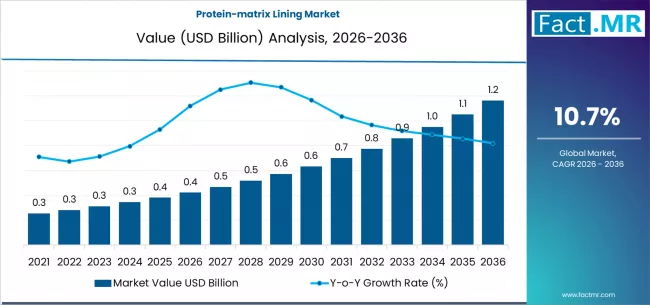
Estimated Market Value in 2026: USD 1.4 billion
-
Projected Market Value in 2036: USD 3.8 billion
-
Forecast CAGR (2026–2036): Approximately 10.3%
-
Leading Segment: Biomedical and Medical Device Linings
-
Primary End Users: Medical device manufacturers, specialty packaging producers, industrial equipment suppliers
The market’s projected growth reflects broadening adoption of protein-based linings as manufacturers seek biodegradable, high-barrier materials that meet evolving performance, regulatory, and sustainability requirements.
To access the complete data tables and in-depth insights, request a Discount On The Report here: https://www.factmr.com/connectus/sample?flag=S&rep_id=12754
Market Overview
Protein-matrix linings are composite materials formulated from protein-rich feedstocks such as whey protein, soy protein, collagen, gelatin, and casein, which are processed and cross-linked to form continuous films or coatings. These linings exhibit strong barrier properties against oxygen, moisture, and certain chemical permeants, making them suitable for protective applications where conventional plastics have been dominant.
In biomedical contexts, the biocompatibility and bioactivity of protein-matrix linings support use in implantable devices, surgical tools, wound dressings, and controlled-release systems. In packaging and industrial applications, protein-matrix linings offer biodegradable barrier solutions that reduce environmental impact while protecting sensitive contents.
Ongoing advancements in protein modification, cross-linking chemistries, nano-reinforcements, and surface engineering are expanding performance envelopes and enabling integration with broader substrate classes, including metals, ceramics, and advanced polymers.
Key Market Drivers
1. Rising Demand for Sustainable and Biodegradable Materials
Increasing regulatory and consumer focus on reducing plastic waste and environmental pollution is driving interest in biodegradable materials, particularly in packaging and disposable medical consumables. Protein-matrix linings offer an attractive sustainable alternative without compromising barrier performance.
2. Expansion of Medical and Biomedical Applications
The biocompatibility, tunable degradation rates, and barrier properties of protein-matrix systems make them useful in wound care, implantable device coatings, drug-eluting systems, and surgical supplies, where synthetic polymers may pose compatibility or disposal challenges.
3. Technological Advancements in Formulation and Processing
Innovations in protein extraction, functionalization, and composite fabrication are improving mechanical strength, thermal stability, and barrier efficacy of protein-matrix linings, enabling broader industrial acceptance and performance parity with traditional materials.
4. Growth of High-Performance Packaging Needs
Consumer goods, food, and specialty industrial products increasingly require advanced barrier solutions that protect against moisture, oxygen, and contaminants. Protein-matrix linings integrated with recyclable substrates support both performance objectives and sustainability goals.
5. Regulatory Pressures and Policy Support
Global regulations restricting certain single-use plastics and promoting bio-based materials create a favorable environment for protein-matrix systems, particularly in regions with extended producer responsibility frameworks and circular economy strategies.
Market Segmentation Insights
By Material Source:
-
Whey Protein-Based Linings – Known for strong film-forming and oxygen barrier properties.
-
Soy Protein-Derived Linings – Cost-effective and widely available plant-based option.
-
Collagen and Gelatin-Based Linings – Biocompatible options used in medical and specialty applications.
-
Casein and Mixed-Protein Systems – Balanced performance and processability.
By Application:
-
Medical and Healthcare Devices – Coatings for implants, wound dressings, surgical tools, and controlled-release systems.
-
Food and Beverage Packaging – High-barrier layers in trays, films, and containers.
-
Industrial Equipment and Filters – Protective linings for corrosion or permeation resistance.
-
Specialty Consumer Goods – Eco-friendly coatings for textiles, personal care products, and household items.
By End Use Industry:
-
Medical and Healthcare
-
Food and Beverages
-
Consumer Goods
-
Industrial and Chemical Processing
-
Automotive and Electronics
Regional Demand Dynamics
North America is expected to remain a leading regional market due to strong innovation ecosystems, robust biomedical manufacturing, and growing regulatory emphasis on sustainable materials. The presence of major medical device and packaging companies accelerates adoption of advanced protein-matrix linings.
Europe demonstrates significant demand due to stringent regulations on plastics, strong circular economy policies, and high consumer and corporate sustainability expectations. Protein-based materials aligned with eco-design principles are gaining traction across multiple sectors.
Asia Pacific is projected to register rapid growth as expanding manufacturing capacity, rising consumer awareness, and increasing investment in sustainable packaging and biomedical sectors spur demand. Emerging economies are also adopting regulatory frameworks that support bio-based material integration.
Growing development in Latin America and Middle East & Africa reflects increasing attention to eco-friendly materials and gradual modernization of packaging and medical device industries.
Competitive Landscape
The protein-matrix lining market is moderately competitive and features a mix of global material science innovators, specialty bio-based producers, and industrial coating suppliers. Key players are focusing on expanding product portfolios, improving performance through advanced formulations, and developing strategic partnerships with original equipment manufacturers (OEMs) and end-use sector leaders.
Strategic priorities include investments in research and development to enhance mechanical and barrier properties, collaboration with packaging and medical device manufacturers for co-development projects, and scaling production to meet growing demand. Companies also emphasize certification and compliance with health and environmental standards to strengthen market positioning.
Future Outlook
The Protein-Matrix Lining Market is expected to sustain strong growth through 2036 as demand for high-performance, sustainable lining solutions rises across diverse industries. Continued innovation in bio-based materials, expanded application development, and supportive regulatory landscapes will further accelerate adoption.
As businesses increasingly prioritize environmental stewardship, product performance, and regulatory compliance, protein-matrix linings are poised to emerge as key solutions in next-generation barrier technologies — delivering both functional excellence and reduced ecological impact.
Browse Full Report: https://www.factmr.com/report/protein-matrix-lining-market