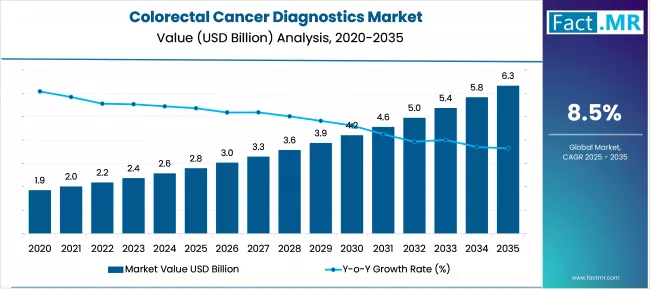
The colorectal cancer diagnostics market is evolving rapidly as global healthcare systems focus on early identification, enhanced screening accuracy, and improved disease management. Colorectal cancer remains one of the most commonly diagnosed forms of cancer worldwide, and its rising incidence has heightened the need for effective diagnostic solutions. With advancements in technology, broader screening initiatives, and stronger clinical awareness, the market is experiencing steady growth. Modern diagnostic tools are enabling earlier detection, which is critical for better treatment outcomes and reduced health complications.
Market Overview:
The market for colorectal cancer diagnostics encompasses a broad range of tools and technologies used to identify abnormalities in the colon and rectum. These include stool-based tests, imaging technologies, endoscopic procedures, and biomarker-driven diagnostics. As healthcare providers emphasize precision medicine and proactive health monitoring, the adoption of advanced testing methods continues to expand.
Innovations in molecular diagnostics, automated screening technologies, and AI-assisted tools have improved accuracy and efficiency. These advancements help clinicians detect precancerous polyps and early-stage colorectal cancer with greater confidence. Additionally, growing awareness campaigns encourage individuals to undergo routine screenings, leading to wider adoption of diagnostic procedures across both developed and developing regions.
Regional Insights:
North America
North America remains a major contributor to colorectal cancer diagnostics due to well-established healthcare infrastructure, extensive screening programs, and strong awareness initiatives. Healthcare organizations actively promote early screening among at-risk populations, driving significant use of diagnostic tools ranging from colonoscopy to advanced imaging.
Europe
Europe follows closely, supported by national screening programs, policy-driven healthcare support, and investments in diagnostic technologies. European countries have introduced organized colorectal screening initiatives that significantly increase participation in early detection, contributing to market expansion.
Asia-Pacific
Asia-Pacific is emerging as a rapidly growing region in colorectal cancer diagnostics. Lifestyle changes, increasing awareness of cancer risks, and enhancements in healthcare infrastructure support broader screening adoption. Governments in several countries are encouraging early diagnosis through public health campaigns and improved access to diagnostic services.
Other Regions
Regions such as Latin America and the Middle East & Africa are gradually expanding their diagnostic capabilities as awareness grows and healthcare accessibility improves. Public health organizations are focusing more on educating communities about colorectal cancer risks, thus increasing demand for diagnostic tools in these regions.
Key Trends & Forecast:
Advancements in Non-Invasive Testing
Non-invasive screening methods are significantly gaining attention as they provide a convenient and comfortable alternative to traditional diagnostic procedures. Stool-based tests and biomarker analysis options allow early detection without requiring invasive interventions, encouraging greater patient participation.
Improved Imaging and Endoscopic Technologies
Enhanced colonoscopy devices, high-definition imaging, and advanced endoscopic tools are revolutionizing colorectal cancer diagnosis. These technologies enable clinicians to identify even small polyps and abnormalities with improved clarity, supporting early intervention and reducing the likelihood of advanced-stage detection.
Expansion of Molecular Diagnostics
Molecular testing is becoming an integral part of colorectal cancer detection. These tests identify genetic mutations, biomarkers, and tumor signatures that support precision medicine. As personalized healthcare gains momentum, molecular diagnostics play an increasingly important role in comprehensive cancer assessment.
Integration of Artificial Intelligence
AI-driven diagnostic tools are transforming the screening landscape. Artificial intelligence enhances the accuracy of image interpretation, supports real-time polyp detection during colonoscopies, and helps reduce human error. These tools make diagnostic procedures faster, more efficient, and more reliable.
Focus on Early Screening Programs
Governments and healthcare organizations across the world are prioritizing early screening initiatives. These programs aim to identify high-risk individuals and encourage routine screening beginning at younger ages. Early detection remains one of the most effective ways to reduce mortality rates associated with colorectal cancer.
Collaboration Between Healthcare Providers and Technology Developers
The growing partnership between medical institutions, research organizations, and diagnostic technology companies continues to fuel innovation. These collaborations accelerate the development of next-generation tests, deeper understanding of biomarkers, and improved diagnostic accuracy.
Applications & End-Use Outlook:
Hospitals and Specialized Cancer Centers
Hospitals remain key providers of colorectal cancer diagnostics due to their access to advanced imaging, endoscopy suites, pathology labs, and multidisciplinary cancer teams. These centers manage diagnostic procedures ranging from colonoscopy to molecular testing.
Diagnostic Laboratories
Specialized labs play a vital role in conducting stool-based screening, biomarker testing, and detailed histopathological examinations. Continuous improvements in laboratory automation and analytical technology support faster, more accurate results.
Ambulatory and Outpatient Clinics
Outpatient clinics increasingly conduct non-invasive tests and initial screening procedures. With rising awareness and ease of access, these facilities serve as a convenient option for patients seeking preventive care.
Home-Based Diagnostic Solutions
Home-testing kits for colorectal screening are becoming more popular due to their simplicity, privacy, and user convenience. These tests encourage participation among individuals who may avoid clinical procedures, contributing to early detection growth.
Research and Academic Institutions
Research institutions remain crucial to the advancement of colorectal cancer diagnostics. They contribute to the discovery of new biomarkers, improved testing methodologies, and innovative technologies that shape the future of colorectal cancer detection.
Conclusion:
The colorectal cancer diagnostics market continues to expand as healthcare systems emphasize early detection, improved screening accuracy, and enhanced patient outcomes. Advancements in imaging, molecular testing, AI-driven diagnostics, and non-invasive screening tools are reshaping the landscape of colorectal cancer care. With growing awareness, supportive public health initiatives, and continuous technological innovation, the market is well-positioned for sustained progress. Organizations and healthcare providers aiming to strengthen their diagnostic capabilities can benefit from understanding the latest trends and advancements, leading to more effective cancer management and improved patient well-being.
Browse Full Report – https://www.factmr.com/report/70/colorectal-cancer-diagnostics-market