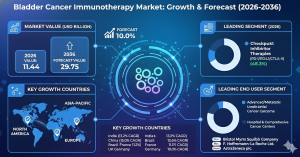
Bladder cancer remains one of the most prevalent urological malignancies worldwide, with recurrence and disease progression posing ongoing clinical challenges. Traditional treatment approaches, including surgery, chemotherapy, and radiation therapy, have shown limitations in long-term disease control for many patients. In response, immunotherapy has emerged as a transformative approach, harnessing the body’s immune system to target cancer cells more effectively. The bladder cancer immunotherapy market is gaining momentum as advances in immune-based treatments reshape therapeutic strategies and improve patient outcomes.
Market Overview
Bladder cancer immunotherapy involves the use of immune checkpoint inhibitors, intravesical immunotherapies, and emerging immune-modulating agents to stimulate anti-tumor immune responses. These therapies are increasingly integrated into treatment protocols for both early-stage and advanced bladder cancer, particularly for patients who are unresponsive or unsuitable for conventional therapies.
The market is driven by growing clinical evidence supporting the efficacy of immunotherapies, increasing regulatory approvals, and rising awareness among healthcare providers and patients. Pharmaceutical companies are investing heavily in research and development to expand immunotherapy indications and enhance treatment durability. As personalized medicine gains traction, immunotherapy is becoming a cornerstone of bladder cancer management.
Advancements in Immunotherapy Approaches
Technological and scientific advancements have significantly influenced the bladder cancer immunotherapy landscape. Immune checkpoint inhibitors targeting specific immune pathways have demonstrated the ability to improve survival and reduce disease progression in certain patient populations. These therapies help overcome immune evasion mechanisms employed by cancer cells, enabling more effective immune recognition.
In addition to systemic immunotherapies, intravesical treatments continue to play an important role, particularly in non-muscle-invasive bladder cancer. Ongoing research is exploring combination regimens that integrate immunotherapy with chemotherapy, targeted therapy, or radiation to enhance therapeutic response and minimize resistance.
Biomarker-driven treatment strategies are also gaining importance, allowing clinicians to identify patients most likely to benefit from specific immunotherapies. This approach supports more precise and individualized treatment planning.
Regulatory and Clinical Landscape
Regulatory agencies worldwide have shown strong support for innovative cancer therapies, including immunotherapy. Accelerated approval pathways and expanded indications have helped bring new treatments to patients more quickly. Clinical guidelines increasingly recognize immunotherapy as a standard option for certain stages of bladder cancer, reinforcing its role in routine oncology practice.
However, regulatory compliance remains complex, as manufacturers must demonstrate safety, efficacy, and long-term benefit. Post-approval studies and real-world evidence generation are becoming increasingly important in supporting continued market expansion and clinical adoption.
Regional Insights
The bladder cancer immunotherapy market exhibits varying adoption patterns across regions, influenced by healthcare infrastructure, regulatory frameworks, and access to advanced treatments.
North America remains a leading region due to strong research ecosystems, early adoption of innovative therapies, and well-established oncology care networks. Europe follows closely, supported by robust clinical research activity and coordinated cancer care initiatives across multiple countries.
The Asia-Pacific region is emerging as a significant growth area, driven by rising cancer incidence, expanding healthcare investment, and increasing participation in global clinical trials. Improved access to advanced cancer therapies and growing awareness of immunotherapy benefits are contributing to broader regional adoption.
Key Trends Shaping the Market
One of the most prominent trends in the bladder cancer immunotherapy market is the expansion of combination therapies. Combining immunotherapy with other treatment modalities is showing promise in improving response rates and extending progression-free survival.
Another key trend is the growing emphasis on early intervention. Researchers and clinicians are exploring the use of immunotherapy earlier in the treatment pathway to prevent disease recurrence and progression. This shift has the potential to redefine standard care practices.
Patient-centric care models are also influencing the market. Improved management of immune-related side effects, enhanced patient monitoring, and supportive care strategies are helping increase treatment adherence and overall quality of life.
Applications and End-Use Outlook
Bladder cancer immunotherapy is primarily administered in hospital oncology departments and specialized cancer centers, where multidisciplinary teams manage complex treatment regimens. These settings provide the infrastructure required for patient monitoring, immune-related adverse event management, and long-term follow-up.
Academic and research institutions also play a critical role, particularly in clinical trial execution and translational research. Insights generated from these environments contribute to ongoing therapy optimization and pipeline development.
As immunotherapy indications expand and treatment protocols become more standardized, adoption across a broader range of healthcare settings is expected to increase.
Competitive Landscape
The bladder cancer immunotherapy market is characterized by strong competition among global pharmaceutical companies and emerging biotechnology firms. Market participants focus on innovation, clinical differentiation, and strategic partnerships to strengthen their positions. Ongoing investment in clinical trials and pipeline diversification remains essential for sustaining competitive advantage.
Collaborations between industry, research institutions, and healthcare providers are accelerating the development of next-generation immunotherapies and improving access to novel treatments.
Conclusion
The bladder cancer immunotherapy market represents a significant advancement in oncology care, offering new hope for patients facing limited treatment options. As scientific understanding of tumor immunology deepens, immunotherapy continues to redefine bladder cancer management through improved efficacy and personalized treatment approaches.
Access to comprehensive market intelligence, such as detailed analyses from Fact.MR, can help stakeholders navigate evolving therapeutic landscapes, regulatory developments, and competitive dynamics. For pharmaceutical companies, healthcare providers, and investors, understanding the trajectory of bladder cancer immunotherapy is essential to supporting innovation and improving patient outcomes.
Browse Full Report – https://www.factmr.com/report/bladder-cancer-immunotherapy-market