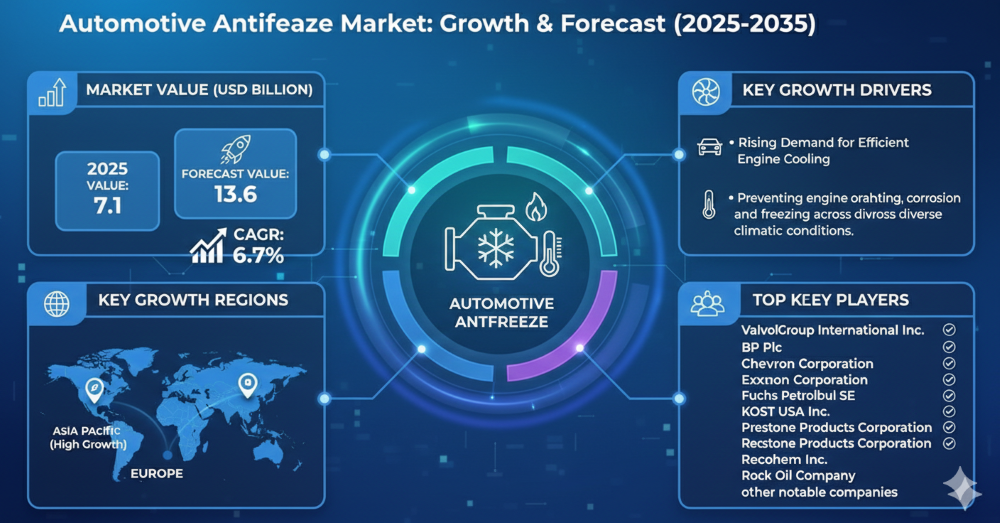
The automotive antifreeze market is an essential segment of the global automotive chemicals industry, supporting vehicle performance by maintaining optimal engine temperatures in diverse climatic conditions. Antifreeze, commonly blended with coolant, prevents engine fluids from freezing in cold environments and overheating in high temperatures, ensuring consistent functionality throughout the year.
As vehicles become more technologically advanced and engines operate under higher efficiency standards, the need for reliable thermal management solutions continues to grow. Automotive antifreeze plays a crucial role in protecting engine components, extending vehicle lifespan, and reducing maintenance requirements, making it indispensable for both passenger and commercial vehicles.
Market Overview
Automotive antifreeze is a chemical formulation typically composed of glycols and performance-enhancing additives designed to regulate engine temperature and prevent corrosion. Beyond freeze protection, modern antifreeze solutions help safeguard radiators, water pumps, cylinder heads, and other critical components from rust, scale buildup, and premature wear.
The market is witnessing steady expansion as vehicle owners increasingly recognize the importance of preventive maintenance. With modern engines engineered for higher performance and tighter tolerances, maintaining proper cooling has become more critical than ever.
Manufacturers are developing advanced antifreeze formulations compatible with a wide range of engine materials, including aluminum and lightweight alloys commonly used in modern vehicles. Long-life coolants and extended-drain products are gaining traction as they reduce the frequency of fluid replacement while enhancing operational efficiency.
Key Growth Drivers
One of the primary drivers of the automotive antifreeze market is the continuous growth of the global vehicle fleet. As more vehicles remain in operation for longer periods, the demand for maintenance fluids, including antifreeze, rises accordingly.
Extreme weather patterns in many regions further highlight the importance of effective engine cooling solutions. Vehicles operating in very cold or hot climates require dependable antifreeze to maintain performance and prevent mechanical failures.
Another significant factor is the increasing consumer awareness of vehicle maintenance. Drivers are becoming more proactive about servicing their vehicles to avoid costly repairs, encouraging consistent use of high-quality cooling fluids.
Additionally, the expansion of electric and hybrid vehicles is influencing product innovation. While these vehicles differ from traditional internal combustion models, they still require advanced thermal management systems to regulate battery temperatures and power electronics, opening new opportunities for specialized coolant technologies.
Technology Trends and Innovation
Innovation within the automotive antifreeze market is centered on improving durability, environmental compatibility, and performance. Organic acid technology and hybrid formulations are gaining popularity due to their enhanced corrosion resistance and longer service life.
Manufacturers are also prioritizing environmentally responsible solutions by reducing toxic substances and exploring biodegradable alternatives. This shift aligns with broader sustainability initiatives across the automotive sector.
Another notable trend is the development of vehicle-specific antifreeze products tailored to meet manufacturer requirements. These customized solutions help ensure compatibility with modern engines while supporting warranty compliance and optimal performance.
Smart packaging, clearer labeling, and ready-to-use mixtures are further enhancing consumer convenience, particularly within the retail aftermarket.
Regional Insights
North America represents a mature market for automotive antifreeze, supported by strong vehicle ownership rates and seasonal temperature variations that necessitate reliable cooling solutions. Consumers in this region often prioritize premium products that offer extended protection and durability.
Europe maintains steady demand, driven by stringent environmental standards and a well-established automotive service ecosystem. The region’s emphasis on sustainability is encouraging the adoption of advanced, eco-friendly antifreeze formulations.
Asia-Pacific is emerging as a highly attractive market due to expanding vehicle production, rapid urbanization, and growing middle-class populations. Rising awareness about preventive maintenance and improving service infrastructure are further supporting market growth across the region.
Other developing regions are also experiencing increased adoption as automotive ownership rises and access to maintenance products improves.
Applications & End-Use Outlook
Automotive antifreeze is widely used across passenger cars, light commercial vehicles, and heavy-duty trucks. Passenger vehicles account for substantial demand as everyday drivers prioritize engine reliability and long-term performance.
Commercial fleets rely heavily on antifreeze to maintain operational efficiency and minimize downtime. Reliable cooling systems are especially important for vehicles covering long distances or operating under heavy loads.
The aftermarket segment remains a key distribution channel, as antifreeze requires periodic replacement to maintain effectiveness. Automotive service centers, retail outlets, and e-commerce platforms are making these products more accessible to consumers worldwide.
Meanwhile, original equipment manufacturers continue to collaborate with chemical producers to develop factory-fill antifreeze solutions that align with modern engine requirements.
Competitive Landscape
The automotive antifreeze market features a blend of established chemical companies and specialized fluid manufacturers. Competition is driven by product quality, formulation technology, brand reputation, and compatibility with evolving automotive standards.
Companies are investing in research and development to create longer-lasting and more environmentally responsible products. Strategic partnerships with automakers and distributors are also helping manufacturers strengthen their global presence.
As consumers increasingly seek dependable maintenance solutions, brands that emphasize reliability, performance, and sustainability are likely to maintain a competitive advantage.
Future Outlook
The future of the automotive antifreeze market is closely tied to the evolution of vehicle technologies and environmental expectations. As engines become more efficient and vehicles incorporate alternative powertrains, the demand for advanced thermal management fluids will continue to rise.
Climate variability, growing transportation needs, and heightened awareness of preventive maintenance are expected to sustain long-term market potential. Additionally, innovations focused on eco-friendly chemistry and extended service intervals will shape the next generation of antifreeze products.
Manufacturers that adapt to changing regulatory landscapes while delivering high-performance solutions will be well-positioned for future growth.
Conclusion
Automotive antifreeze remains a fundamental component in ensuring engine safety, efficiency, and durability. By preventing temperature extremes and protecting vital engine parts, it supports the reliable operation of vehicles across diverse environments.
As the automotive industry advances toward smarter and more sustainable mobility, antifreeze solutions will continue to evolve in response to new technical demands. Gaining a clear understanding of market trends, technological progress, and regional dynamics can help stakeholders make informed decisions and capture emerging opportunities in this essential sector.
Browse Full Report – https://www.factmr.com/connectus/sample?flag=S&rep_id=19