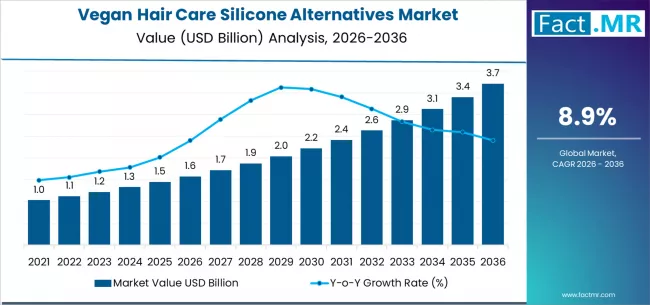
The global vegan hair care silicone alternatives market is undergoing a major reformulation shift, driven by the convergence of ethical consumerism, clean beauty trends, ingredient transparency, and advanced cosmetic science. According to a new analysis by Fact.MR, the market is projected to expand from USD 1.58 billion in 2026 to USD 3.71 billion by 2036, reflecting a strong CAGR of 8.9% over the forecast period.
This growth highlights rising consumer demand for plant-based, biodegradable, cruelty-free, and performance-driven alternatives to traditional silicones used in shampoos, conditioners, serums, and styling products.
As global beauty brands pivot toward sustainability, vegan silicone alternatives are becoming a core innovation area in modern hair care formulations.
Browse Full Report: https://www.factmr.com/report/vegan-hair-care-silicone-alternatives-market
Strategic Market Drivers
Ethical Consumerism Fuels Clean Beauty Adoption
Consumers worldwide are increasingly prioritizing vegan, cruelty-free, and environmentally responsible personal care products. Heightened awareness around the environmental persistence of synthetic silicones and concerns over scalp buildup are accelerating the shift toward bio-based emollients, esters, oils, and polysaccharides.
Millennials and Gen Z consumers, in particular, are driving demand for label transparency and ethically sourced ingredients, reshaping hair care formulation strategies.
Performance-Driven Innovation in Silicone Replacements
Modern vegan silicone alternatives now offer comparable or superior performance to traditional silicones, including:
- Smoothness and slip
- Enhanced shine
- Frizz control
- Lightweight conditioning
Advances in green chemistry, fermentation-based ingredients, and botanical esters are enabling formulators to deliver high-performance results without compromising sustainability.
Regulatory Pressure Accelerates Reformulation
Stringent regulations governing microplastics, non-biodegradable ingredients, and chemical transparency—particularly in Europe and North America—are pushing manufacturers to reformulate legacy products.
Clean-label compliance, COSMOS certification, and vegan standards are becoming competitive differentiators across global hair care brands.
Growth of Premium and Indie Beauty Brands
The rapid rise of indie, DTC, and premium clean beauty brands is significantly boosting demand for silicone alternatives. These brands are early adopters of plant-derived oils, sugar-based polymers, and bio-fermented conditioning agents, accelerating market penetration.
Regional Growth Highlights
North America: Clean Beauty Leadership
North America leads adoption due to strong consumer awareness, widespread availability of vegan-certified products, and a thriving indie beauty ecosystem. The U.S. market is seeing rapid growth in silicone-free shampoos, conditioners, and styling products.
Europe: Regulatory Strength and Sustainability Focus
Europe remains a high-growth region, supported by strict cosmetic regulations, sustainability mandates, and eco-conscious consumers. Countries such as Germany, France, the U.K., and the Nordic region are driving reformulation across mass and premium brands.
East Asia: Innovation Meets Natural Beauty Trends
Japan and South Korea are integrating plant-based conditioning technologies into high-performance formulations. Meanwhile, China’s evolving clean beauty landscape is opening new opportunities for vegan ingredient suppliers.
Emerging Markets: Rising Awareness and Urban Demand
India, Southeast Asia, Latin America, and the Middle East are witnessing increased adoption due to:
- Expanding middle-class populations
- Growth of premium personal care segments
- Rising vegan and cruelty-free awareness
- Influence of global beauty trends
Market Segmentation Insights
By Ingredient Type
- Plant-Based Oils & Butters – Widely used for nourishment and shine
- Bio-Based Esters – Fast-growing due to silicone-like sensory performance
- Natural Polymers & Polysaccharides – Increasing adoption for conditioning and slip
By Product Type
- Shampoos – High-volume adoption of silicone-free formulations
- Conditioners – Largest demand for silicone alternatives
- Hair Serums & Styling Products – Fastest-growing segment
By End User
- Premium & Luxury Brands – Early adopters of advanced vegan formulations
- Mass Market Brands – Rapid reformulation to meet regulatory and consumer pressure
- Professional Salon Products – Rising demand for scalp-friendly solutions
Challenges Impacting Market Growth
Higher Formulation Costs
Vegan silicone alternatives often involve higher ingredient and R&D costs, impacting price-sensitive markets.
Performance Consistency
Achieving long-lasting smoothness and humidity resistance comparable to silicones remains a technical challenge in certain formulations.
Supply Chain Constraints
Availability of certified sustainable raw materials can impact scalability for global brands.
Competitive Landscape
The vegan hair care silicone alternatives market is moderately fragmented, with ingredient manufacturers and cosmetic brands focusing on green innovation, patent development, and clean beauty certifications.
Key Companies Profiled
- Croda International
- BASF SE
- Evonik Industries
- Clariant AG
- Ashland Global
- Givaudan Active Beauty
- Inolex Inc.
- Dow Inc.
These players are investing heavily in fermentation-based ingredients, biodegradable esters, and multifunctional plant-derived polymers.
Recent Developments
- 2024: Launch of bio-fermented silicone alternatives offering enhanced shine and frizz control
- 2023: Major global hair care brands introduce fully vegan, silicone-free product lines
- 2022: Increased investment in green chemistry to replace synthetic conditioning agents
Future Outlook: Sustainable Performance Redefines Hair Care
Over the next decade, the vegan hair care silicone alternatives market will be shaped by:
- Expansion of clean and ethical beauty movements
- Continuous innovation in bio-based cosmetic science
- Strong regulatory push against non-biodegradable ingredients
- Rising premiumization of personal care products
As consumers increasingly demand performance without compromise, vegan silicone alternatives are set to become a standard formulation component, positioning the market for strong, long-term growth through 2036.