As the demand for dependable and cleaner backup power solutions rises, the propane generator market is gaining strong momentum across residential, commercial, and industrial sectors. With increasing concerns over power outages, natural disasters, and grid instability, propane generators are becoming a preferred alternative to traditional diesel and gasoline-powered systems. Their lower emissions, extended shelf life of fuel, and efficient performance make them an attractive choice for both backup and primary power applications. As sustainability continues to shape energy decisions, propane generators are positioned as a practical solution for modern energy needs.
Market Overview:
The propane generator market revolves around the production and adoption of generators powered by liquefied petroleum gas (LPG), commonly known as propane. These generators are widely recognized for their clean-burning properties, reduced maintenance requirements, and reliable performance in various environments. Unlike gasoline, propane does not degrade over time, making it ideal for emergency backup systems that may remain unused for extended periods.
Manufacturers are increasingly focusing on developing advanced propane generators that are portable, efficient, and capable of supporting smart connectivity features. The integration of inverter technology has also enhanced fuel efficiency and reduced noise levels, making these generators suitable for residential use. In addition, propane generators are often favored in remote locations where fuel accessibility and storage safety are critical factors.
Regional Insights:
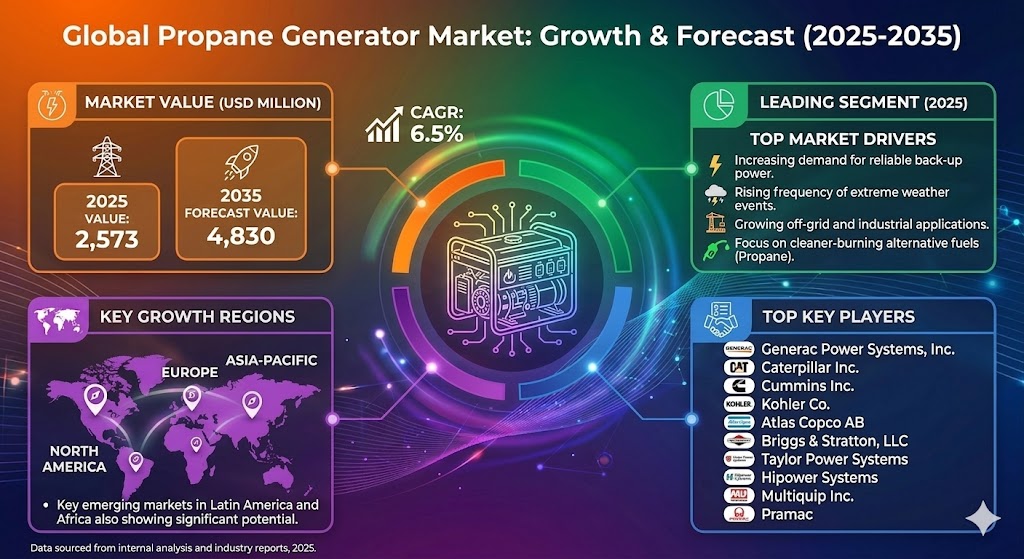
North America stands out as a key market for propane generators, driven by widespread propane availability and a strong culture of preparedness for power outages. Residential users in particular are adopting propane generators for home backup systems due to their reliability and environmental advantages.
Europe is also witnessing notable growth, supported by increasing environmental regulations and a shift toward cleaner fuel alternatives. The region’s focus on reducing carbon emissions is encouraging the adoption of propane-powered equipment, including generators.
The Asia-Pacific region is emerging as a promising market, fueled by rapid urbanization, infrastructure development, and rising energy demands. Countries in this region are exploring alternative energy solutions to address power shortages and improve energy resilience, creating opportunities for propane generator adoption.
Key Trends & Forecast:
One of the most prominent trends in the propane generator market is the growing emphasis on eco-friendly energy solutions. Propane, being a low-carbon fuel, aligns well with global sustainability goals and regulatory frameworks aimed at reducing greenhouse gas emissions.
Another significant trend is the increasing demand for portable and compact generators. Consumers are looking for lightweight and easy-to-transport options for outdoor activities, construction sites, and emergency preparedness. This has led to innovation in design and functionality, with manufacturers introducing user-friendly models equipped with digital controls and enhanced safety features.
The adoption of hybrid generator systems is also gaining traction. These systems combine propane with other energy sources, such as solar power, to provide more efficient and flexible energy solutions. This hybrid approach not only reduces fuel consumption but also enhances overall system reliability.
Digitalization is playing a key role in shaping the future of the market. Smart propane generators with remote monitoring capabilities and automated controls are becoming increasingly popular. These features allow users to track performance, manage fuel usage, and ensure timely maintenance, improving overall user experience.
Applications & End-Use Outlook:
Propane generators find applications across a wide range of sectors, each benefiting from their reliability and clean energy output. In the residential sector, they are commonly used as backup power sources during outages, ensuring uninterrupted electricity for essential appliances and systems.
In the commercial sector, businesses such as retail stores, restaurants, and offices rely on propane generators to maintain operations during power disruptions. Their quiet operation and reduced emissions make them suitable for use in urban environments.
The industrial sector also represents a significant end-use segment, where propane generators are used to power equipment and operations in remote or off-grid locations. Construction sites, agricultural operations, and mining activities often depend on these generators for consistent and efficient power supply.
Additionally, the growing popularity of outdoor recreational activities has boosted the demand for portable propane generators. Campers, RV owners, and event organizers prefer these generators for their convenience, safety, and ease of use.
Conclusion:
The propane generator market is steadily evolving as the need for reliable, efficient, and environmentally friendly power solutions continues to grow. With advancements in technology, expanding applications, and increasing awareness of clean energy alternatives, propane generators are set to play a vital role in the future energy landscape.
Organizations and consumers alike are recognizing the value of investing in propane-based power systems that offer both performance and sustainability. Access to in-depth market insights and analysis can help stakeholders make informed decisions and capitalize on emerging opportunities in this dynamic market.
Browse Full Report – https://www.factmr.com/report/propane-generator-market