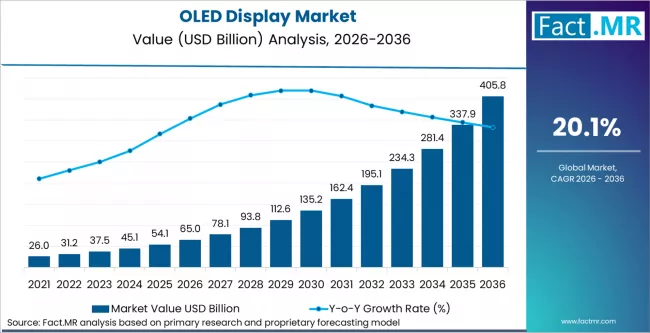
The OLED display market is rapidly transforming the global display industry, driven by the demand for superior visual quality, energy efficiency, and flexible design capabilities. Organic Light Emitting Diode (OLED) technology has emerged as a preferred choice across consumer electronics, automotive, and industrial applications due to its ability to deliver vibrant colors, deep blacks, and thinner form factors. As digital experiences become more immersive, OLED displays are playing a crucial role in redefining how users interact with screens across devices.
Market Overview:
OLED displays utilize organic compounds that emit light when an electric current is applied, eliminating the need for a backlight. This fundamental advantage enables thinner, lighter, and more flexible displays compared to traditional LCD technologies. The market includes various types of OLED displays such as rigid, flexible, and transparent panels, catering to a wide range of applications.
One of the key drivers of the OLED display market is the growing adoption of high-end smartphones and televisions. Consumers increasingly prefer devices that offer enhanced picture quality, better contrast ratios, and energy-efficient performance. OLED technology meets these expectations, making it a popular choice among premium device manufacturers.
In addition to consumer electronics, OLED displays are gaining traction in automotive applications, where they are used for digital dashboards, infotainment systems, and advanced lighting solutions. The ability to create curved and customizable displays aligns well with modern vehicle design trends, enhancing both aesthetics and functionality.
Regional Insights:
Asia-Pacific dominates the OLED display market, supported by the presence of leading display manufacturers and a strong electronics manufacturing ecosystem. Countries such as South Korea, China, and Japan are at the forefront of OLED production, investing heavily in research, development, and large-scale manufacturing facilities.
North America represents a significant market driven by high consumer demand for advanced electronic devices and rapid adoption of new technologies. The region also benefits from strong innovation in product design and integration of OLED displays in emerging applications such as wearable devices and augmented reality systems.
Europe is witnessing steady growth in the OLED display market, particularly in the automotive and industrial sectors. The region’s focus on sustainability and energy efficiency is encouraging the adoption of OLED technology, which offers lower power consumption and reduced environmental impact.
Key Trends & Forecast:
A major trend in the OLED display market is the increasing adoption of flexible and foldable displays. These innovations are enabling new form factors in smartphones, tablets, and wearable devices, offering users enhanced portability and functionality. Flexible OLED panels allow manufacturers to design devices with curved edges and foldable screens, opening up new possibilities in product design.
Another significant trend is the advancement of transparent OLED displays. These displays are being used in applications such as retail signage, smart windows, and heads-up displays, providing a futuristic and interactive user experience. Transparent OLED technology is expected to gain traction as industries explore innovative ways to engage customers.
The integration of OLED displays with emerging technologies such as augmented reality (AR) and virtual reality (VR) is also driving market growth. High-resolution OLED panels are essential for delivering immersive visual experiences in AR and VR devices, making them a critical component in the development of next-generation digital platforms.
Energy efficiency and sustainability are becoming key focus areas for manufacturers. OLED displays consume less power compared to traditional display technologies, making them an attractive option for energy-conscious consumers and industries. Additionally, ongoing research is focused on improving the lifespan and durability of OLED panels to enhance their long-term performance.
The rise of smart devices and the Internet of Things (IoT) is further contributing to the expansion of the OLED display market. As more devices become connected and require high-quality displays, the demand for OLED technology is expected to increase.
Applications & End-Use Outlook:
The OLED display market serves a wide range of applications across multiple industries. Consumer electronics remain the largest segment, with OLED displays widely used in smartphones, televisions, laptops, and wearable devices. The superior visual performance and sleek design of OLED panels make them ideal for high-end consumer products.
In the automotive sector, OLED displays are being integrated into advanced driver assistance systems, digital instrument clusters, and infotainment systems. The flexibility and design versatility of OLED technology enable automakers to create innovative and user-friendly interfaces.
The healthcare industry is also adopting OLED displays for medical imaging and diagnostic devices. The high contrast and accuracy of OLED screens enhance the clarity of medical images, supporting better diagnosis and treatment.
Retail and advertising sectors are leveraging OLED displays for digital signage and interactive displays. The ability to create visually striking and customizable displays helps businesses attract customer attention and improve engagement.
Other applications include industrial equipment, aerospace systems, and smart home devices, where OLED displays provide reliable and high-quality visual output. The versatility of OLED technology makes it suitable for a diverse range of use cases.
Conclusion:
The OLED display market is poised for continued growth as technological advancements and increasing demand for high-quality visual experiences drive adoption across industries. The unique advantages of OLED technology, including superior image quality, flexibility, and energy efficiency, are positioning it as a key component in the future of display solutions.
As manufacturers continue to innovate and expand their capabilities, OLED displays are expected to play an even more significant role in shaping the next generation of electronic devices. Companies that invest in research, development, and sustainable practices will be well-positioned to capitalize on the evolving opportunities in this dynamic and competitive market.
Browse Full Report – https://www.factmr.com/report/1871/oled-display-market