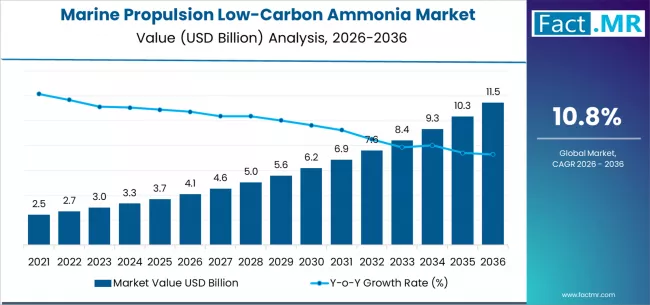
The global marine propulsion low-carbon ammonia market is emerging as a cornerstone of maritime decarbonization, driven by stringent international emissions regulations, rising fuel transition initiatives, and accelerating investments in zero-carbon shipping technologies. According to a new analysis by Fact.MR, the market is projected to expand from USD 4.11 billion in 2026 to USD 11.46 billion by 2036, registering a robust CAGR of 10.8% over the forecast period.
This rapid expansion reflects the global shipping industry’s urgent shift toward carbon-neutral fuels, with ammonia gaining traction as a scalable, hydrogen-based solution capable of eliminating CO₂ emissions from long-haul marine transport.
Browse Full Report: https://www.factmr.com/report/marine-propulsion-low-carbon-ammonia-market
Strategic Market Drivers
Global Maritime Decarbonization Mandates Accelerate Adoption
International regulations led by the International Maritime Organization (IMO)—including the IMO 2050 emissions reduction targets—are compelling shipowners and operators to adopt low- and zero-carbon fuels. Low-carbon ammonia, which produces zero CO₂ emissions at combustion, is increasingly viewed as a long-term compliance fuel for deep-sea shipping.
Rising carbon pricing mechanisms and fuel intensity regulations are further accelerating ammonia propulsion investments.
Ammonia Emerges as a Viable Zero-Carbon Marine Fuel
Low-carbon ammonia offers several advantages over conventional marine fuels:
- Carbon-free combustion
- High energy density for long voyages
- Ease of storage compared to hydrogen
- Compatibility with existing global fuel infrastructure (with modifications)
These attributes position ammonia as a leading candidate for bulk carriers, tankers, and container vessels operating on intercontinental routes.
Ship Engine & Fuel System Innovation Gains Momentum
Marine engine manufacturers and technology providers are actively developing:
- Dual-fuel ammonia engines
- Ammonia-ready propulsion systems
- Advanced fuel injection and safety systems
Strategic collaborations between shipbuilders, engine OEMs, and fuel producers are accelerating pilot projects and commercial-scale deployments.
Green Ammonia Production Expands Globally
Growth in renewable-powered green ammonia production, particularly using solar and wind energy, is strengthening the long-term viability of ammonia as a marine fuel. Major investments in electrolyzers, renewable hydrogen, and ammonia synthesis plants are building the foundation for global fuel supply chains.
Regional Growth Highlights
Europe: Regulatory Leadership and Early Adoption
Europe leads the transition due to aggressive decarbonization policies, green shipping corridors, and strong government funding. Countries such as Norway, Germany, Denmark, and the Netherlands are spearheading ammonia-fueled vessel deployments and port infrastructure upgrades.
East Asia: Shipbuilding Powerhouses Drive Scale
Japan, South Korea, and China—home to the world’s largest shipbuilders—are heavily investing in ammonia propulsion technologies. Government-backed R&D programs and export-driven shipbuilding demand are accelerating market expansion.
North America: Strategic Fuel Transition Initiatives
The U.S. and Canada are advancing low-carbon maritime fuel adoption through clean energy funding, port decarbonization programs, and public-private partnerships focused on green ammonia supply chains.
Emerging Markets: Long-Term Growth Potential
Regions including Middle East, Southeast Asia, Latin America, and Australia are investing in green ammonia production hubs, leveraging abundant renewable energy resources to support future marine fuel exports.
Market Segmentation Insights
By Vessel Type
- Bulk Carriers – Largest adoption potential due to long-haul routes
- Container Ships – Rapid growth driven by decarbonization commitments from global shipping lines
- Tankers – Strong suitability for ammonia fuel integration
- Offshore & Specialized Vessels – Early adoption in pilot projects
By Fuel Type
- Green Ammonia – Fastest-growing segment powered by renewable energy
- Blue Ammonia – Transitional fuel with carbon capture
- Low-Carbon Ammonia Blends – Short-term adoption in hybrid systems
By Technology
- Dual-Fuel Engines – Leading adoption for retrofit flexibility
- Dedicated Ammonia Engines – Long-term growth in new-build vessels
Challenges Impacting Market Growth
Fuel Safety & Toxicity Concerns
Ammonia’s toxicity requires advanced safety systems, crew training, and strict handling protocols, increasing initial implementation complexity.
High Infrastructure & Conversion Costs
Retrofitting vessels and developing port-side ammonia bunkering infrastructure involves substantial capital investment.
Fuel Availability & Supply Chain Maturity
Limited large-scale green ammonia production and bunkering facilities currently restrict widespread adoption.
Competitive Landscape
The marine propulsion low-carbon ammonia market is in a developmental but rapidly consolidating phase, with companies focusing on engine innovation, fuel system safety, and strategic alliances across the maritime value chain.
Key Companies Profiled
- MAN Energy Solutions
- Wärtsilä Corporation
- Mitsubishi Heavy Industries
- Hyundai Heavy Industries
- Yara International
- CF Industries
- Siemens Energy
- ABB Ltd.
- NYK Line
- Maersk Mc-Kinney Møller Center for Zero Carbon Shipping
Industry players are investing in ammonia-ready vessels, green fuel supply agreements, and large-scale demonstration projects.
Recent Developments
- 2024: Successful testing of ammonia-powered marine engines in commercial vessel trials
- 2023: Launch of green shipping corridors supporting ammonia-fueled vessels
- 2022: Major shipowners announce ammonia-ready fleet expansion plans
Future Outlook: Charting the Course Toward Zero-Emission Shipping
The next decade will be transformative for the marine propulsion low-carbon ammonia market, supported by:
- Global maritime decarbonization mandates
- Expansion of green ammonia production capacity
- Advancements in ammonia engine and safety technologies
- Strong policy and financial backing for clean shipping
- Rising demand for zero-carbon long-haul marine fuels
As the shipping industry accelerates toward net-zero emissions, low-carbon ammonia is positioned as a pivotal fuel solution, driving sustainable growth and reshaping global maritime propulsion through 2036.