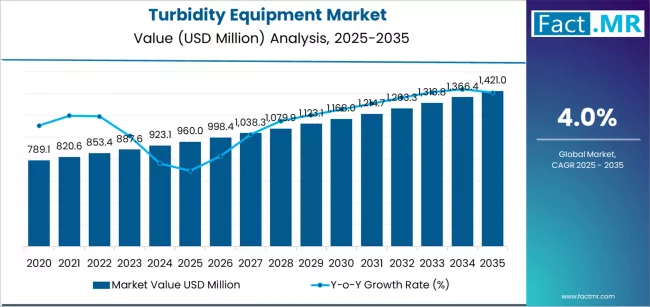
Water quality monitoring has become a critical priority across municipal, industrial, and environmental sectors as concerns over water safety, pollution, and regulatory compliance continue to rise. Among the various analytical tools used for water assessment, turbidity equipment plays a vital role in measuring the clarity of liquids and detecting suspended particles. The turbidity equipment market is gaining momentum as governments, industries, and utilities increasingly invest in advanced monitoring technologies to ensure clean water and efficient process control. According to insights from Fact.MR, growing environmental awareness and stricter water quality standards are key factors shaping market development.
Market Overview
Turbidity equipment is used to measure the degree of cloudiness or haziness in liquids caused by suspended solids. These instruments typically include turbidity meters, sensors, analyzers, and probes, which are deployed in both laboratory and online monitoring applications. Turbidity measurement is a critical parameter in assessing water quality, wastewater treatment efficiency, and industrial process performance.
The market caters to a wide range of applications, including drinking water treatment, wastewater management, environmental monitoring, and industrial processing. Advances in optical technologies, digital signal processing, and sensor design have significantly improved the accuracy, reliability, and ease of use of modern turbidity equipment. As a result, end users are increasingly shifting toward automated and real-time monitoring solutions.
Key Growth Drivers
One of the primary drivers of the turbidity equipment market is the increasing focus on safe drinking water and wastewater treatment. Urbanization, population growth, and aging water infrastructure have intensified the need for continuous water quality monitoring, making turbidity measurement essential for regulatory compliance and public health protection.
Another major growth driver is the implementation of stringent environmental and water quality regulations worldwide. Regulatory authorities mandate turbidity monitoring at various stages of water treatment and discharge processes, prompting utilities and industries to adopt reliable turbidity equipment.
Industrial sectors such as food and beverage, pharmaceuticals, chemicals, and power generation are also contributing to market growth. In these industries, turbidity monitoring helps ensure process consistency, product quality, and equipment protection, further expanding the application scope of turbidity equipment.
Regional Insights
From a regional perspective, North America represents a significant market for turbidity equipment, supported by well-established water treatment infrastructure, strong regulatory frameworks, and early adoption of advanced analytical technologies. Municipal utilities and industrial facilities in the region actively invest in real-time monitoring systems to maintain compliance and operational efficiency.
Europe follows closely, driven by strict environmental directives and sustainability initiatives. European countries emphasize water conservation, pollution control, and environmental monitoring, which supports consistent demand for turbidity measurement instruments.
The Asia-Pacific region is emerging as a high-growth market due to rapid urbanization, industrial expansion, and increasing investments in water and wastewater treatment infrastructure. Countries across the region are strengthening regulatory oversight and upgrading monitoring systems, boosting the adoption of turbidity equipment.
Key Trends & Forecast
One of the most notable trends in the turbidity equipment market is the shift toward online and continuous monitoring solutions. Utilities and industrial operators increasingly prefer real-time turbidity measurement systems that enable immediate detection of water quality fluctuations and faster corrective actions.
Another key trend is the integration of digital technologies, such as IoT connectivity, cloud-based data platforms, and remote monitoring capabilities. These advancements allow operators to track turbidity levels remotely, analyze historical data, and optimize maintenance schedules.
The market is also witnessing innovation in low-maintenance and self-cleaning sensor designs, which reduce downtime and operational costs. Portable and handheld turbidity meters are gaining popularity for field testing and environmental monitoring applications, offering flexibility and ease of use.
Applications & End-Use Outlook
Turbidity equipment is widely used in drinking water treatment plants, where it helps monitor filtration efficiency and detect potential contamination. Continuous turbidity monitoring is essential to ensure water safety from source to distribution.
In wastewater treatment facilities, turbidity measurement supports process optimization, sludge management, and compliance with discharge regulations. Accurate turbidity data helps operators improve treatment efficiency and minimize environmental impact.
The industrial sector represents another major end-use segment. Industries such as food and beverage, pharmaceuticals, chemicals, and pulp and paper rely on turbidity equipment to maintain product quality, monitor effluent streams, and protect sensitive equipment.
Environmental agencies and research institutions also use turbidity equipment for surface water monitoring, groundwater assessment, and ecological studies, highlighting the broad application range of these instruments.
Competitive Landscape
The turbidity equipment market features a mix of global instrumentation companies and specialized water quality solution providers. Market participants focus on technological innovation, product reliability, and compliance with international standards to strengthen their competitive position.
Strategic initiatives such as product launches, partnerships with water utilities, and expansion of service offerings are common across the market. As highlighted by Fact.MR, manufacturers that offer robust, user-friendly, and digitally enabled turbidity solutions are well-positioned to address evolving customer requirements.
Conclusion
The turbidity equipment market plays a crucial role in safeguarding water quality, supporting environmental protection, and enhancing industrial process control. As regulatory scrutiny intensifies and demand for clean water continues to grow, turbidity measurement technologies are becoming increasingly indispensable. Ongoing advancements in sensor design, automation, and digital integration are expected to shape the market’s future. Leveraging comprehensive insights from trusted sources such as Fact.MR can help stakeholders understand emerging trends, identify opportunities, and make informed decisions in this essential water monitoring sector.
Browse Full Report – https://www.factmr.com/report/508/turbidity-equipment-market