Consumer expectations in the personal care and cosmetics industry are evolving rapidly, with performance, comfort, and durability becoming as important as aesthetics. One of the key innovations addressing these demands is the use of sweat-resistant sensorial modifiers. These specialty ingredients are designed to maintain product feel, texture, and efficacy even under conditions of perspiration, heat, and humidity. As active lifestyles and climate-related challenges influence consumer behavior, the sweat-resistant sensorial modifiers market is emerging as a critical segment within advanced formulation technologies.
Market Overview
Sweat-resistant sensorial modifiers are functional additives used primarily in cosmetics, skin care, sun care, and color cosmetics. Their role is to preserve the sensory attributes of a product—such as smoothness, lightness, and non-greasy feel—despite exposure to sweat or moisture. These modifiers help formulations remain stable on the skin, preventing issues such as streaking, stickiness, or breakdown during prolonged wear.
The market is driven by innovation in formulation science, where brands seek to deliver long-lasting comfort without compromising skin compatibility. These modifiers are often incorporated into emulsions, gels, and powders to enhance tactile performance across a wide range of personal care products.
Key Growth Drivers
One of the primary drivers of the sweat-resistant sensorial modifiers market is the growing demand for long-wear and high-performance personal care products. Consumers increasingly expect cosmetics and skincare solutions to perform reliably throughout the day, particularly in warm or humid environments.
The rise of active and outdoor lifestyles has also contributed to demand. Products designed for sports, travel, and daily urban use must withstand perspiration while maintaining a pleasant sensory profile. Sweat-resistant sensorial modifiers enable brands to meet these expectations without relying on heavy or occlusive ingredients.
In addition, increased awareness of climate conditions and their impact on skin comfort is encouraging manufacturers to reformulate existing products with improved sweat resistance and skin feel.
Regional Insights
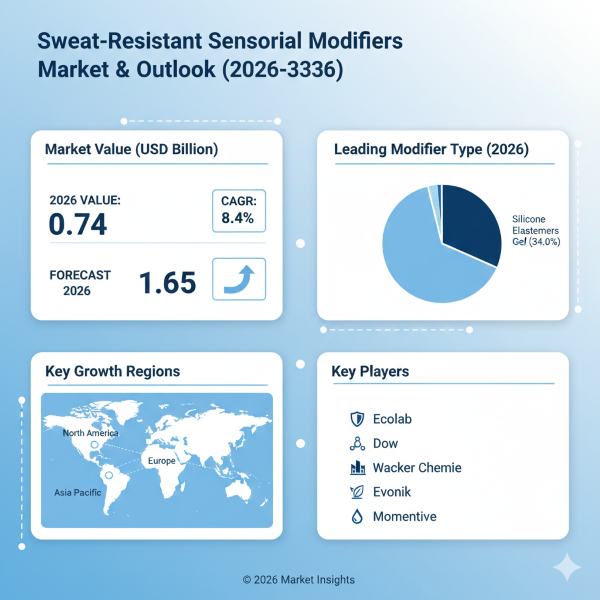
North America remains a strong market for sweat-resistant sensorial modifiers, supported by high consumer demand for premium personal care products and ongoing innovation by cosmetic ingredient suppliers. The region’s emphasis on performance-driven beauty solutions continues to fuel adoption.
Europe plays a significant role, driven by sophisticated formulation standards and a strong focus on sensory experience and skin safety. Regulatory oversight and consumer preference for high-quality ingredients are encouraging the use of advanced sensorial modifiers in both mass-market and luxury products.
Asia-Pacific is emerging as a high-growth region due to rising temperatures, humid climates, and expanding urban populations. Increasing demand for lightweight, sweat-resistant beauty products is driving innovation and adoption across skincare and color cosmetics segments.
Key Trends and Market Evolution
A major trend shaping the market is the shift toward multifunctional sensorial modifiers. Manufacturers are developing ingredients that not only improve sweat resistance but also enhance spreadability, softness, and after-feel, reducing the need for multiple additives in a single formulation.
Another important trend is the growing emphasis on skin-friendly and breathable formulations. Brands are seeking sweat-resistant solutions that allow natural skin respiration while maintaining comfort, especially for sensitive or acne-prone skin types.
Sustainability is also influencing product development. There is increasing interest in biodegradable, silicone-alternative, and naturally derived sensorial modifiers that align with clean beauty and environmental responsibility goals.
Applications and End-Use Outlook
The cosmetics and personal care sector represents the largest application area for sweat-resistant sensorial modifiers. Color cosmetics such as foundations, concealers, and eye products rely heavily on these modifiers to ensure long-lasting wear without compromising comfort.
Skincare products, including moisturizers, sunscreens, and anti-aging formulations, are also key end users. Sweat-resistant sensorial modifiers help these products maintain a light, non-sticky feel while improving durability under active conditions.
Sun care is another important application segment, where maintaining even coverage and pleasant skin feel under heat and perspiration is essential. The use of sensorial modifiers enhances consumer satisfaction and product performance in this category.
Competitive Landscape
The market is characterized by the presence of global specialty chemical companies and niche ingredient innovators. Competition is driven by formulation expertise, sensory performance optimization, and regulatory compliance. Companies are investing in research and development to create next-generation modifiers tailored to specific climatic and consumer needs.
Strategic partnerships between ingredient suppliers and personal care brands are becoming more common, enabling customized solutions and faster innovation cycles.
Conclusion
The sweat-resistant sensorial modifiers market is playing a pivotal role in shaping the future of high-performance personal care formulations. By enabling products to maintain comfort, texture, and effectiveness under challenging conditions, these modifiers address evolving consumer expectations in a climate-conscious world. As formulation technologies advance and demand for durable, skin-friendly products continues to grow, sweat-resistant sensorial modifiers are expected to remain a key focus area for innovation.
Browse Full Report – https://www.factmr.com/report/sweat-resistant-sensorial-modifiers-market