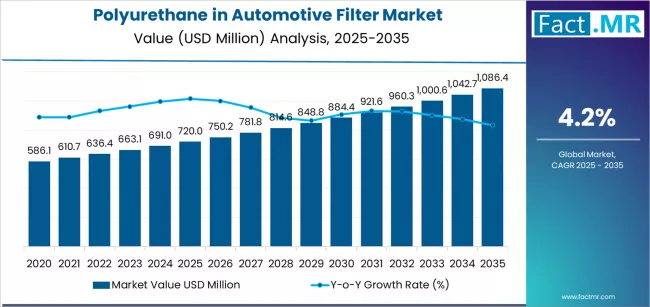
As automotive technologies continue to evolve, the importance of efficient filtration systems has become increasingly evident. Filters play a vital role in protecting engines, improving air quality, and enhancing overall vehicle performance. Within this context, polyurethane (PU) has emerged as a preferred material for automotive filters due to its flexibility, durability, and excellent sealing properties. The polyurethane in automotive filter market is gaining steady traction as vehicle manufacturers focus on improving emission control, fuel efficiency, and passenger comfort. According to insights from Fact.MR, advancements in filtration materials and rising regulatory pressure are key factors influencing the adoption of polyurethane-based filter components.
Market Overview
Polyurethane is widely used in automotive filters primarily as sealing gaskets, end caps, and structural support components. Its ability to form tight seals, resist temperature variations, and maintain dimensional stability makes it highly suitable for air, oil, fuel, and cabin filters. Compared to traditional materials, polyurethane offers superior elasticity and chemical resistance, ensuring long service life and consistent filtration performance.
The market encompasses polyurethane applications across various filter types, including engine air filters, cabin air filters, oil filters, and fuel filters. As automotive designs become more compact and performance-oriented, manufacturers increasingly rely on polyurethane to deliver efficient filtration while accommodating space constraints and complex geometries.
Key Growth Drivers
One of the primary drivers of the polyurethane in automotive filter market is the increasing focus on emission reduction and engine protection. Efficient filtration systems help prevent contaminants from entering critical engine components, supporting compliance with stringent emission regulations and improving vehicle longevity.
Another major growth factor is the rising demand for enhanced cabin air quality. With growing awareness of air pollution and health concerns, cabin air filters have become standard across most vehicle segments. Polyurethane’s excellent sealing properties ensure effective filtration of dust, allergens, and pollutants, improving passenger comfort.
The expansion of the global automotive parc, including passenger cars and commercial vehicles, also supports market growth. As vehicle production and aftermarket demand increase, the need for reliable and durable filter materials continues to rise.
Regional Insights
From a regional standpoint, Asia-Pacific dominates the polyurethane in automotive filter market, supported by high vehicle production volumes and a strong presence of automotive manufacturing hubs in countries such as China, India, Japan, and South Korea. Increasing adoption of emission standards and rising consumer awareness of vehicle maintenance further contribute to market expansion in the region.
Europe represents a significant market, driven by stringent environmental regulations and a strong emphasis on vehicle efficiency and sustainability. European automakers actively integrate advanced filtration systems, supporting steady demand for polyurethane-based filter components.
North America also plays an important role in the market, supported by a large vehicle fleet, well-established aftermarket, and growing focus on air quality and engine performance. The region’s demand for high-performance and long-lasting filters further boosts polyurethane adoption.
Key Trends & Forecast
A key trend shaping the polyurethane in automotive filter market is the development of lightweight and high-performance filter designs. Manufacturers are optimizing polyurethane formulations to reduce material usage while maintaining sealing efficiency and durability.
Another important trend is the growing adoption of electric and hybrid vehicles. While these vehicles have fewer engine-related filters, demand for cabin air filters and thermal management filtration systems remains strong, sustaining polyurethane usage in alternative powertrain vehicles.
The market is also witnessing increased interest in sustainable and recyclable polyurethane solutions. Manufacturers are investing in eco-friendly PU formulations and production processes to align with broader sustainability goals within the automotive industry.
Applications & End-Use Outlook
Polyurethane is extensively used in engine air filters, where it ensures airtight sealing and structural integrity under varying temperature and pressure conditions. These applications are critical for maintaining optimal engine performance and fuel efficiency.
In cabin air filters, polyurethane enhances filtration effectiveness by preventing air bypass and ensuring consistent airflow. This application is gaining importance as consumers prioritize in-vehicle air quality.
Polyurethane also plays a key role in oil and fuel filters, where its chemical resistance and durability help maintain filter performance over extended service intervals. These applications are particularly relevant in commercial vehicles and high-mileage applications.
End-use segments include passenger cars, light commercial vehicles, and heavy commercial vehicles, with passenger cars accounting for a significant share due to high production volumes and regular maintenance requirements.
Competitive Landscape
The polyurethane in automotive filter market features a mix of material suppliers, filter manufacturers, and automotive component producers. Companies are focusing on material innovation, performance enhancement, and collaboration with OEMs and Tier-1 suppliers to strengthen their market presence.
Strategic initiatives such as product development, capacity expansion, and long-term supply agreements are common across the market. As highlighted by Fact.MR, manufacturers that can offer high-quality, cost-effective, and sustainable polyurethane solutions are likely to gain a competitive advantage.
Conclusion
The polyurethane in automotive filter market plays a crucial role in improving filtration efficiency, vehicle performance, and passenger comfort. As emission regulations tighten and consumer expectations rise, the demand for reliable and durable filter materials continues to grow. Polyurethane’s versatility, durability, and sealing capabilities position it as a key material in modern automotive filtration systems. Leveraging in-depth insights from trusted industry sources such as Fact.MR can help stakeholders understand market dynamics, identify emerging trends, and make informed strategic decisions in this evolving automotive materials landscape.
Browse Full Report – https://www.factmr.com/report/511/polyurethane-in-automotive-filter-market