The global Plant-Based Shrink Wrap Market is gaining strong momentum as industries across food, beverage, consumer goods, and logistics transition toward sustainable packaging alternatives. With mounting pressure to reduce plastic waste and carbon emissions, plant-derived shrink films are emerging as a viable replacement for conventional petroleum-based shrink wraps. The market is projected to witness steady expansion between 2026 and 2036, supported by regulatory action, consumer awareness, and technological advances in bio-polymer performance.
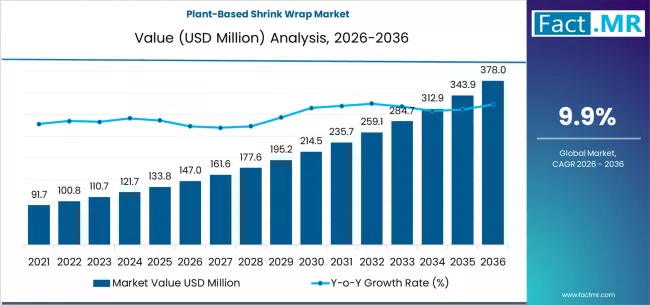
Plant-based shrink wrap sales are expected to reach USD 147.00 million globally in 2026 and rise to USD 378.00 million by 2036, representing a compound annual growth rate of 10.4%.
Plant-based shrink wrap refers to heat-shrinkable films manufactured using renewable raw materials such as polylactic acid (PLA), starch blends, and sugarcane-derived polymers. These materials offer similar shrink strength, transparency, and protection as traditional plastic films while significantly reducing environmental impact. As sustainability commitments move from optional to essential, plant-based shrink wraps are increasingly being adopted across both primary and secondary packaging applications.
Market Outlook (2026–2036)
-
Market Value in 2026: USD 140–155 Million
-
Market Value in 2036: USD 360–395 Million
-
Forecast CAGR (2026–2036): ~9.9%
-
Leading End-Use Segment: Food & Retail Packaging
-
Dominant Product Format: Shrink Film Rolls
-
Fastest-Growing Region: Asia Pacific
The market outlook reflects growing acceptance of bio-based materials across high-volume packaging operations and expanding availability of compostable and recyclable shrink films compatible with existing packaging equipment.
To access the complete data tables and in-depth insights, request a Discount On The Report here: https://www.factmr.com/connectus/sample?flag=S&rep_id=12749
Market Overview
Shrink wrapping is widely used for bundling, unitizing, and protecting products during storage and transportation. Plant-based shrink wraps perform these same functions while addressing environmental concerns related to fossil-fuel-based plastics. These films tightly conform to packaged products when heat is applied, improving shelf appeal and reducing material usage.
Manufacturers are increasingly favoring plant-based shrink films due to their ability to integrate seamlessly into existing heat-shrink tunnels and wrapping lines. This compatibility reduces the need for capital investment while enabling rapid sustainability upgrades. As a result, adoption is expanding not only among premium eco-brands but also among mass-market food and beverage producers.
Key Market Drivers
1. Growing Demand for Sustainable Packaging
Environmental awareness among consumers and corporations is driving demand for packaging solutions that reduce plastic waste and greenhouse gas emissions. Plant-based shrink wrap aligns with circular economy goals and brand sustainability pledges, making it an attractive alternative for forward-looking companies.
2. Regulatory Pressure on Conventional Plastics
Government regulations targeting single-use plastics and non-recyclable packaging materials are accelerating the shift toward renewable alternatives. Plant-based shrink wraps help manufacturers comply with evolving environmental regulations while maintaining packaging performance standards.
3. Advancements in Bio-Polymer Technology
Innovations in polymer blending and film extrusion have significantly improved the mechanical strength, clarity, and heat-shrink performance of plant-based films. These advancements are narrowing the performance gap between bio-based and conventional plastic shrink wraps.
4. Compatibility with Existing Packaging Infrastructure
One of the strongest adoption drivers is the ability of plant-based shrink wraps to function on standard shrink-wrapping machinery. This allows manufacturers to transition to sustainable materials without disrupting operations or incurring high conversion costs.
Market Segmentation Insights
By Material Type:
-
PLA-based Shrink Films
-
Starch-Blend Shrink Films
-
Sugarcane-Derived Bio-Polymers
-
Bio-Polyethylene Alternatives
-
Other Renewable Polymer Films
By Packaging Format:
-
Shrink Film Rolls
-
Shrink Sleeves
-
Pre-Cut Shrink Bags
-
Pallet Shrink Wraps
-
Specialty Shrink Applications
By End-Use Industry:
-
Food and Beverage Packaging
-
Retail and Consumer Goods
-
Industrial and Bulk Packaging
-
E-commerce and Logistics
-
Personal Care and Household Products
Regional Demand Dynamics
Asia Pacific is expected to lead market growth due to rapid expansion of packaged food consumption, increasing environmental regulations, and strong availability of agricultural feedstocks used in bio-polymer production. Manufacturing hubs in the region are increasingly investing in sustainable packaging materials to meet export and compliance requirements.
North America shows steady adoption driven by corporate sustainability initiatives, consumer demand for eco-friendly packaging, and strong retail presence of bio-based products. Europe remains a mature but influential market, supported by strict environmental policies, waste reduction targets, and advanced composting infrastructure.
Competitive Landscape
The plant-based shrink wrap market features a mix of global packaging manufacturers and specialized sustainable film producers. Competition is centered on material innovation, film performance, environmental certifications, and scalability. Companies are investing in research to enhance heat resistance, shrink ratios, and shelf life while reducing overall material thickness.
Strategic collaborations with food brands, retailers, and packaging converters are helping manufacturers accelerate market penetration and expand application coverage.
Future Outlook
The Plant-Based Shrink Wrap Market is expected to maintain strong growth through 2036 as sustainability becomes a core requirement rather than a differentiator. Continued innovation in renewable polymers, combined with regulatory support and consumer preference for eco-friendly packaging, will further strengthen market adoption.
As industries balance performance, cost efficiency, and environmental responsibility, plant-based shrink wrap solutions are positioned to play a critical role in the future of sustainable packaging worldwide.
Browse Full Report: https://www.factmr.com/report/plant-based-shrink-wrap-market