The Modified Atmosphere Packaging (MAP) market is witnessing strong global expansion driven by the rising need for extended shelf life, reduced food waste, and improved product safety across fresh food categories. As consumers demand fresher, minimally processed foods with clean labels, industries are increasingly adopting packaging technologies that preserve quality without relying heavily on chemical preservatives. MAP has emerged as one of the most effective and versatile solutions, making it a major focus of innovation in the packaging and food processing sectors.
Quick Stats on Modified Atmosphere Packaging Market
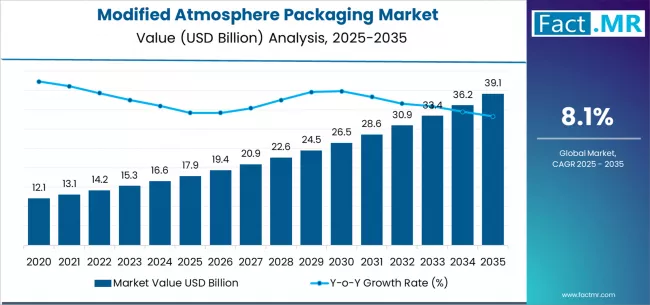
- Modified Atmosphere Packaging Market Value (2025): USD 17.9 billion
- Modified Atmosphere Packaging Market Forecast Value (2035): USD 39.1 billion
- Modified Atmosphere Packaging Market Forecast CAGR (2025 to 2035): 8.1%
- Leading Packaging Material in Modified Atmosphere Packaging Market: Polyethylene (PE) (48.7%)
- Leading Packaging Gas Type in Modified Atmosphere Packaging Market: Carbon Dioxide (CO₂) (44.2%)
- Leading Application in Modified Atmosphere Packaging Market: Fruits & Vegetables (39.3%)
- Key Growth Regions in Modified Atmosphere Packaging Market: Asia Pacific, North America, and Europe
- Key Players in Modified Atmosphere Packaging Market: Air Products & Chemicals Inc., Linde plc, Praxair Inc., Amcor plc, Berry Global Inc., Sealed Air Corporation, MULTIVAC Group, Multisorb Technologies Inc., Colpac Limited, WinDHAm Packaging
To access the complete data tables and in-depth insights, request a Discount On The Report here: https://www.factmr.com/connectus/sample?flag=S&rep_id=8199
Rising Demand for Fresh and Convenience Foods
One of the key factors boosting MAP adoption is the growing consumer shift toward fresh, ready-to-eat, and convenience foods. Changing lifestyles, urbanization, and the increasing working population are elevating the demand for food products that are both fresh and easy to prepare. MAP helps maintain color, texture, aroma, and nutritional value by altering the gas composition inside packaging—typically involving oxygen, carbon dioxide, and nitrogen mixtures tailored for specific foods. This technology significantly slows down microbial growth and oxidation, thereby extending the shelf life of meat, poultry, seafood, dairy products, bakery items, cut fruits, vegetables, and even snacks.
Reduction in Food Waste Driving Market Growth
Globally, food waste reduction has become a high priority for governments, retailers, and manufacturers. A substantial share of food waste occurs because products spoil faster than they can be consumed or sold. MAP plays a crucial role in extending distribution timeframes, supporting longer retail display, and reducing spoilage across supply chains. Retailers increasingly favor MAP-packed products because they help lower losses, maintain inventory consistency, and meet sustainability targets. This trend is fueling the market’s growth, particularly in regions with advanced retail infrastructures.
Technological Advancements Strengthening Industry Expansion
Technological innovation is reshaping the MAP landscape. New gas-flushing systems, high-barrier films, advanced sealing machines, and intelligent packaging sensors are enhancing accuracy and effectiveness. Manufacturers are blending MAP with vacuum packaging, skin packaging, and active packaging technologies to create more robust combinations. Smart packaging innovations—such as indicators for freshness, oxygen levels, and microbial changes—are adding more value for both brands and consumers.
Improvements in packaging materials are also influencing the market. High-barrier multilayer films made from polyethylene, polypropylene, polyamide, and biodegradable materials are gaining traction due to their ability to regulate moisture, prevent gas exchange, and maintain structural integrity. Sustainability-focused product development is accelerating the shift toward recyclable and bio-based films, which aligns with global environmental regulations.
Growing Use in Meat, Poultry, and Seafood Applications
The meat sector remains the largest adopter of MAP because of its high perishability and strict shelf-life requirements. MAP helps preserve color and reduce oxidation, providing supermarkets and butchers with fresher-looking products for longer periods. Similarly, the seafood industry relies heavily on MAP due to its susceptibility to microbial spoilage. Increasing consumption of protein-rich foods worldwide ensures strong demand from these segments.
Expanding Role in Fruits, Vegetables, and Bakery Products
Fruits and vegetables benefit immensely from MAP because they continue to respire even after harvest. MAP’s ability to control oxygen and carbon dioxide levels helps maintain freshness, reduce browning, and slow down moisture loss. Pre-cut fruit, salad mixes, and ready-to-eat vegetable packs are increasingly packaged using MAP.
Bakery items also leverage the technology to prevent mold growth while preserving texture. As bakery brands expand their distribution networks and offer packaged, long-lasting products, MAP adoption in this category is steadily rising.
E-commerce and Cold Chain Improvements Boosting Adoption
The rapid expansion of e-commerce grocery delivery and improved cold chain logistics are accelerating MAP usage. Online grocery platforms require products that can withstand extended delivery timelines while retaining quality. MAP provides this stability, making it an essential technology for modern retail ecosystems.
Furthermore, as cold chain infrastructure strengthens globally, especially in developing economies, food producers are increasingly integrating MAP into their packaging strategies to maintain product standards throughout transportation.
Industry Challenges: Costs and Regulatory Pressures
Despite its advantages, MAP equipment and materials can be costly, particularly for small and medium-sized food manufacturers. High-barrier films and advanced machinery require substantial capital investments. Additionally, stringent food safety regulations demand precise gas composition and quality control, increasing operational complexities.
Environmental regulations concerning plastic waste also push manufacturers to adopt sustainable materials, which can further impact cost structures.
Future Outlook
The future of the Modified Atmosphere Packaging market looks promising, with continued growth expected across food, pharmaceuticals, and industrial applications. Sustainability trends, innovations in biodegradable films, integration of smart sensors, and growing global food demand will play critical roles in shaping market expansion.
As both consumers and retailers increasingly prioritize freshness, safety, and lower food waste, MAP will remain a vital technology for the global packaging industry.
Browse Full Report: https://www.factmr.com/report/modified-atmosphere-packaging-market