The global wear resistant steel plate market is on a sustained growth trajectory, driven by rising demand from mining, construction, agriculture, and heavy-equipment manufacturing sectors. Valued at approximately US$ 31.46 billion in 2024, the market is forecast to expand steadily over the next decade, reflecting the critical role of high-performance abrasion-resistant steels in modern industrial applications.
Understanding Wear Resistant Steel Plates
Wear resistant steel plates — also known as abrasion-resistant steel plates (WRSP) — are specially engineered high-strength materials designed to withstand heavy wear and tear under harsh conditions. These plates typically incorporate alloying elements such as chromium, nickel, molybdenum, vanadium, titanium, and niobium, which enhance strength, toughness, and resistance to abrasion compared with conventional steel. Their superior work-hardening capabilities, impact resistance, and long service life make them essential for heavy-duty machinery, reducing downtime and lowering life-cycle costs.
Strategically, WRSPs function as enabling materials for industries demanding durability — from mining shovels and dump trucks to agricultural implements and bulk material handling systems — reinforcing their position as a backbone material for high-intensity industrial operations.
Market Outlook to 2036: Growth and Value Projections
Global sales of wear resistant steel plates are projected to grow at a CAGR of around 4 % from 2024 through 2034, with the total market value expected to reach approximately US$ 46.58 billion by 2034.
To 2036, industry analysts anticipate continued momentum as key end-use industries drive greater adoption of advanced steel solutions. Growth over the next decade will be underpinned by:
-
Incremental infrastructure investment, particularly in emerging regions where construction and mechanization are accelerating.
-
Upgrading and retrofitting of heavy industrial equipment, as firms prioritize reliability and lower operating costs.
-
Sustainability-oriented manufacturing, where high-strength steels contribute to lighter, more durable machinery with improved fuel efficiency and reduced emissions.
The overall trend signals moderate but resilient growth, with opportunities expanding beyond traditional usage scenarios.
Regional Dynamics: Asia Pacific Leads, East Asia Dominates
Geographically, East Asia is poised to be the dominant regional market, anticipated to command over 37 % of the global market share by 2034, led by industrial powerhouses such as China, South Korea, and Japan.
This strong regional performance is supported by:
-
Rapid urbanization and infrastructure expansion in China and Southeast Asia.
-
Large-scale mining operations in Australia and Mongolia.
-
Rising agricultural mechanization across Asian subregions.
The Asia Pacific & Middle East/Africa (MEA) corridor is also expected to witness especially robust growth between 2027 and 2030, driven by sustained construction activity and favorable government industrial initiatives.
Key Industry Segments and End-Use Trends
Mining machinery manufacturing remains the largest consumer segment of wear resistant plates, reflecting the material’s effectiveness in protecting equipment from abrasive wear during intensive material handling and excavation. This segment alone is forecast to maintain a strong share of total demand through the mid-2030s.
Other major end-use industries include:
-
Construction: Mechanical abrasion from earthmoving and material conveyor systems drives adoption.
-
Agriculture: Harsh field conditions and repetitive impact accelerate the shift toward abrasion-resistant variants that improve equipment lifetime.
-
Waste Management & Bulk Handling: Corrosion-resistant WRSPs are increasingly applied in garbage trucks, containers, and related equipment where exposure to acidic and corrosive media is frequent.
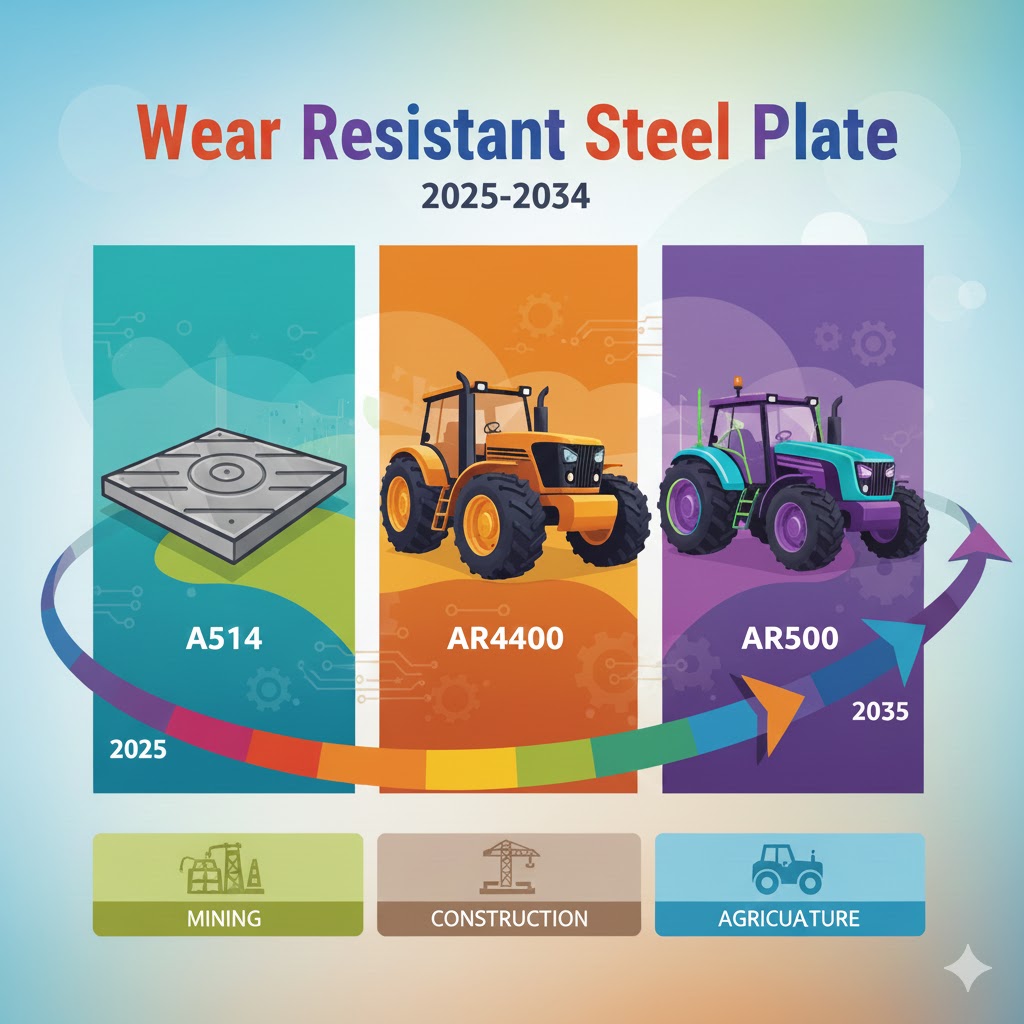
Product segmentation by grade — particularly A514, AR400, and AR500 wear resistant plates — highlights differing performance characteristics and applications. For example, A514 steel is widely preferred for its excellent machinability, weldability, and strength, making it ideal for high-impact applications such as crane booms and lifting gear.
Innovation and R&D: Driving Future Competitiveness
Innovation in alloy design, manufacturing processes, and performance optimization will be critical in maintaining competitive advantage through 2036. Key R&D priorities include:
-
Advanced alloy formulations with higher abrasion resistance and weight-to-strength efficiencies.
-
Manufacturing automation and digitalization (AI, IoT) to improve production precision and reduce waste.
-
Enhanced environmental performance, such as reduced lifecycle emissions and recyclability of steel products.
Startups and established steelmakers alike are investing in next-generation production technologies, including smart manufacturing systems and advanced heat treatments that can deliver enhanced performance at lower cost.
Expansion Strategies: Global Players and Competitive Landscape
The competitive landscape is diversified, featuring major steel producers such as Nippon Steel, Sumitomo Metal Corporation, China Baowu Steel Group, ArcelorMittal, JFE Holdings, SSAB AB, and Thyssenkrupp AG.
These players are adopting several strategic initiatives to expand their market footprint and technological capabilities:
-
Geographic expansion through new production facilities and partnerships in high-growth regions.
-
Mergers & acquisitions to consolidate market share and integrate specialized steel production capabilities.
-
Portfolio diversification including premium abrasion-resistant grades tailored for niche applications.
-
Strategic supply contracts with OEMs and industrial consumers to secure long-term demand.
Browse Full Report : https://www.factmr.com/report/522/wear-resistant-steel-plate-market
Market Challenges and Mitigation
Despite promising growth, the wear resistant steel plate industry faces headwinds, including:
-
Competition from alternative materials, such as advanced aluminum and composite solutions that offer weight savings in specific applications.
-
Raw material cost volatility, which can impact profitability and pricing strategies.
-
Supply chain constraints stemming from global logistics disruptions.
Industry stakeholders are mitigating these risks through vertical integration, strategic inventory management, and enhanced supplier collaborations.
Concluding Outlook
As industries worldwide transition toward higher productivity, sustainability, and operational resilience, wear resistant steel plates will remain a critical engineering material. With growth anchored in mining, construction, and agricultural applications — coupled with innovation and global expansion efforts — the wear resistant steel plate market is set to demonstrate steady growth through 2036 and beyond.
Strategic R&D investment, regional expansion, and portfolio innovation will be vital for companies to capitalize on emerging opportunities and deliver value across industrial ecosystems.