The ductile iron pipes market is playing a pivotal role in modernizing global water infrastructure. Ductile iron pipes, renowned for their mechanical strength, corrosion resistance, and long service life, are widely adopted across municipal, industrial, and irrigation applications. As urbanization accelerates and the demand for reliable water distribution and wastewater management grows, ductile iron pipes are increasingly recognized as essential components in sustainable and efficient infrastructure systems.
Market Overview:
Ductile iron pipes are engineered for durability, hydraulic efficiency, and pressure resistance, making them suitable for diverse water conveyance and industrial applications. Their versatility allows for integration into water distribution, sewage, wastewater treatment, irrigation, fire protection, desalination, and hydropower networks. The pipes are often enhanced with cement mortar or epoxy linings, providing superior protection against corrosion and extending operational lifespan. This combination of strength, reliability, and maintenance efficiency positions ductile iron pipes as a preferred choice for both new infrastructure projects and pipeline replacements.
Product Segmentation:
The market is segmented by application, diameter, lining type, and end-use. Water distribution remains the leading application, benefiting from ductile iron pipes’ ability to maintain flow efficiency, handle high pressure, and prevent leaks. Sewage and wastewater systems follow closely, emphasizing durability and chemical resistance. Diameter segmentation caters to specific project needs, with medium diameters (DN 350–600 mm) widely adopted for municipal networks, while larger diameters are employed in transmission mains. Cement mortar lining dominates, offering long-term corrosion protection, while epoxy coatings are increasingly used in aggressive environments requiring additional durability. Municipal end-use represents the largest segment, reflecting widespread investment in public water infrastructure, with industrial, agricultural, and desalination projects growing steadily.
Regional Insights:
Asia-Pacific is emerging as a high-growth market due to rapid urbanization, expanding population centers, and significant investments in water infrastructure. China and India lead regional growth, driven by pipeline replacement programs and urban utility expansion. North America and Europe maintain strong positions through established municipal systems, regulatory compliance, and ongoing modernization projects. Other regions, including Latin America and the Middle East & Africa, are witnessing incremental adoption fueled by infrastructure development and water security initiatives. The geographic distribution demonstrates how both mature and emerging markets rely on ductile iron pipe solutions to meet their unique water management needs.
Key Trends & Drivers:
The market is driven by rising demand for reliable, long-lasting water distribution systems. Governments and utilities increasingly prioritize the modernization of drinking water networks, wastewater treatment facilities, and industrial process pipelines. The adoption of trenchless installation techniques is growing, reducing disruption during pipeline replacement and urban renewal projects. Smart water networks integrating digital monitoring and real-time management systems are also becoming more common, further enhancing the appeal of ductile iron pipelines for modern infrastructure projects.
Technological advancements, such as improved joint systems and specialized coating methods, enable extended service life and reduced lifecycle costs. These innovations, combined with the material’s proven hydraulic efficiency and structural strength, continue to reinforce ductile iron pipes as the infrastructure material of choice for municipalities and industrial operators alike.
Challenges & Market Barriers:
Despite their advantages, ductile iron pipes face challenges including higher initial costs compared to alternative materials like PVC or HDPE. Specialized installation and maintenance expertise may be required, particularly for large-diameter or coated pipes. Regulatory compliance, particularly for drinking water quality and industrial standards, requires rigorous documentation and quality assurance processes. Companies must navigate these factors to ensure adoption while maintaining cost-effectiveness and infrastructure reliability.
Applications & End-Use Outlook:
Municipal water distribution is the largest end-use sector, supporting potable water delivery and efficient pipeline networks for urban populations. Industrial applications, including process water and wastewater conveyance, are expanding alongside growth in manufacturing and utilities. Irrigation, desalination, fire protection, and hydropower projects increasingly incorporate ductile iron pipelines due to their mechanical robustness and pressure-handling capabilities. Across all applications, ductile iron pipes are valued for their predictability in performance, ease of maintenance, and integration into modern infrastructure planning.
Future Outlook:
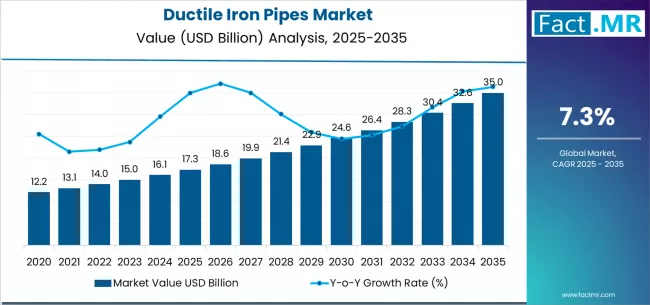
The ductile iron pipes market is poised for sustained growth as governments, utilities, and private sector players continue investing in resilient water and wastewater infrastructure. Expansion in urbanizing regions, combined with pipeline replacement programs in developed markets, will drive demand over the next decade. Continued adoption of trenchless installation, epoxy coatings, and smart water technologies will further enhance the appeal and efficiency of ductile iron pipelines. Companies offering comprehensive solutions—including pipes, joint systems, coatings, and technical support—will maintain competitive advantages in this evolving market.
Conclusion:
Ductile iron pipes are essential to the modernization and sustainability of global water infrastructure. Their durability, hydraulic efficiency, and corrosion resistance make them ideal for municipal, industrial, and irrigation applications. With technological innovations, regulatory compliance, and growing demand for reliable water systems, the ductile iron pipes market is set to expand, providing infrastructure solutions that ensure safe, efficient, and long-lasting water and wastewater management worldwide.
Browse Full Report – https://www.factmr.com/report/ductile-iron-pipes-market