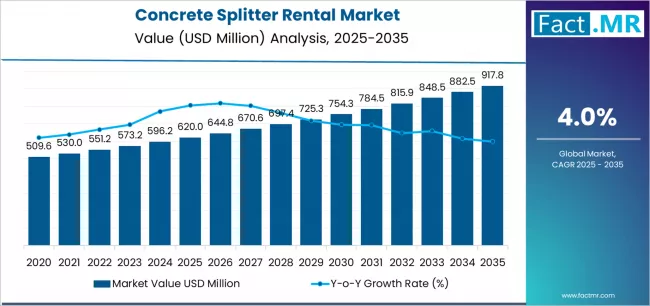
The concrete splitter rental market is steadily expanding as construction, demolition, and infrastructure projects increasingly demand precision-driven equipment that enhances productivity while maintaining safety standards. Concrete splitters are engineered to fracture reinforced concrete in a controlled manner, making them ideal for projects where traditional breaking techniques may cause excessive vibration, structural damage, or noise. As contractors look for flexible and cost-efficient equipment solutions, rental services have emerged as a practical alternative to purchasing heavy machinery.
The growing shift toward equipment rental reflects broader industry trends focused on operational efficiency, capital conservation, and access to advanced technologies without long-term financial commitments.
Market Overview
Concrete splitters are specialized machines that separate concrete using hydraulic pressure or mechanical force. Unlike jackhammers or blasting methods, these tools allow operators to create precise cracks along predetermined lines, minimizing disruption to nearby structures and reducing environmental impact. This capability makes them particularly valuable in urban redevelopment projects, structural renovations, bridge repairs, and tunnel construction.
The rental model provides contractors with the advantage of selecting equipment tailored to specific project requirements. Whether for short-term demolition work or large infrastructure developments, renting eliminates the need for high upfront investments while ensuring access to modern, well-maintained machinery. Rental providers are also expanding their fleets to include both compact and heavy-duty splitters, further supporting market growth.
Key Demand Drivers
Rising Infrastructure Development
Global infrastructure development continues to accelerate, driven by urbanization, population growth, and government investments in transportation networks and public facilities. Projects involving highways, rail corridors, airports, and smart cities frequently require controlled demolition, boosting the need for concrete splitter rentals.
Growing Preference for Low-Impact Demolition
Construction regulations are becoming stricter regarding noise pollution, vibration control, and worker safety. Concrete splitters offer a quieter and safer alternative to conventional demolition tools, making them especially suitable for densely populated areas where minimizing disturbance is critical.
Cost Efficiency and Financial Flexibility
For many contractors, purchasing heavy equipment is not always financially viable, particularly for projects with limited timelines. Renting enables companies to align equipment costs with project durations, improve cash flow management, and avoid long-term maintenance responsibilities.
Advancements in Equipment Technology
Technological improvements have enhanced splitter performance, durability, and ease of operation. Modern machines deliver higher splitting force while remaining portable and user-friendly, encouraging adoption across both large construction firms and mid-sized contractors.
Regional Insights
Asia-Pacific
Rapid urban expansion and large-scale infrastructure programs are driving strong demand across the region. Emerging economies are investing heavily in residential construction, transportation systems, and industrial facilities. Cost-sensitive markets particularly favor rentals, as they allow contractors to access high-performance equipment without significant capital expenditure.
Europe
The region’s focus on sustainability and strict environmental guidelines has accelerated the adoption of low-impact demolition methods. Aging infrastructure is also undergoing modernization, creating consistent demand for specialized equipment that supports safe and efficient structural upgrades.
North America
A well-established construction sector and ongoing infrastructure renewal projects support steady demand for rental equipment. Contractors increasingly rely on precision tools to complete projects efficiently while minimizing downtime and operational risks.
Segmentation Dynamics
By Equipment Type
Hydraulic concrete splitters dominate the rental landscape due to their superior power and effectiveness in heavy-duty applications. These machines are widely used for breaking thick concrete structures and reinforced foundations. Pneumatic and mechanical variants also maintain relevance, particularly for smaller jobs requiring portability and flexibility.
By Application
Demolition remains the leading application segment, as controlled concrete removal is essential for redevelopment and renovation projects. Tunneling and quarrying activities also contribute significantly to demand, especially in regions expanding underground transit systems and resource extraction operations.
By End Users
Construction companies represent the primary customer base, leveraging rental solutions to manage project costs and maintain operational agility. Mining operators and civil engineering firms also utilize concrete splitters for specialized tasks requiring precision and reliability.
Challenges in the Market
Operational Expertise Requirements
Advanced concrete splitting equipment often requires trained personnel for safe and effective use. Contractors lacking skilled operators may face a learning curve, which can temporarily limit adoption.
Fleet Maintenance for Rental Providers
Rental companies must invest in regular equipment servicing to ensure reliability and performance. Maintaining high-quality fleets can be resource-intensive, particularly as demand grows.
Competition from Alternative Technologies
While concrete splitters offer clear advantages, competing demolition tools continue to evolve. Equipment that delivers faster results or lower operational costs could influence contractor preferences in certain scenarios.
Future Outlook
The future of the concrete splitter rental market appears promising, supported by continued infrastructure development and the construction industry’s shift toward efficient, environmentally responsible practices. As urban areas become more congested and regulatory frameworks tighten, demand for precision demolition tools is expected to rise.
Rental providers that focus on expanding their equipment portfolios, integrating advanced technologies, and offering strong customer support will likely strengthen their competitive position. Additionally, the increasing popularity of equipment-as-a-service models suggests that rentals will remain a preferred choice for contractors seeking adaptability in an unpredictable project environment.
Digital platforms that simplify booking, scheduling, and equipment tracking are also expected to transform the rental experience, making it more convenient and transparent for customers.
Conclusion
The concrete splitter rental market is evolving in response to the construction industry’s need for safer, more precise, and cost-effective demolition solutions. By eliminating the financial burden of ownership while ensuring access to high-performance machinery, rental services empower contractors to execute complex projects with confidence.
As infrastructure investments continue worldwide and sustainability becomes a priority, concrete splitter rentals are set to play an increasingly important role in modern construction practices. Companies that embrace innovation and prioritize operational efficiency will be well positioned to benefit from the market’s ongoing expansion.
Browse Full Report – https://www.factmr.com/connectus/sample?flag=S&rep_id=8661