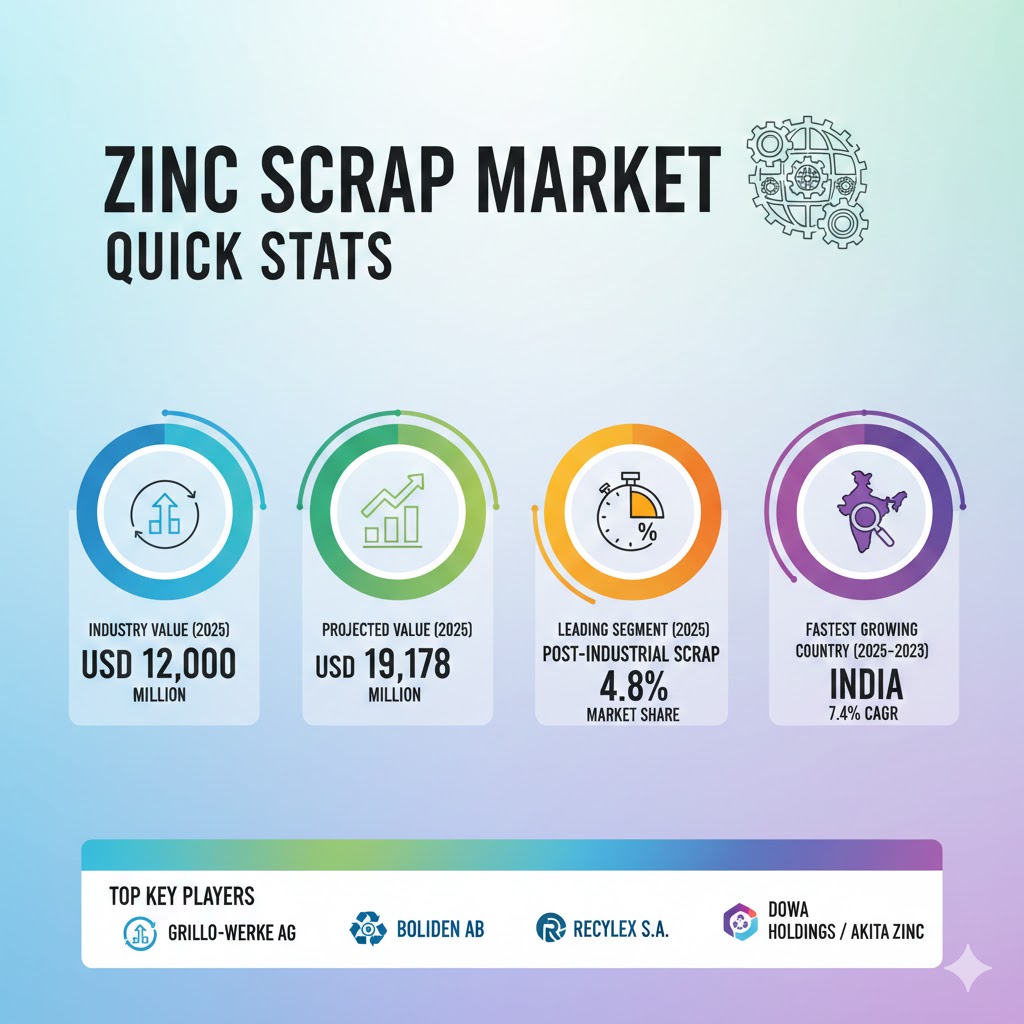
As the global industrial sector accelerates its transition toward a circular economy, the zinc scrap market is entering a pivotal growth phase. New data for 2026 indicates the market volume is estimated to reach 13.99 million tons, up from 13.78 million tons in 2025. This steady expansion, characterized by a compound annual growth rate (CAGR) of 1.5% through 2031, is being propelled by massive infrastructure programs in emerging economies and the intensifying “”green”” metal requirements of the electric vehicle (EV) and renewable energy sectors.
Market Dynamics: The Shift to Secondary Production
The landscape of the zinc industry is fundamentally shifting from primary mining to secondary zinc production. In 2026, while primary mining remains a cornerstone of the supply chain, secondary production—derived from zinc scrap—is advancing at a faster projected CAGR of 2.55%.
Industry analysts point to the construction sector, which currently commands over 56% of global zinc consumption, as the primary driver. However, the most significant “”new age”” demand is emerging from the electrical and electronics sectors, which are recording the highest projected CAGR at 2.28%. This shift is necessitated by the metal’s critical role in galvanizing steel for corrosion resistance in harsh environments, such as offshore wind farms and high-intensity urban infrastructure.
Who is Driving the Market?
The market is currently dominated by major industrial players and specialized recyclers, including:
- Asia-Pacific Leaders: Organizations such as Nupur Recyclers and Gravita India have solidified their positions as leading importers and processors of non-ferrous scrap, leveraging advanced sorting technologies to meet high-purity standards.
- Infrastructure Catalysts: Emerging economies in the Asia-Pacific region, notably India and Southeast Asia, now represent over 62% of the global revenue share.
- The EV Sector: Automotive manufacturers are integrating approximately 15–20 kilotons of additional zinc into the global vehicle fleet for every incremental point of EV market penetration.
What is Evolving in 2026?
Technological innovation is redefining how zinc scrap is processed. AI-driven sorting and sensor-based separation are now industry standards, significantly reducing contamination and increasing the recovery rates of high-value zinc die-cast scrap.
Furthermore, the emergence of zinc-ion and zinc-air batteries is creating a new long-term upside for scrap demand. As energy storage solutions move toward safer, more sustainable alternatives to lithium-ion, recycled zinc is becoming a preferred feedstock for battery manufacturers aiming to lower their carbon footprints.
Where is the Growth Concentrated?
While China maintains a significant surplus in zinc production, the rest of the world is navigating a regional shortfall. This disparity has kept zinc scrap prices robust, with 2026 estimates placing zinc scrap prices between $2,500 and $3,000 per ton, depending on purity and form. North America remains the second-largest market, driven by a revitalization of domestic manufacturing and stringent ESG (Environmental, Social, and Governance) mandates that favor recycled content over primary ores.
Why the Zinc Scrap Market Matters Now
The urgency of the “”Zinc-intensive”” economy is driven by two main factors:
- Infrastructure Spend: Every $1 trillion allocated to global power grids and rail generates roughly 0.3 kg of zinc demand per dollar through galvanizing.
- Decarbonization: Recycled zinc requires significantly less energy to process than primary zinc mined from ore, directly aligning with global net-zero targets.
Industry Outlook and Investor Relevance
For investors and market professionals, the 2026 outlook remains cautiously optimistic despite global macroeconomic volatility. While supply surpluses in certain regions may cap immediate price spikes, the structural deficit in high-purity recycled zinc provides a stable floor for long-term value.
“”The industry is moving from a compliance-focused recycling model to a value-driven strategy,”” notes a recent market analysis. “”The ability to secure secondary zinc feedstock is no longer just an environmental choice; it is a strategic necessity for supply chain resilience.””
Key 2026 Data Points at a Glance
| Metric | 2026 Estimate |
| Market Volume | 13.99 Million Tons |
| Secondary Production CAGR | 2.55% |
| Zinc Scrap Price Range | $2,500 – $3,000 / ton |
| Dominant Region | Asia-Pacific (62% share) |
| Top End-User | Construction (56%) |
Browse Full Report : https://www.factmr.com/report/zinc-scrap-market
About the Zinc Scrap Market Update
This market overview is compiled using the latest industry data and analyst projections for the 2026 fiscal year. It serves as an authoritative resource for stakeholders in the non-ferrous metals, recycling, and sustainable manufacturing sectors.