The global water heater market is poised for steady expansion over the next decade, supported by rising urbanization, growth in residential and commercial construction, increasing demand for energy-efficient home appliances, and the growing need for reliable hot-water systems across homes, institutions, and industries. Water heaters including electric, gas, solar, heat-pump, hybrid, and tankless systems — form an essential utility for bathing, cleaning, sanitation, and industrial processes. With rapid technological upgrades and expanding smart-home adoption, water heaters are evolving into more efficient, compact, and intelligent systems.
Quick Stats (2025–2035)
-
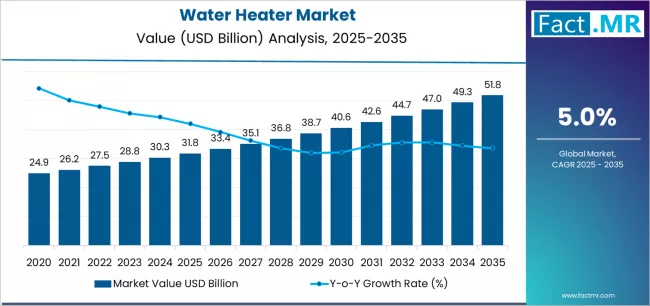
2025 Market Value: Around USD 31.9 billion
-
2035 Market Forecast: Approximately USD 54.0 billion
-
Absolute Market Growth: Nearly USD 22.1 billion
-
Forecast CAGR: About 4.8% to 5.0%
-
Leading Product Type (2025): Electric and storage water heaters
-
Fastest-Growing Categories: Solar heaters, heat-pump heaters, hybrid units, and tankless/instant heaters
To access the complete data tables and in-depth insights, request a Discount On The Report here: https://www.factmr.com/connectus/sample?flag=S&rep_id=9817
Key Market Drivers
1. Rapid Urbanization & Housing Expansion
-
Growth in residential construction and rising household formation are significantly increasing the installation of new water heaters.
-
Urban infrastructure development in emerging markets is accelerating adoption in apartments, homes, and rental units.
-
Renovation and home-upgrade trends also drive replacement demand.
2. Rising Demand for Energy-Efficient Systems
-
Consumers increasingly prefer energy-saving, cost-efficient appliances due to rising electricity and fuel prices.
-
Energy-efficiency regulations across many regions require the use of low-energy water heaters.
-
Solar heaters, heat-pump water heaters, and hybrid systems are gaining momentum as sustainable alternatives.
3. Technological Advancements & Smart Water Heaters
-
Smart features such as remote control, mobile connectivity, automatic temperature regulation, and energy-usage monitoring are boosting adoption.
-
Tankless/instant heaters offer compact design, fast heating, and energy efficiency — ideal for small spaces and modern households.
-
Manufacturers are integrating AI-based predictive maintenance for longer efficiency and reduced downtime.
4. Growth in Commercial & Institutional Sectors
-
Hotels, hospitals, hostels, restaurants, and office buildings require reliable, high-capacity hot-water solutions.
-
Expansion of healthcare, hospitality, and educational infrastructure contributes to market growth.
-
Commercial spaces increasingly opt for energy-efficient water-heating systems to reduce operational costs.
Market Structure & Segmentation Insights
By Product Type
-
Electric Water Heaters: Dominant due to easy installation, reliability, and availability across all regions.
-
Gas Water Heaters: Continue to remain popular where gas infrastructure is well established.
-
Solar Water Heaters: Fastest-growing category due to sustainability trends and low operational cost.
-
Heat-Pump Water Heaters: Attractive for their high energy efficiency and lower long-term expense.
-
Hybrid Water Heaters: Offer performance stability by combining multiple heating methods.
-
Tankless/Instant Water Heaters: Rising adoption in space-constrained homes and rental properties.
By End-User
-
Residential (Largest Share): Core demand from single-family homes, apartments, and multi-family buildings.
-
Commercial: Hotels, hospitals, restaurants, offices, gyms, and public infrastructure.
-
Industrial: Hot-water requirements in processing, cleaning, and industrial facilities.
By Region
-
Asia-Pacific: Largest and fastest-growing region due to rapid urbanization and expansion of housing projects.
-
North America & Europe: Mature markets driven by replacement demand, sustainability norms, and smart-heater adoption.
-
Latin America, Middle East & Africa: Growing adoption with expanding construction and improved consumer purchasing power.
Challenges & Market Restraints
-
High Upfront Cost of Advanced Systems: Solar, heat-pump, and hybrid heaters require significant initial investment.
-
Energy Source Limitations: Regions with limited electricity or gas infrastructure may face adoption challenges.
-
Long Replacement Cycles: Water heaters have a long service life, slowing down replacement demand in developed markets.
-
Regulation Pressure: Strict efficiency standards increase manufacturing and compliance costs.
Opportunities & Strategic Directions
1. Rising Demand for Smart, Connected Water Heaters
Smart-home integration and IoT-enabled systems offer major growth opportunities for manufacturers.
2. Strong Potential in Renewable-Based Heaters
Solar and heat-pump units align with global sustainability goals and government incentives.
3. Large Replacement Market
Aging water heaters in homes and commercial spaces represent strong retrofit demand.
4. Growing Use in Hospitality & Healthcare
Commercial expansion across these sectors requires high-capacity, reliable water-heating solutions.
5. Customization for Regional Needs
Adapting product designs for local climates, energy sources, and consumer preferences yields strong market penetration.
Outlook
The global water heater market is expected to grow from roughly USD 31.9 billion in 2025 to about USD 54.0 billion by 2035, registering a CAGR of 4.8%–5.0%. Driven by urban growth, energy-efficient technologies, sustainability focus, and rising commercial infrastructure development, water heaters will remain an essential household and industrial utility. Manufacturers investing in smart systems, renewable-based technologies, efficient designs, and customized regional solutions will dominate the next decade.
Browse Full Report: https://www.factmr.com/report/water-heater-market