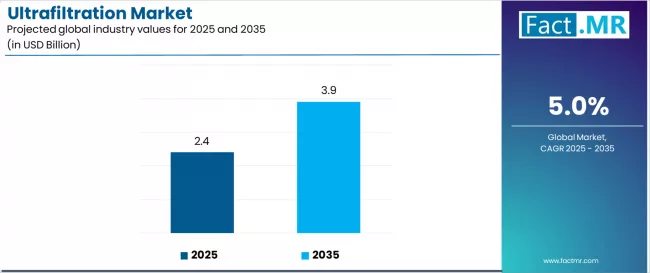
As global demand for clean water, efficient wastewater treatment, and high-purity industrial processes continues to rise, the Ultrafiltration Market is gaining strong momentum. Ultrafilation technology plays a crucial role in separating suspended solids, bacteria, viruses, and macromolecules from liquids using semi-permeable membranes. With growing environmental concerns, tightening regulatory standards, and increasing industrialization, ultrafiltration systems are becoming essential across municipal and industrial applications worldwide.
Market Overview
Ultrafiltration is a membrane filtration process that operates under pressure to remove contaminants while allowing water and low-molecular-weight solutes to pass through. Positioned between microfiltration and nanofiltration in membrane technology, ultrafiltration offers high efficiency in removing pathogens and colloidal particles without requiring extensive chemical treatment.
The market is expanding due to increasing water scarcity, rapid urbanization, and the growing need for advanced water reuse systems. Municipal authorities are investing in modern wastewater treatment infrastructure, while industries are integrating ultrafiltration units to improve operational efficiency and ensure compliance with environmental standards.
Technological advancements in membrane materials, module design, and energy-efficient systems are further strengthening adoption. Innovations such as hollow fiber membranes and improved polymer-based membranes are enhancing durability, permeability, and overall system performance.
Key Market Drivers
- Rising Water Scarcity and Reuse Initiatives
Water shortages in several regions have accelerated the adoption of water recycling and reuse systems. Ultrafiltration serves as a reliable pre-treatment and polishing solution in desalination and wastewater recycling plants. - Stringent Environmental Regulations
Governments and environmental agencies worldwide are implementing strict wastewater discharge norms. Industries are increasingly adopting ultrafiltration to comply with effluent quality standards and minimize environmental impact. - Industrial Expansion
Industries such as food & beverage, pharmaceuticals, chemicals, and power generation require high-purity process water. Ultrafiltration ensures consistent quality while reducing contamination risks. - Growing Demand in Municipal Applications
Urban population growth has increased pressure on municipal water treatment facilities. Ultrafiltration systems provide compact, efficient, and scalable solutions for drinking water purification.
Regional Insights
North America
North America holds a significant share in the ultrafiltration market due to strong environmental regulations, established infrastructure, and high adoption of advanced water treatment technologies. The region emphasizes sustainable water management practices and modernization of aging water treatment plants.
Europe
Europe remains a key market, driven by stringent wastewater treatment regulations and sustainability goals. Investments in smart water management and circular economy initiatives are encouraging the integration of membrane-based filtration systems.
Asia-Pacific
Asia-Pacific is emerging as a high-growth region due to rapid industrialization, urban expansion, and increasing concerns about water quality. Governments across developing economies are investing heavily in water infrastructure and desalination projects.
Middle East & Africa
Water scarcity challenges in the Middle East are driving demand for ultrafiltration in desalination and wastewater reuse projects. Industrial growth in select African economies is also supporting gradual market expansion.
Technology & Product Segmentation
Ultrafiltration systems are typically categorized based on membrane type, module design, and application.
By Membrane Type:
- Polymer membranes
- Ceramic membranes
Polymer membranes dominate due to cost-effectiveness and flexibility, while ceramic membranes are preferred in high-temperature and chemically aggressive environments.
By Module Type:
- Hollow fiber
- Tubular
- Flat sheet
- Spiral wound
Hollow fiber modules are widely adopted because of their compact design and high packing density.
By Application:
- Municipal water treatment
- Industrial wastewater treatment
- Food & beverage processing
- Pharmaceutical and biotechnology
- Chemical processing
- Power generation
Municipal and industrial water treatment remain the primary application segments, accounting for a substantial share of global demand.
Key Trends & Forecast
Integration with Smart Monitoring Systems
Digital monitoring and automation technologies are increasingly being integrated into ultrafiltration systems. Real-time monitoring improves membrane lifespan and reduces maintenance costs.
Shift Toward Sustainable Solutions
Manufacturers are focusing on reducing energy consumption and chemical usage. Eco-friendly membrane materials and energy-efficient pump systems are gaining traction.
Hybrid Filtration Systems
Ultrafiltration is often combined with reverse osmosis and nanofiltration to enhance purification efficiency. Such hybrid systems are widely adopted in desalination and high-purity industrial processes.
Rising Adoption in Emerging Economies
Infrastructure development projects in emerging markets are creating new growth opportunities for membrane filtration technologies.
Applications & End-Use Outlook
Municipal Sector
Urban municipalities use ultrafiltration for drinking water production, wastewater treatment, and water reuse programs. The technology ensures pathogen removal and compliance with public health standards.
Industrial Sector
Industries rely on ultrafiltration to treat process water, remove contaminants, and recover valuable by-products. The food & beverage industry uses ultrafiltration for dairy processing and beverage clarification, while pharmaceutical companies depend on it for sterile filtration processes.
Energy & Power Plants
Ultrafiltration is used as a pre-treatment solution for boiler feed water and cooling tower systems, ensuring operational efficiency and reducing scaling issues.
Healthcare & Biotechnology
In healthcare settings, ultrafiltration supports sterile filtration, protein separation, and laboratory applications, ensuring precision and reliability.
Competitive Landscape
The ultrafiltration market is characterized by the presence of global membrane manufacturers and regional players. Companies are focusing on product innovation, strategic partnerships, and expansion into emerging markets to strengthen their market position. Research and development efforts are centered on improving membrane durability, fouling resistance, and system efficiency.
Future Outlook
The ultrafiltration market is poised for steady expansion as water sustainability becomes a global priority. Increasing investments in infrastructure modernization, rising industrial output, and advancements in membrane technology will continue to drive demand. As industries and governments prioritize environmental compliance and resource conservation, ultrafiltration systems will remain central to water purification and wastewater treatment strategies.
Conclusion
Ultrafiltration has emerged as a vital technology in addressing global water challenges and supporting sustainable industrial processes. Its ability to deliver reliable, high-quality filtration makes it indispensable across municipal and industrial applications. With technological innovation and regulatory support accelerating adoption, the ultrafiltration market is set to play a transformative role in the future of water management and environmental protection.
Browse Full Report – https://www.factmr.com/report/ultrafiltration-market