The rapid evolution of urban mobility and smart transportation systems has significantly increased the demand for efficient fare collection technologies. Ticket validators have emerged as a critical component in modern transit infrastructure, enabling quick, secure, and contactless ticket verification. As cities continue to expand and public transportation networks become more sophisticated, the ticket validators market is gaining momentum, driven by the need for improved passenger experience, operational efficiency, and digital integration.
Market Overview:
Ticket validators are electronic devices used in public transportation systems to verify the validity of travel tickets or passes. These devices support a wide range of technologies, including QR codes, smart cards, NFC (Near Field Communication), and mobile-based tickets. Their primary function is to ensure seamless entry and exit for passengers while reducing fare evasion and enhancing revenue management for transit authorities.
The market is witnessing significant transformation due to the integration of digital payment systems and smart mobility solutions. Transit agencies are increasingly adopting automated fare collection systems that rely on advanced validators to process transactions quickly and accurately. These systems not only improve efficiency but also reduce the need for manual intervention, leading to cost savings and better resource allocation.
Regional Insights:
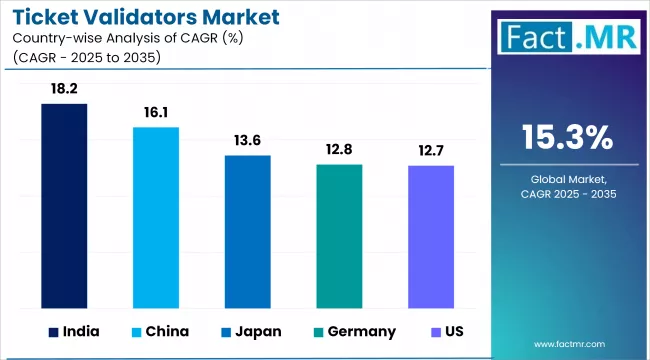
North America holds a strong position in the ticket validators market, supported by advanced transportation infrastructure and early adoption of smart transit technologies. The region continues to invest in modernizing public transport systems, driving the demand for innovative ticket validation solutions.
Europe is also a key market, characterized by extensive rail and metro networks and a strong focus on sustainable urban mobility. Governments and transit authorities are actively implementing smart ticketing systems to enhance passenger convenience and reduce environmental impact.
Asia-Pacific is emerging as a rapidly growing market, fueled by increasing urbanization, expanding public transportation networks, and government initiatives aimed at developing smart cities. Countries in this region are adopting digital ticketing solutions at a fast pace, creating significant opportunities for market growth.
Key Trends & Forecast:
The ticket validators market is evolving with several important trends shaping its future:
- Adoption of Contactless Technologies: The growing use of contactless payment methods, including mobile wallets and NFC-enabled cards, is driving the demand for advanced ticket validators.
- Integration with Smart Mobility Platforms: Validators are increasingly being integrated with broader smart city ecosystems, enabling real-time data sharing and improved transit management.
- Focus on Passenger Convenience: Features such as faster processing times, user-friendly interfaces, and multi-format ticket support are becoming essential.
- Use of Data Analytics: Transit authorities are leveraging data collected from validators to optimize routes, improve services, and enhance operational efficiency.
- Expansion of Mobile Ticketing: The rise of smartphone-based ticketing solutions is encouraging the deployment of validators that can support digital and QR-based tickets.
Applications & End-Use Outlook:
Ticket validators are widely used across various modes of public transportation, making them an integral part of urban mobility systems. Their primary application is in buses, trains, trams, and metro systems, where they facilitate quick and efficient passenger movement.
In addition to public transit, ticket validators are also being used in:
- Parking Facilities: For automated entry and exit management.
- Event Venues: For validating digital tickets at stadiums and entertainment centers.
- Airports: For boarding pass verification and access control.
- Shared Mobility Services: For integrating fare systems across different transport modes.
The versatility of ticket validators is expanding their scope beyond traditional transportation, contributing to their increasing adoption.
Competitive Landscape:
The ticket validators market is highly competitive, with key players focusing on technological innovation and strategic collaborations to strengthen their market presence. Companies are investing in research and development to introduce advanced solutions that support multiple ticketing formats and enhance system reliability.
Partnerships between technology providers, transit authorities, and system integrators are playing a crucial role in the development of comprehensive fare collection solutions. These collaborations enable the deployment of integrated systems that improve efficiency and provide a seamless experience for passengers.
Emerging players are also entering the market with innovative products, intensifying competition and driving continuous advancements in ticket validation technologies.
Challenges and Opportunities:
Despite its growth potential, the ticket validators market faces certain challenges. High implementation costs and the complexity of integrating new systems with existing infrastructure can hinder adoption. Additionally, concerns related to data security and system reliability may pose challenges for transit authorities.
However, these challenges present opportunities for innovation and improvement. The development of cost-effective solutions and secure technologies can address these issues and encourage wider adoption. The increasing focus on digital transformation and smart city initiatives is expected to create new growth opportunities for the market.
Furthermore, the growing demand for seamless and contactless travel experiences is driving the need for advanced ticket validation systems, opening new avenues for market expansion.
Conclusion:
The ticket validators market is playing a vital role in shaping the future of smart transportation and urban mobility. By enabling efficient, secure, and user-friendly fare collection, these systems are enhancing the overall travel experience for passengers while improving operational efficiency for transit authorities.
As cities continue to invest in smart infrastructure and digital technologies, the demand for advanced ticket validators is expected to rise steadily. Organizations that focus on innovation, integration, and customer-centric solutions will be well-positioned to succeed in this dynamic and evolving market.
Browse Full Report – https://www.factmr.com/report/ticket-validators-market