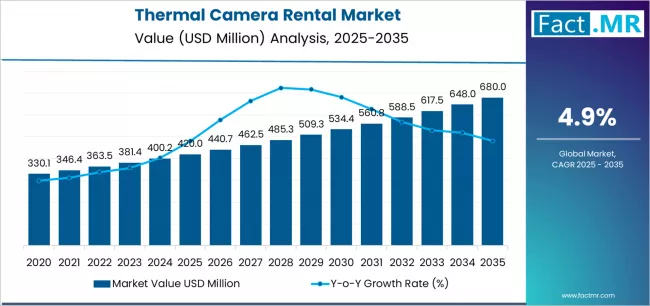
As industries increasingly adopt thermal imaging technology for inspection, surveillance, and operational efficiency, the Thermal Camera Rental Market is gaining significant traction worldwide. The ability to access advanced thermal cameras through rental services is transforming how businesses approach temporary detection needs—especially where purchasing high-end thermal imaging equipment is not cost-effective. The market’s growth reflects the rising demand for sophisticated thermal imaging across applications such as industrial inspection, construction diagnostics, security monitoring, and utility maintenance.
Market Overview
The thermal camera rental industry centers on providing on-demand access to thermal imaging equipment without long-term capital investments. Thermal cameras detect infrared radiation, producing images that reveal temperature variations not visible to the human eye. These capabilities make them indispensable in environments where early fault detection, safety compliance, and operational optimization are critical.
Rented thermal cameras can be handheld, fixed, or integrated with drones and autonomous inspection systems. Rental companies supply a range of devices—from compact units for short-term use to advanced high-resolution systems suited for industrial analysis—all designed to meet project-specific requirements.
The increasing industrialization of emerging economies and the rising focus on predictive maintenance and energy efficiency are prompting industries to turn toward rental models. By opting for rentals, firms gain access to the latest technology, mitigate cost burdens, and maintain operational flexibility—factors that are fueling demand globally.
Key Drivers & Market Dynamics
Operational Flexibility and Cost Efficiency
One of the primary factors driving the thermal camera rental market is the economic advantage of renting high-end imaging equipment rather than purchasing it outright. Thermal cameras with advanced features can be expensive, and owning such tools may not be cost-effective for businesses with intermittent needs. Rental services enable companies to deploy thermal imaging technology only when needed, reducing capital expenditure and enabling efficient budget allocation.
Industrial & Construction Adoption
Industrial facilities and construction projects represent two of the most dynamic end-user segments. Thermal imaging is widely used for detecting equipment anomalies, identifying potential electrical issues, and monitoring heat loss in structures. In construction, thermal cameras help professionals spot moisture intrusion, insulation gaps, and structural irregularities that might go unnoticed during visual inspections. The ability to rent specialized cameras tailored to these needs enhances project workflows and safety outcomes.
Security & Surveillance Applications
The surveillance segment is also contributing to market growth. Thermal cameras enhance visibility in low-light or night conditions—making them ideal for security monitoring at critical infrastructure sites, perimeter surveillance, and large-scale events. Organizations increasingly rely on rental thermal systems for temporary security deployments where permanent installation isn’t practical.
Technology Integration & Innovation
Technological advances are accelerating adoption rates. Modern thermal cameras boast better resolution, improved sensor performance, and enhanced software integration—enabling more precise readings and automated data analysis. Rental solutions now often include features such as remote monitoring, AI-enhanced image analysis, and compatibility with drones and IoT platforms. These innovations expand applications into remote inspection, smart-city initiatives, and automated maintenance systems.
Segment Insights
By Equipment Type
Among the different types of thermal cameras offered for rental, handheld units dominate the market due to their portability and versatility. These devices are widely used for field inspections, electrical diagnostics, HVAC system evaluations, and building diagnostics. Fixed thermal camera systems and integrated solutions—designed for long-term surveillance or specialized industrial applications—also contribute to rental demand, particularly in large facility management.
By Application
Inspection emerges as the leading application segment within the thermal camera rental space. Thermal inspection tools help organizations proactively identify issues, optimize maintenance cycles, and reduce unplanned downtime. Surveillance follows closely as businesses deploy rented cameras for security and monitoring purposes. Research and development applications round out demand, especially in academic and specialized testing environments, where access to high-end imaging is critical yet infrequent.
Regional Insights
Global demand for thermal camera rentals is distributed across major regions with varying growth dynamics:
Asia-Pacific is expected to register strong growth, driven by rapid industrialization, infrastructure development, and increasing construction activity. Countries such as India and China are at the forefront of adopting thermal imaging for industrial and building diagnostics, creating a fertile environment for rental services.
North America and Europe continue to represent significant markets due to established industrial bases and advanced surveillance requirements. In these regions, rental adoption is supported by mature service ecosystems and stringent safety and inspection regulations that require regular, high-quality imaging solutions.
Market Challenges
While the thermal camera rental market is growing steadily, it faces specific challenges:
- Technical Complexity: Advanced thermal imaging systems can be intricate to operate and maintain. Rentals often require skilled technicians and support services, which can raise operational costs for providers and users alike.
- Inventory Availability: Maintaining a diverse and updated inventory of thermal cameras across regions can be challenging. Providers must balance equipment investment with rental demand to avoid shortages during peak periods.
- Competitive Landscape: The market includes a mix of established imaging manufacturers and specialized rental firms, making competitive differentiation important. Success often depends on equipment quality, customer support services, and the ability to offer integrated solutions.
Future Outlook
Looking ahead, the Thermal Camera Rental Market is poised for continued expansion as industries recognize the value of on-demand access to advanced imaging technology. As trends like AI integration, enhanced sensor capabilities, and remote monitoring solutions gain traction, rental services are likely to evolve alongside technology advancements. This will enable businesses to deploy thermal imaging more effectively across diverse sectors—ranging from industrial maintenance and energy auditing to public safety, security, and infrastructure management.
Organizations that invest in flexible rental models and innovative imaging solutions will be well placed to meet evolving operational needs, reduce risk, and improve overall productivity. With cost-effective access to cutting-edge thermal cameras, enterprises can stay agile in an increasingly data-driven industrial landscape—transforming thermal imaging from a niche tool into a mainstream diagnostic and monitoring solution.
Read More: https://www.factmr.com/report/thermal-camera-rental-market