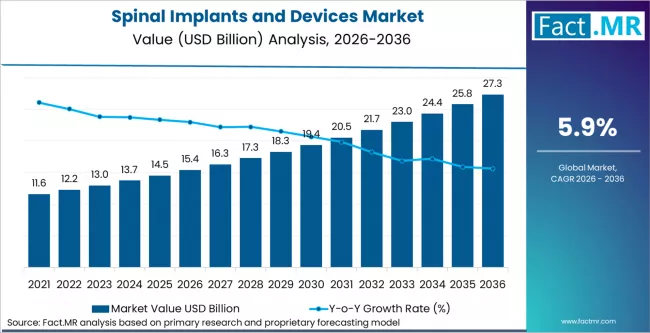
The spinal implants and devices market is witnessing significant growth as the prevalence of spinal disorders and injuries continues to rise globally. With increasing cases of degenerative spine conditions, trauma-related injuries, and age-related complications, the demand for advanced spinal treatment solutions is steadily increasing. Technological innovations in medical devices and surgical techniques are further supporting the adoption of spinal implants, enabling improved patient outcomes and faster recovery. As healthcare systems focus on enhancing quality of care, spinal implants and devices are becoming an essential component of modern orthopedic and neurosurgical practices.
Market Overview:
Spinal implants and devices are medical tools used to stabilize, support, and correct deformities of the spine. These devices are commonly utilized in surgical procedures to treat conditions such as herniated discs, spinal stenosis, scoliosis, and fractures. The market includes a wide range of products such as rods, screws, plates, cages, and artificial discs, each designed to address specific spinal issues.
The increasing adoption of minimally invasive surgical procedures is a key factor driving the market. These procedures involve smaller incisions, reduced blood loss, and shorter hospital stays, making them more appealing to both patients and healthcare providers. Additionally, advancements in biomaterials, including titanium and polymer-based implants, have improved the durability and compatibility of spinal devices.
The integration of navigation systems and robotic-assisted surgeries is also transforming the landscape of spinal treatments. These technologies enhance precision during surgical procedures, reducing the risk of complications and improving overall success rates.
Regional Insights:
North America holds a dominant position in the spinal implants and devices market, primarily due to its advanced healthcare infrastructure and high adoption of innovative medical technologies. The presence of leading market players and a strong focus on research and development contribute to the region’s leadership in this space.
Europe follows closely, supported by a growing aging population and increasing awareness about spinal health. Favorable healthcare policies and access to advanced treatment options are encouraging the use of spinal implants across the region.
The Asia-Pacific region is emerging as a lucrative market, driven by rapid urbanization, improving healthcare facilities, and rising medical tourism. Increasing investments in healthcare infrastructure and growing awareness about advanced treatment options are further accelerating market growth in this region.
Key Trends & Forecast:
The spinal implants and devices market is evolving with several notable trends shaping its future. One of the most significant trends is the shift toward motion-preserving technologies, such as artificial disc replacement. These solutions aim to maintain natural spinal movement, offering an alternative to traditional fusion procedures.
Another important trend is the growing use of 3D printing technology in the development of customized spinal implants. This innovation allows for patient-specific designs that improve fit and performance, leading to better surgical outcomes.
Biologics are also gaining traction in spinal procedures. The use of bone graft substitutes and growth factors is enhancing the success rates of spinal fusion surgeries by promoting faster bone healing and regeneration.
Furthermore, the increasing focus on outpatient and ambulatory surgical centers is influencing market dynamics. As healthcare providers aim to reduce costs and improve efficiency, more spinal procedures are being performed in these settings.
Digital health technologies, including preoperative planning software and intraoperative imaging systems, are also playing a crucial role in improving surgical precision and patient care.
Applications & End-Use Outlook:
Spinal implants and devices are widely used in the treatment of various spinal conditions. Hospitals remain the primary end users, given their access to advanced surgical infrastructure and skilled professionals. These facilities handle complex spinal surgeries and provide comprehensive post-operative care.
Ambulatory surgical centers are gaining popularity as an alternative setting for spinal procedures. These centers offer cost-effective solutions and shorter recovery times, making them an attractive option for both patients and healthcare providers.
In terms of applications, spinal fusion surgeries account for a significant share of the market. These procedures involve joining two or more vertebrae to eliminate motion and reduce pain. However, non-fusion procedures, such as artificial disc replacement, are gaining traction due to their ability to preserve spinal mobility.
Spinal implants are also used in trauma cases, where immediate stabilization of the spine is critical. Additionally, they play a vital role in correcting deformities such as scoliosis and kyphosis, improving both functionality and quality of life for patients.
The increasing prevalence of lifestyle-related spinal issues, including those caused by poor posture and sedentary habits, is further contributing to the demand for spinal implants and devices.
Conclusion:
The spinal implants and devices market is set to experience robust growth as advancements in medical technology continue to transform spine care. With a strong focus on innovation, precision, and patient-centric solutions, the market is addressing the growing burden of spinal disorders worldwide.
As healthcare providers adopt minimally invasive techniques and advanced implant technologies, patients can benefit from safer procedures and improved recovery outcomes. The integration of digital tools and personalized treatment approaches is further enhancing the effectiveness of spinal interventions.
Overall, the market reflects a dynamic and evolving landscape, driven by the need for better treatment solutions and improved quality of life. Access to in-depth market insights and research can help stakeholders make informed decisions and capitalize on emerging opportunities in the spinal implants and devices market.
Browse Full Report – https://www.factmr.com/report/spinal-implants-and-devices-market