The healthcare industry is witnessing a paradigm shift toward less invasive treatment approaches, particularly in spinal care. Minimally invasive spine technologies have emerged as a breakthrough, offering patients effective treatment options with reduced pain, shorter hospital stays, and faster recovery times. These technologies are redefining surgical standards by enabling precision-driven procedures that minimize tissue damage. As the demand for safer and more efficient spine treatments continues to grow, the minimally invasive spine technologies market is gaining significant momentum globally.
Market Overview:
Minimally invasive spine technologies involve advanced surgical techniques and specialized instruments designed to treat spinal disorders with minimal disruption to surrounding tissues. Unlike traditional open surgeries, these procedures utilize small incisions, imaging guidance, and innovative devices to achieve accurate outcomes.
The market is driven by the rising prevalence of spinal disorders such as degenerative disc disease, herniated discs, spinal stenosis, and scoliosis. Additionally, the growing aging population is contributing to increased demand for spine-related treatments, as older individuals are more prone to musculoskeletal conditions.
Technological advancements are playing a crucial role in expanding the capabilities of minimally invasive procedures. Innovations such as robotic-assisted surgery, navigation systems, and enhanced imaging techniques are improving surgical accuracy and patient outcomes. Furthermore, increasing awareness among patients and healthcare providers about the benefits of minimally invasive techniques is accelerating market adoption.
Regional Insights:
North America holds a leading position in the minimally invasive spine technologies market, supported by a well-established healthcare infrastructure, high adoption of advanced medical technologies, and a strong presence of key industry players. The region continues to invest in research and development, driving innovation in spinal care.
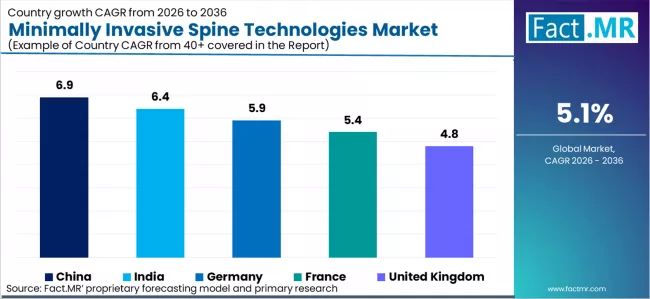
Europe follows closely, with a growing emphasis on improving healthcare quality and patient safety. Favorable reimbursement policies and increasing adoption of minimally invasive procedures are supporting market growth across countries such as Germany, France, and the United Kingdom.
The Asia-Pacific region is emerging as a lucrative market due to rising healthcare expenditure, improving medical infrastructure, and increasing awareness about advanced treatment options. Countries like China, India, and Japan are experiencing rapid growth, driven by a large patient pool and expanding access to healthcare services.
Key Trends & Forecast:
- Adoption of Robotic-Assisted Spine Surgery:
The integration of robotics in spine procedures is enhancing precision and reducing the risk of complications. Robotic systems enable surgeons to perform complex procedures with improved accuracy and control. - Advancements in Imaging and Navigation Systems:
Real-time imaging technologies and navigation tools are helping surgeons visualize the surgical area more clearly, leading to better outcomes and reduced operation time. - Growing Preference for Outpatient Procedures:
Minimally invasive spine surgeries are increasingly being performed in outpatient settings, reducing hospital stays and overall healthcare costs. - Development of Advanced Implants and Devices:
Continuous innovation in spinal implants, such as interbody cages and fixation devices, is improving the effectiveness and durability of treatments. - Rising Demand for Personalized Treatment:
Customized surgical solutions tailored to individual patient needs are gaining traction, enhancing treatment success rates.
Applications & End-Use Outlook:
Minimally invasive spine technologies are widely used in the treatment of various spinal conditions and are adopted across multiple healthcare settings.
- Spinal Fusion Procedures:
These procedures stabilize the spine by fusing two or more vertebrae, often using minimally invasive techniques to reduce recovery time. - Decompression Surgeries:
Techniques such as discectomy and laminectomy are performed to relieve pressure on spinal nerves, addressing conditions like herniated discs and spinal stenosis. - Vertebral Compression Fractures:
Minimally invasive approaches, including vertebroplasty and kyphoplasty, are used to treat fractures and restore spinal stability. - Motion Preservation Procedures:
Advanced technologies aim to maintain spinal mobility while treating underlying conditions, offering an alternative to traditional fusion surgeries.
End users include hospitals, ambulatory surgical centers, and specialty clinics. Hospitals remain the primary adopters due to their advanced infrastructure and availability of skilled professionals. However, ambulatory surgical centers are gaining popularity as they offer cost-effective and convenient treatment options for minimally invasive procedures.
Competitive Landscape:
The minimally invasive spine technologies market is highly competitive, with key players focusing on innovation, product development, and strategic collaborations. Companies are investing in research and development to introduce advanced surgical tools, implants, and robotic systems that enhance procedural efficiency and patient outcomes.
Partnerships between medical device manufacturers and healthcare providers are becoming increasingly common, enabling the development of integrated solutions that address evolving clinical needs. Additionally, mergers and acquisitions are helping companies expand their market presence and strengthen their technological capabilities.
Conclusion:
The minimally invasive spine technologies market is poised for substantial growth as the healthcare industry continues to prioritize patient-centric and efficient treatment approaches. With ongoing advancements in surgical techniques, imaging systems, and medical devices, these technologies are set to revolutionize spinal care.
As demand for minimally invasive procedures rises, healthcare providers and industry stakeholders must focus on innovation, accessibility, and training to fully leverage the benefits of these technologies. Access to in-depth market insights can help organizations make informed decisions and stay competitive in this rapidly evolving landscape.
Browse Full Report – https://www.factmr.com/report/minimally-invasive-spine-technologies-market