Macerators have become an essential component in modern waste management systems, offering efficient solutions for handling solid waste by breaking it down into smaller, manageable particles. Widely used across residential, commercial, and industrial settings, macerators play a crucial role in improving sanitation, reducing blockages, and enabling smoother waste disposal processes. As urbanization and infrastructure development continue to expand, the demand for advanced maceration systems is steadily increasing.
Market Overview:
The macerators market is experiencing significant growth driven by the rising need for efficient waste management solutions. These systems are designed to grind solid waste into slurry, allowing it to be transported easily through plumbing systems. This capability is particularly valuable in environments where traditional drainage systems are not feasible or where waste needs to be managed more effectively.
Technological advancements are playing a key role in shaping the market, with manufacturers focusing on developing compact, energy-efficient, and high-performance macerators. Modern systems are equipped with improved motor designs, noise reduction features, and enhanced durability, making them suitable for a wide range of applications. The increasing emphasis on hygiene and sanitation, especially in densely populated areas, is further driving the adoption of maceration technologies.
Additionally, the growing awareness of sustainable waste management practices is encouraging the use of macerators in both residential and industrial sectors. By facilitating efficient waste processing and reducing the risk of blockages, these systems contribute to improved environmental outcomes and operational efficiency.
Regional Insights:
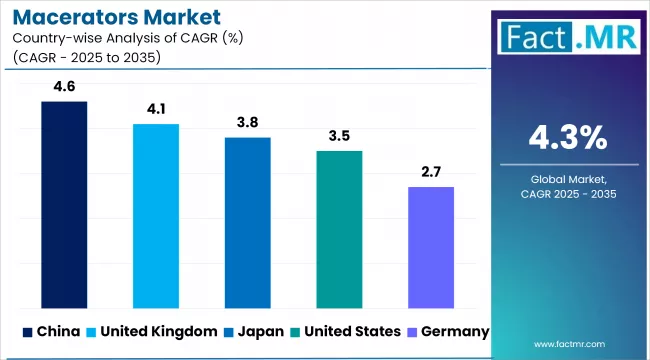
North America represents a significant market for macerators, supported by advanced infrastructure and a strong focus on sanitation and waste management. The region’s adoption of modern plumbing systems and emphasis on convenience are driving demand for maceration solutions in residential and commercial applications.
Europe is another key market, where stringent environmental regulations and a commitment to sustainability are encouraging the use of efficient waste management technologies. The region’s well-established construction sector and focus on upgrading existing infrastructure are contributing to market growth.
Asia-Pacific is emerging as a rapidly growing market for macerators, fueled by urbanization, population growth, and increasing investments in infrastructure development. The need for efficient sanitation systems in both urban and rural areas is driving the adoption of maceration technologies across the region.
Key Trends & Developments:
One of the major trends in the macerators market is the development of compact and space-saving designs. These systems are particularly beneficial for residential applications, where space constraints are common. Compact macerators allow for flexible installation options, making them ideal for retrofitting and renovation projects.
Another significant trend is the integration of advanced features such as automatic operation and smart controls. These innovations enhance user convenience and improve system efficiency by optimizing performance based on usage patterns. Noise reduction technology is also gaining attention, as consumers increasingly prefer quieter appliances for residential settings.
Energy efficiency is becoming a critical focus area, with manufacturers striving to develop systems that consume less power while maintaining high performance. This aligns with global efforts to reduce energy consumption and promote sustainable living.
Durability and reliability are also key considerations, especially for industrial and commercial applications where macerators are subjected to heavy usage. The use of high-quality materials and robust engineering ensures long-term performance and reduces maintenance requirements.
Applications & End-Use Outlook:
Macerators are widely used across various sectors, including residential, commercial, and industrial applications. In residential settings, these systems are commonly used in bathrooms and kitchens to facilitate waste disposal, especially in locations where traditional plumbing systems are challenging to install.
In commercial environments such as hotels, restaurants, and office buildings, macerators play a vital role in maintaining efficient waste management and preventing plumbing issues. Their ability to handle large volumes of waste makes them indispensable in high-traffic areas.
The industrial sector also relies on macerators for processing waste in facilities such as manufacturing plants, wastewater treatment plants, and food processing units. These systems help streamline operations by ensuring efficient waste handling and reducing the risk of system blockages.
Healthcare facilities represent another important application area, where hygiene and sanitation are of utmost importance. Macerators are used to manage medical waste and ensure compliance with strict health and safety standards.
Conclusion:
The macerators market is poised for steady growth as the demand for efficient and reliable waste management solutions continues to rise. With ongoing advancements in technology and increasing awareness of sanitation and sustainability, macerators are becoming an integral part of modern infrastructure.
As urban development accelerates and the need for effective waste management becomes more critical, the adoption of innovative maceration systems is expected to expand across various sectors. Organizations and consumers alike can benefit from these solutions by improving efficiency, reducing maintenance challenges, and contributing to a cleaner and more sustainable environment.
Browse Full Report – https://www.factmr.com/report/macerators-market