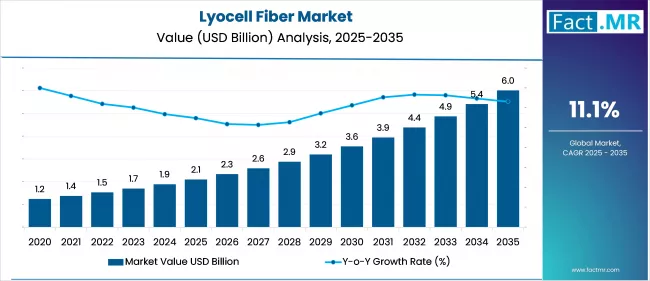
The global lyocell fiber market is undergoing a structural transformation, with its valuation projected to exceed $1.12 billion by the end of 2026. Driven by a compound annual growth rate (CAGR) of approximately 8.6%, the industry is shifting from a niche “”eco-alternative”” to a primary raw material for the global textile, hygiene, and automotive sectors.
As of early 2026, the demand for lyocell—a regenerated cellulose fiber—is being propelled by a convergence of stringent environmental regulations, particularly in the European Union, and a decisive shift in consumer preference toward biodegradable materials. Unlike traditional viscose, lyocell production utilizes a closed-loop solvent extraction process that recovers more than 99% of non-toxic solvents, positioning it as a cornerstone of the burgeoning circular economy.
Strategic Market Context: The Shift to Sustainable Feedstock
The market’s momentum is rooted in the textile industry’s urgent need to decouple growth from petroleum-based synthetics.
- Who is leading: Market dominance remains concentrated among key innovators, including Lenzing AG (Tencel), Sateri, and Aditya Birla Group (Birla Cellulose). These entities are aggressively expanding capacity, with Lenzing recently targeting production milestones of over 100,000 tons per year to meet surging demand.
- What is driving growth: Beyond apparel, lyocell is seeing rapid adoption in the Nonwovens and Medical segments. Its superior moisture management (absorbing 50% more than cotton) and hypoallergenic properties have made it the preferred substrate for surgical dressings, baby wipes, and high-end hygiene products.
- Where the expansion is happening: While North America and Europe remain the largest consumers of high-end lyocell textiles, the Asia-Pacific region—specifically China and India—is the fastest-growing production hub, fueled by rising disposable income and a localized supply chain for dissolving wood pulp.
Data-Backed Insights and Performance Advantages
Industry analysts point to lyocell’s physical performance as a critical factor in its market penetration. Recent comparative studies indicate that lyocell maintains 85% of its strength when wet, significantly outperforming other cellulosic fibers like viscose. This durability, combined with a “”silky”” tactile profile, has allowed it to command a price premium in the luxury and performance activewear markets.
However, the industry faces headwinds. High capital expenditure requirements for closed-loop facilities and the volatility of certified sustainable wood pulp prices remain significant barriers to entry. To counter these costs, manufacturers are investing in Textile-to-Textile recycling, integrating post-consumer cotton waste into the lyocell production process to reduce reliance on virgin pulp.
2026-2030 Outlook: From Fashion to Industrial Applications
The next 36 months are expected to redefine lyocell’s utility.
- Industrial Integration: Emerging applications in automotive filtration and lightweight interior composites are projected to grow at a CAGR of 11% through 2030.
- Circular Mandates: With the EU’s “”Strategy for Sustainable and Circular Textiles”” mandating higher recycled content by 2030, lyocell’s role as a recyclable carrier fiber is becoming essential for brand compliance.
- Technological Refinement: Innovations in “”Micro-Lyocell”” (fibers under 1 denier) are opening doors to the high-performance filtration and technical textile markets.
“”The lyocell market is no longer just about sustainability; it is about performance security,”” says a lead industry analyst. “”As brands face increasing pressure to eliminate microplastic shedding from polyesters, lyocell offers the only scalable, high-tenacity biodegradable alternative.””
Browse Full Report : https://www.factmr.com/report/lyocell-fiber-market
About the Lyocell Fiber Industry
The Lyocell Fiber market comprises manufacturers, researchers, and textile processors dedicated to the production of cellulose-based fibers derived from sustainably managed forests. Utilizing the NMMO solvent spinning process, the industry represents the leading edge of sustainable chemical engineering in the global materials sector.