The Hydraulic Breakers Rental Market is gaining substantial traction as construction, mining, quarrying, and demolition activities expand globally. Hydraulic breakers, also known as hydraulic hammers, are essential attachments used with excavators, skid steers, and backhoes to break concrete, asphalt, rocks, and other hard materials. With infrastructure modernization and urban redevelopment projects accelerating worldwide, demand for flexible and cost-effective equipment rental solutions is on the rise.
Renting hydraulic breakers enables contractors to access high-performance machinery without the financial burden of ownership, making rental services a preferred choice for short-term and specialized projects.
Market Overview
Hydraulic breakers are powerful impact tools designed to deliver repetitive hammering force for breaking tough surfaces. They are widely used in road construction, building demolition, trenching, foundation work, and mining operations. These breakers vary in size and power capacity, allowing users to select equipment based on project scale and material hardness.
The rental market offers contractors access to a broad range of breaker types, including light-duty, medium-duty, and heavy-duty models. Rental providers typically handle maintenance, servicing, and equipment upgrades, reducing downtime and ensuring operational efficiency for clients.
As construction projects become more dynamic and time-sensitive, the rental model provides flexibility to scale equipment usage according to project demands. This approach helps contractors manage costs effectively while maintaining productivity.
Key Growth Drivers
- Infrastructure Development and Urban Redevelopment
Rapid expansion of transportation networks, smart city initiatives, and commercial construction projects are driving demand for hydraulic breakers. Road expansions, bridge repairs, and building renovations require efficient material-breaking solutions, boosting rental adoption. - Cost Optimization and Financial Flexibility
Purchasing hydraulic breakers involves significant capital investment and ongoing maintenance expenses. Rental services allow contractors to avoid long-term ownership costs while gaining access to well-maintained and technologically advanced equipment. - Growing Demolition and Renovation Activities
Aging infrastructure and redevelopment of old buildings are increasing demolition projects. Hydraulic breakers play a critical role in controlled dismantling and concrete removal, supporting market growth. - Technological Advancements
Modern hydraulic breakers feature noise reduction systems, vibration control, improved energy efficiency, and enhanced durability. Rental companies frequently upgrade their fleets, ensuring customers benefit from the latest innovations without purchasing new equipment.
Regional Insights
North America represents a significant market due to strong construction activity, infrastructure investments, and well-established rental service providers. Government spending on public infrastructure projects further supports rental demand.
Europe follows closely, driven by urban renewal initiatives and stringent environmental and safety regulations. The region’s focus on sustainable construction practices encourages adoption of efficient demolition equipment.
The Asia-Pacific region is witnessing rapid growth fueled by industrialization, urban expansion, and large-scale infrastructure development. Increasing construction activity in emerging economies contributes significantly to rental market expansion.
Latin America and the Middle East & Africa are also experiencing steady growth as infrastructure modernization and mining activities gain momentum.
Market Segmentation
The Hydraulic Breakers Rental Market can be segmented based on product type, application, and end-use industry.
By Product Type:
- Light-duty hydraulic breakers
- Medium-duty hydraulic breakers
- Heavy-duty hydraulic breakers
Heavy-duty breakers are widely used in large-scale mining and demolition operations, while light-duty models are suitable for smaller construction tasks.
By Application:
- Construction and infrastructure
- Mining and quarrying
- Demolition
- Road maintenance
- Utility installation
Construction and demolition activities account for a substantial share of market demand due to ongoing urban development projects.
By End-Use Industry:
- Construction companies
- Mining operators
- Municipal authorities
- Industrial contractors
Construction firms remain the primary end users, while mining and quarrying operations represent a significant secondary segment.
Emerging Trends
Equipment Efficiency and Sustainability
Rental providers are investing in energy-efficient and low-noise hydraulic breakers to meet environmental standards and reduce operational impact in urban areas.
Telematics and Digital Monitoring
Integration of telematics systems enables real-time monitoring of equipment performance, fuel consumption, and maintenance needs. This improves asset utilization and minimizes downtime.
Customized Rental Solutions
Flexible rental agreements tailored to project duration and workload requirements are becoming increasingly common, offering greater convenience to contractors.
Focus on Safety Enhancements
Improved shock absorption systems and operator-friendly designs are enhancing workplace safety and reducing fatigue during prolonged operations.
Applications & End-Use Outlook
Hydraulic breaker rentals are essential across multiple sectors. In construction, they are used for foundation removal, trenching, and road repairs. Demolition contractors rely on breakers for dismantling reinforced concrete structures efficiently and safely.
Mining and quarrying operations utilize heavy-duty breakers for rock fragmentation and excavation. Municipal authorities use rented breakers for public infrastructure repairs, pipeline installations, and maintenance of utilities.
Industrial facilities undergoing expansion or renovation also depend on hydraulic breaker rentals for site preparation and structural modifications. The versatility of these tools ensures consistent demand across diverse project types.
Competitive Landscape
The market consists of global equipment rental companies and regional service providers offering specialized solutions. Competitive factors include fleet quality, equipment availability, pricing, maintenance support, and customer service.
Companies are focusing on expanding their rental fleets, incorporating technologically advanced breakers, and enhancing digital booking platforms to improve customer experience. Strategic partnerships and geographic expansion initiatives further strengthen market positioning.
Future Outlook
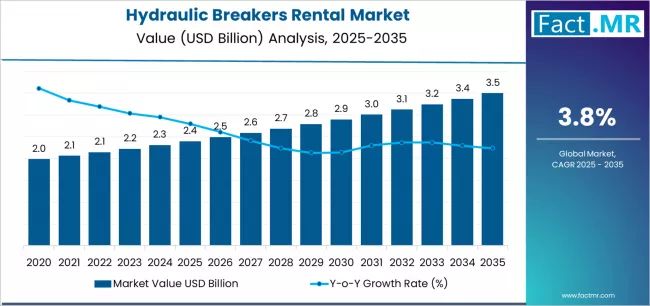
The Hydraulic Breakers Rental Market is poised for continued growth as infrastructure investment, urban redevelopment, and mining activities expand worldwide. Increasing emphasis on operational efficiency, sustainability, and cost management will continue to drive demand for rental solutions.
Technological innovation and digital integration are expected to shape the future of the market. Rental providers that prioritize advanced equipment, reliable service, and flexible rental models are likely to capture significant opportunities in the evolving construction and demolition landscape.
Conclusion
The Hydraulic Breakers Rental Market plays a crucial role in supporting construction, mining, and demolition projects globally. By offering flexible access to high-performance equipment, rental services enable efficient material breaking while minimizing financial and operational risks. As infrastructure modernization accelerates and sustainability becomes a priority, the demand for hydraulic breaker rentals is expected to grow steadily, reinforcing their importance in modern industrial operations.
Browse Full Report – https://www.factmr.com/report/hydraulic-breakers-rental-market