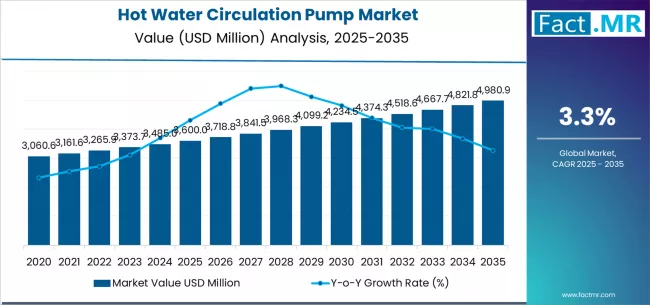
As residential, commercial, and industrial infrastructures continue to modernize, the demand for efficient water management systems is rising steadily. Hot water circulation pumps have become essential components in plumbing systems, ensuring instant access to hot water while minimizing water wastage. These pumps are designed to circulate hot water continuously through pipes, eliminating the delay between turning on a tap and receiving heated water. With growing awareness of water conservation, energy efficiency, and sustainable building practices, the hot water circulation pump market is experiencing notable expansion.
Market Overview
Hot water circulation pumps are mechanical devices installed in plumbing systems to maintain a consistent flow of heated water between water heaters and outlets. By recirculating unused hot water back to the heater, these systems reduce water wastage and improve user convenience. They are commonly used in residential homes, apartment complexes, hotels, hospitals, office buildings, and industrial facilities.
The market encompasses various pump types, including traditional recirculation pumps, demand-controlled pumps, and smart pumps equipped with timers and sensors. These systems can be installed in new constructions or retrofitted into existing plumbing networks.
Growing construction activities, increasing urbanization, and rising demand for energy-efficient appliances are major factors driving market growth. Additionally, the adoption of green building standards and smart home technologies is further accelerating the integration of advanced hot water circulation systems.
Key Market Drivers
Increasing Focus on Water Conservation
Water scarcity concerns in many regions have intensified the need for efficient water usage. Hot water circulation pumps significantly reduce the volume of water wasted while waiting for hot water to reach faucets, making them an attractive solution in both residential and commercial settings.
Energy Efficiency and Sustainability Initiatives
Energy-efficient appliances are gaining popularity as governments and consumers aim to reduce carbon footprints. Modern circulation pumps are designed with energy-saving motors and smart controls, aligning with sustainability goals and green building certifications.
Growth in Residential and Commercial Construction
Rapid urbanization and expanding real estate development projects are boosting the demand for advanced plumbing systems. High-rise buildings, luxury apartments, and commercial complexes increasingly incorporate hot water recirculation systems to enhance occupant comfort.
Advancements in Smart Pump Technologies
The integration of digital timers, motion sensors, and programmable controls allows users to optimize pump operation according to usage patterns. Smart pumps enhance efficiency and reduce operational costs, driving adoption in tech-enabled homes and buildings.
Regional Insights
North America represents a significant share of the hot water circulation pump market due to high awareness of water conservation and widespread adoption of energy-efficient appliances. Residential retrofitting projects and modernization of commercial infrastructure further support market growth.
Europe is another prominent market, driven by stringent energy efficiency regulations and sustainability initiatives. The emphasis on green building standards across countries such as Germany, France, and the UK is encouraging the use of advanced water management systems.
Asia-Pacific is emerging as a rapidly growing region, supported by large-scale urban development and infrastructure expansion. Countries like China, India, Japan, and South Korea are witnessing increased demand for modern plumbing solutions in residential and commercial projects.
Middle East & Africa and Latin America are gradually adopting energy-efficient water systems, particularly in hospitality and large residential developments.
Key Trends & Innovations
Smart and Demand-Controlled Pumps
Demand-based systems operate only when hot water is needed, significantly reducing energy consumption. These pumps are gaining popularity among homeowners seeking cost-effective and eco-friendly solutions.
Integration with Smart Home Ecosystems
Hot water circulation pumps are increasingly compatible with smart home platforms, enabling remote monitoring and control via mobile applications.
Improved Motor Efficiency
Manufacturers are focusing on developing pumps with high-efficiency motors that consume less electricity while maintaining optimal performance.
Compact and Low-Noise Designs
Modern pumps are engineered to operate quietly and occupy minimal space, making them suitable for residential installations.
Retrofitting Solutions
Easy-to-install retrofit kits are gaining traction, allowing homeowners to upgrade existing plumbing systems without major modifications.
Applications & End-Use Outlook
Residential Sector
Single-family homes and multi-unit apartments are primary adopters of hot water circulation pumps. The convenience of instant hot water enhances living standards while reducing water waste.
Commercial Buildings
Hotels, office complexes, hospitals, and educational institutions require consistent hot water supply across multiple outlets. Circulation pumps improve efficiency and user comfort in these facilities.
Industrial Facilities
Certain industries rely on hot water systems for operational processes. Circulation pumps ensure steady water temperature and flow, supporting process efficiency.
Hospitality and Healthcare
In hotels and hospitals, uninterrupted access to hot water is critical. Efficient circulation systems contribute to guest satisfaction and hygiene standards.
Competitive Landscape
The hot water circulation pump market includes global manufacturers, regional suppliers, and specialized plumbing equipment companies. Market participants are focusing on product innovation, energy efficiency improvements, and strategic partnerships to expand their market presence.
Companies are investing in research and development to create smarter, quieter, and more durable pumps. Expanding distribution networks and offering customized solutions for residential and commercial applications are key competitive strategies.
Challenges
Despite strong growth prospects, certain challenges persist. High upfront installation costs can deter adoption, particularly in older buildings requiring significant plumbing modifications. Additionally, lack of awareness in some regions may limit market penetration.
However, the long-term benefits of water savings, energy efficiency, and enhanced convenience often offset initial costs. As consumer awareness increases and regulatory frameworks strengthen, adoption rates are expected to improve.
Future Outlook
The hot water circulation pump market is poised for steady expansion as sustainability and resource conservation remain global priorities. Growing construction activities, coupled with technological advancements, will continue to drive demand.
Smart technologies, energy-efficient designs, and integration with green building initiatives are expected to shape the future of the market. Emerging economies are likely to present significant growth opportunities due to rapid urbanization and infrastructure development.
Conclusion
Hot water circulation pumps play a crucial role in modern plumbing systems by reducing water wastage, improving energy efficiency, and enhancing user comfort. Their adoption aligns with global sustainability goals and evolving building standards.
With continuous innovation, expanding construction activities, and increasing awareness of water conservation, the hot water circulation pump market is set for sustained growth over the coming decade. Businesses and homeowners investing in advanced circulation systems today will benefit from long-term efficiency, cost savings, and environmental advantages.
Browse Full Report – https://www.factmr.com/report/hot-water-circulation-pump-market