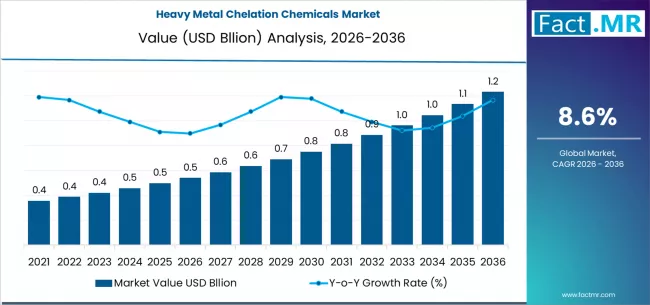
Rising industrialization, urban development, and mining activities have significantly increased the presence of heavy metals in water, soil, and industrial effluents. Contaminants such as lead, mercury, cadmium, and arsenic pose serious risks to human health and ecosystems if left untreated. In this context, heavy metal chelation chemicals play a critical role in binding and removing toxic metals from contaminated environments. According to insights shared by Fact.MR, growing environmental awareness and stricter regulatory frameworks are driving the adoption of chelation chemicals across multiple industries.
Market Overview
Heavy metal chelation chemicals are compounds that form stable complexes with metal ions, preventing their harmful interactions and enabling their removal through filtration or precipitation processes. These chemicals are widely used in wastewater treatment, soil remediation, chemical processing, and pharmaceutical applications. Common chelating agents include aminopolycarboxylates, phosphonates, and biodegradable alternatives designed to improve environmental compatibility.
The market is evolving as industries seek efficient and sustainable solutions for heavy metal management. Manufacturers are focusing on developing chelation chemicals with higher selectivity, improved stability, and lower environmental impact. As highlighted by Fact.MR, advancements in chemical formulation and application technologies are expanding the use of chelation agents beyond traditional industrial settings.
Environmental and Regulatory Landscape
Environmental regulations aimed at controlling heavy metal discharge have become increasingly stringent across regions. Governments and regulatory bodies enforce strict limits on heavy metal concentrations in industrial wastewater, drinking water, and agricultural runoff. These regulations have made the use of effective chelation chemicals essential for compliance and environmental protection.
In addition to regulatory enforcement, public health concerns related to heavy metal exposure are influencing policy decisions. Chelation chemicals help industries reduce toxic metal concentrations before discharge or reuse, minimizing environmental damage and health risks. Fact.MR notes that regulatory compliance remains one of the strongest drivers for market growth, particularly in industries with high metal contamination risks.
Regional Insights
The adoption of heavy metal chelation chemicals varies by region depending on industrial activity, environmental awareness, and regulatory enforcement. Industrialized regions with established manufacturing, mining, and chemical processing sectors show strong demand for chelation solutions. These regions focus on upgrading treatment facilities to meet evolving environmental standards.
Emerging economies are also experiencing increased demand as industrial expansion leads to higher levels of metal contamination. Governments in these regions are investing in wastewater treatment infrastructure and environmental remediation projects, creating opportunities for chelation chemical suppliers. International environmental agreements and cross-border trade regulations further support market development.
Key Trends and Market Dynamics
One key trend shaping the market is the shift toward environmentally friendly and biodegradable chelation chemicals. Traditional chelating agents, while effective, may persist in the environment. As a result, manufacturers are developing greener alternatives that maintain performance while reducing ecological impact.
Another notable trend is the growing integration of chelation chemicals into advanced treatment systems, including membrane filtration and ion-exchange technologies. These integrated solutions improve efficiency and reduce operational costs. Automation and digital monitoring are also gaining traction, enabling precise dosing and performance optimization.
Collaboration between chemical manufacturers, environmental service providers, and research institutions is accelerating innovation. Fact.MR highlights that such partnerships are essential for addressing complex contamination challenges and meeting evolving regulatory requirements.
Applications and End-Use Outlook
Heavy metal chelation chemicals are used across a wide range of applications. In industrial wastewater treatment, they help remove toxic metals before discharge or recycling. Mining and metal processing industries rely on chelation agents to manage effluents and recover valuable metals.
In agriculture, chelation chemicals are used to manage soil contamination and improve micronutrient availability. The pharmaceutical and healthcare sectors utilize chelation compounds for detoxification and diagnostic applications. Municipal water treatment facilities also employ chelation solutions to ensure safe drinking water supplies.
The versatility of chelation chemicals allows them to be tailored for specific metals and application conditions, making them indispensable across multiple end-use industries.
Challenges and Growth Opportunities
Despite strong demand, the market faces challenges related to cost, environmental persistence of certain chelating agents, and the complexity of treating mixed-metal contamination. Proper handling and disposal of metal-chelate complexes are critical to avoid secondary pollution.
However, these challenges also create opportunities for innovation. Development of biodegradable, metal-specific chelation chemicals and improved recovery techniques offers significant growth potential. Expanding environmental awareness and government investment in pollution control infrastructure further support market expansion. According to Fact.MR, ongoing research and sustainable product development will continue to shape the competitive landscape.
Conclusion
The heavy metal chelation chemicals market plays a vital role in addressing environmental pollution and ensuring industrial compliance with safety standards. Driven by regulatory pressure, public health concerns, and technological advancements, the market is steadily advancing toward more efficient and sustainable solutions. Insights from Fact.MR suggest that innovation, collaboration, and environmentally responsible product development will be key to long-term growth. For industries and municipalities alike, heavy metal chelation chemicals remain an essential component of effective pollution management and environmental protection strategies.
Browse Full Report – https://www.factmr.com/report/heavy-metal-chelation-chemicals-market