The global winding machines industry is advancing strongly into the next decade, driven by key industrial megatrends such as automation, electrification of manufacturing, and digital integration. As essential capital equipment for sectors including textiles, electrical & electronics, automotive, aerospace, and healthcare, winding machines play a central role in efficiently winding materials such as wires, yarns, and filaments on spools or coils.
Market Size & Growth Projections
The global winding machines market is valued at approximately USD 4.33 billion in 2025 and is projected to nearly double to USD 8.84 billion by 2035, expanding at a compound annual growth rate (CAGR) of 7.4% through the forecast period.
This healthy growth profile reflects expanding demand across automated manufacturing environments, ongoing electrification trends, rising adoption of Industry 4.0 tools, and broader global industrial modernization. Regional variations in growth rates underscore diverse adoption patterns, with high-growth markets in Asia and robust industrial automation uptake in North America and Europe.
Primary Demand Drivers
1. Automation & Efficiency Imperatives
Across the global manufacturing landscape, automation is emerging as the dominant theme shaping technology adoption. Nearly 74% of industry stakeholders globally identify automation and efficiency as critical investment priorities for winding machine technologies. This translates into strong demand for semi-automatic and fully automatic winding systems that reduce labor intensity, increase throughput, and maintain consistent quality.
Labor shortages in developed economies such as the USA and the drive to offset rising labor costs further accelerate automation adoption. Concurrently, rising quality and precision expectations in sectors like electric vehicles (EVs), aerospace, and medical devices are catalyzing transitions from traditional manual systems to integrated automatic solutions.
2. Electrification & EV Manufacturing
The surge in production of electric motors, transformers, battery packs, and related coil-based components for EVs and renewable infrastructure is positioning winding machines as essential upstream production assets. The electrification of industrial machinery and mobility has a multiplier effect: as EV and grid infrastructure expands, so does the requirement for precision winding equipment capable of handling complex components and multiple materials with high consistency.
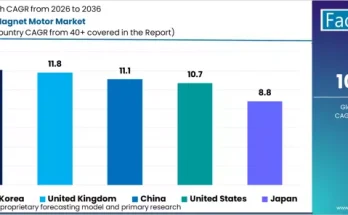
This trend underpins strong regional demand in manufacturing hubs such as China, South Korea, and Germany, where investments in EV manufacturing capacity and clean energy infrastructure remain priorities. In China, the winding machine industry is projected to lead global expansion with the highest CAGR (approx. 8.3%) through 2035.
3. Digital Integration & Predictive Technologies
Industry 4.0 adoption—including IoT connectivity, predictive maintenance, and AI-driven control systems—is reshaping the competitive landscape. Real-time monitoring and diagnostics improve uptime and reduce maintenance costs, while advanced control systems enhance precision and reduce waste. A significant proportion of manufacturers, especially in North America and Western Europe, are actively embedding digital capabilities into modern winding solutions.
Segmentation Insights
By Machine Operation
-
Automatic winding machines are projected to be the fastest-growing segment, with a CAGR of ~7.9% over the forecast period. These systems are increasingly preferred in high-speed production lines and smart manufacturing settings due to reduced labor requirements and improved production reliability.
By Winding Type
-
The horizontal winding segment is expected to remain dominant due to its suitability for heavy-duty, industrial applications such as large coils for power generation, transformers, and aerospace.
By Spindle Counts & Speed
-
Machines with fewer than 2 spindles will sustain strong niche demand in small-batch and specialized manufacturing environments.
-
Mid-range spindle speed machines (2500–5000 RPM) are projected to enjoy broad adoption, particularly in sectors balancing production volume with precision requirements.
End-Use Industry Trends
Textiles
The textile sector is predicted to be among the most profitable end-use industries for winding machines, with an approximate CAGR of ~8.1%. Innovations in smart fabrics, technical textiles, and integration of electronics in wearable systems are stimulating demand for high-speed and high-efficiency winding technologies.
Electrical & Electronics
Driven by global infrastructure upgrades, renewable energy projects, and expansion in consumer electronics, winding machines tailored for coil, wire, and cable production continue to experience robust demand.
Automotive & EVs
Precision winding machines for EV motor stators, battery modules, and related components are becoming strategic production investments, supporting growth in automotive manufacturing ecosystems.
Geographic Dynamics
-
North America: Automation in manufacturing remains a key growth lever, supported by labor cost pressures and reshoring initiatives.
-
Europe: Sustainability policies and digital manufacturing standards drive investments in energy-efficient and connected systems.
-
Asia-Pacific: A leading growth region benefiting from strong domestic electronics, EV, and industrial automation sectors. China, in particular, is forecast to achieve one of the highest regional growth rates.
Competitive Landscape & Strategic Moves
The winding machines market remains fragmented, but is gradually consolidating through strategic partnerships, technology collaborations, and acquisitions. Leading players focus on technological differentiation, including advanced automation, IoT integration, and after-sales digital services.
Examples of strategic activity include:
-
Acquisition of specialized winding equipment firms by global industrial players to expand automation portfolios.
-
Technology collaborations to develop intelligent tension control systems and predictive diagnostic tools.
Key Strategic Imperatives for Stakeholders
-
Accelerate Automation-Ready Product R&D
To meet rising demand for autonomous and high-precision production systems. -
Develop Smart & Connected Machine Capabilities
Integrate IoT, AI, and predictive maintenance into machine portfolios to enhance value and differentiation. -
Strengthen Regional Partnerships & Supply Chains
Particularly for critical components like spindles and control electronics, to mitigate supply disruptions and localize production footprints.
Risks & Challenges to Monitor
-
Supply chain volatility for key components may deter rapid automation roll-outs.
-
Delayed regulatory approvals and compliance requirements could slow adoption in regulated sectors such as healthcare and defense.
-
Cost sensitivity in emerging markets may limit the pace of transition to high-end automated systems.
Browse Full Report : https://www.factmr.com/report/2634/winding-machines-market
Outlook Summary
By 2036, the global winding machines industry is poised for robust expansion, underpinned by industrial automation, digital integration, and transformative demand from electrification and advanced manufacturing sectors. Success for stakeholders will depend on strategic R&D investment, flexible automation offerings, and resilient supply networks that align with global manufacturing evolution.