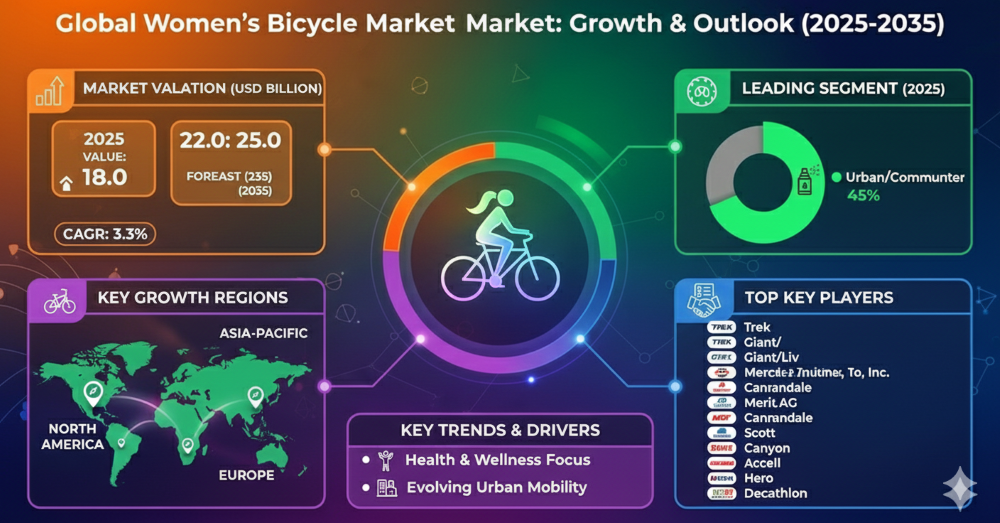
Bicycles are no longer just a mode of transport or recreational gear — they have become powerful tools for health, independence, sustainability, and lifestyle expression. Among all bicycle categories, women-specific bicycles have emerged as a distinct and rapidly evolving segment, driven by rising female participation in cycling activities around the world. As cycling gains traction not only as a fitness activity but also as an eco-friendly urban mobility solution, the women’s bicycle market is attracting significant attention from manufacturers, retailers, and innovators in the cycling ecosystem.
Why Women’s Bicycles Are Gaining Momentum
Today’s women seek products tailored specifically to their needs — bicycles included. This shift arises from several social and lifestyle trends. More women are pursuing active lifestyles, prioritizing fitness and wellness, and embracing cycling as a practical way to commute, explore the outdoors, or simply enjoy a hobby. Cycling offers an effective combination of cardiovascular exercise, mental health benefits, and low-impact movement, making it especially appealing to health-conscious female consumers.
Additionally, urban mobility trends are reshaping how women think about daily travel. Congested roads, rising fuel costs, and growing environmental awareness are prompting women to explore cycling as a sustainable alternative to cars and public transit. A bicycle can be not just a cost-efficient transport choice, but also a statement of personal and environmental values.
Understanding the Market’s Structure
The women’s bicycle market isn’t monolithic — it encompasses a range of bicycle types and distribution channels that reflect diverse consumer needs. Urban and commuter bicycles are especially popular due to their practicality and comfort, serving women who use bicycles for daily travel, errands, and casual city rides. Meanwhile, mountain and road bicycles attract women cyclists who pursue adventure, fitness challenges, or long-distance riding.
The market also spans both conventional bicycles and e-bikes. E-bikes, which provide pedal assistance, are increasingly attractive to women who want to cycle longer distances, tackle hills effortlessly, or use a bike as a replacement for a motorized vehicle. With technological advances, e-bikes tailored to women’s ergonomic needs — such as lighter frames and optimized seating — are gaining prominence.
Distribution channels matter too. Specialty retail stores — with trained staff and fitting services that help women find the right match — play a vital role in customer experience. Online channels are rapidly growing, offering convenience, a wider selection, and an easier comparison shopping experience. Mass retail continues to serve as an entry point for budget-conscious buyers and casual cyclists.
Key Growth Drivers
Several factors are powering the growth of the women’s bicycle market:
Health & Fitness Awareness: Rising awareness about health has encouraged more women to adopt cycling as part of their daily routines. Beyond weight management and cardiovascular health, cycling promotes mental wellness and stress reduction — crucial benefits in fast-paced modern life.
Urban Mobility Trends: As more cities invest in bike lanes, cycle-friendly infrastructure, and mobility programs, women feel more confident and supported in choosing cycling over other transportation options. This shift is especially significant in places where traffic congestion and pollution are pressing concerns.
Women’s Empowerment Movements: Cultural and social movements that promote gender equality and women’s empowerment also influence cycling participation. When women see cycling embraced as a symbol of freedom, confidence, and capability, they are more likely to engage with the sport and lifestyle on a deeper level.
Ergonomic & Safety Innovations: Bicycles designed with women in mind — in terms of frame geometry, seat design, and handlebar positioning — offer better comfort and performance. Safety features, lightweight materials, and technological add-ons like GPS trackers or smart lighting systems further increase appeal and reduce barriers to adoption.
Challenges and Barriers
While opportunities abound, the women’s bicycle market also faces challenges. Safety concerns remain one of the biggest deterrents to regular cycling among women, particularly in cities with limited cycling infrastructure or heavy traffic conditions. This highlights the need for improved urban planning and better cycling networks to encourage broader participation.
Cultural and societal norms can also influence cycling participation. In some regions, traditional views about women’s roles or mobility may discourage cycling, even when interest exists. Furthermore, economic barriers — such as the higher cost of premium women-specific bicycles — can restrict access for some consumers.
Regional Dynamics
The women’s bicycle market is truly global, but growth patterns vary by region. North America and Europe feature strong cycling cultures and well-developed infrastructure, which support higher adoption rates and broader product offerings. In emerging markets across Asia-Pacific, rising urbanization and expanding women’s empowerment initiatives are creating new opportunities for manufacturers and retailers to engage with a growing base of female cyclists.
Countries with established cycling routes and supportive policies demonstrate how infrastructure can accelerate adoption, while developing regions are witnessing increasing interest as more women embrace active lifestyles and sustainable transportation. Each region faces unique hurdles, from infrastructure gaps to cultural barriers, but the overall trajectory points toward expansion and diversification.
Looking Ahead
The future of the women’s bicycle market is bright. As urban planners, policymakers, manufacturers, and advocacy groups work together to promote safe, comfortable, and accessible cycling experiences, more women will feel empowered to ride. Innovations in design, technology, and distribution will continue to shape how women engage with cycling, making bicycles not just vehicles, but instruments of freedom, health, and personal expression.
Browse Full Report – https://www.factmr.com/report/203/womens-bicycle-market