The enzymes market is gaining strong momentum as industries increasingly shift toward sustainable, efficient, and eco-friendly processes. Enzymes, being natural biocatalysts, play a critical role in accelerating chemical reactions without being consumed in the process. Their growing application across diverse sectors such as food processing, pharmaceuticals, biofuels, and detergents highlights their importance in modern industrial operations. As the global focus on green chemistry and biotechnology intensifies, the demand for enzymes continues to rise steadily.
Market Overview:
The enzymes market revolves around the production and application of biological catalysts derived from microorganisms, plants, and animals. These enzymes are widely used to enhance productivity, improve product quality, and reduce environmental impact. Unlike traditional chemical catalysts, enzymes operate under milder conditions, which helps industries lower energy consumption and minimize waste generation.
The market is broadly categorized into industrial enzymes and specialty enzymes. Industrial enzymes dominate the landscape due to their extensive use in sectors such as food & beverages, detergents, textiles, and bioenergy. Specialty enzymes, on the other hand, are increasingly utilized in pharmaceuticals, diagnostics, and research applications, contributing to advancements in healthcare and life sciences.
Regional Insights:
North America holds a prominent position in the enzymes market, supported by advanced biotechnology infrastructure and strong investment in research and development. The region benefits from well-established industries that rely heavily on enzyme-based solutions, particularly in food processing and pharmaceuticals.
Europe follows closely, driven by strict environmental regulations and a strong emphasis on sustainable manufacturing practices. The region’s commitment to reducing carbon emissions and adopting bio-based solutions has significantly boosted enzyme adoption across multiple industries.
Asia-Pacific is emerging as a high-growth region, fueled by rapid industrialization, expanding food and beverage industries, and increasing awareness about sustainable technologies. Countries in this region are investing in biotechnology and enzyme production to meet the rising demand from domestic and international markets.
Key Trends & Forecast:
The enzymes market is evolving rapidly, shaped by technological advancements and shifting industry preferences. One of the key trends is the growing adoption of enzyme engineering and protein modification techniques. These innovations enable the development of highly efficient and specific enzymes tailored for particular industrial applications.
Another significant trend is the increasing use of enzymes in the production of biofuels. As the world seeks alternatives to fossil fuels, enzymes are playing a crucial role in converting biomass into renewable energy sources, thereby supporting the global transition toward cleaner energy.
Sustainability remains a central theme in the market. Industries are actively replacing chemical processes with enzyme-based solutions to reduce environmental impact and comply with regulatory standards. Additionally, the rise of clean-label products in the food and beverage sector has driven the demand for natural and minimally processed ingredients, further boosting enzyme usage.
Digitalization and biotechnology integration are also influencing market growth. Advanced data analytics and bioprocessing technologies are enhancing enzyme production efficiency and enabling manufacturers to scale operations effectively.
Applications & End-Use Outlook:
The versatility of enzymes allows them to be used across a wide range of industries. In the food and beverage sector, enzymes are essential for processes such as fermentation, baking, dairy processing, and juice clarification. They help improve texture, flavor, and shelf life while maintaining product consistency.
In the detergent industry, enzymes are used to break down stains and enhance cleaning efficiency, even at lower temperatures. This not only improves product performance but also contributes to energy savings and environmental sustainability.
The pharmaceutical and healthcare sectors rely on enzymes for drug formulation, disease diagnosis, and therapeutic applications. Enzymes are also used in the development of innovative treatments, including enzyme replacement therapies.
The biofuel industry represents another significant application area, where enzymes facilitate the conversion of raw materials like agricultural waste into bioethanol and biodiesel. This supports the growing demand for renewable energy sources and reduces dependence on fossil fuels.
Other industries, such as textiles, paper & pulp, and animal feed, are also integrating enzymes into their processes to enhance efficiency, reduce costs, and minimize environmental impact.
Conclusion:
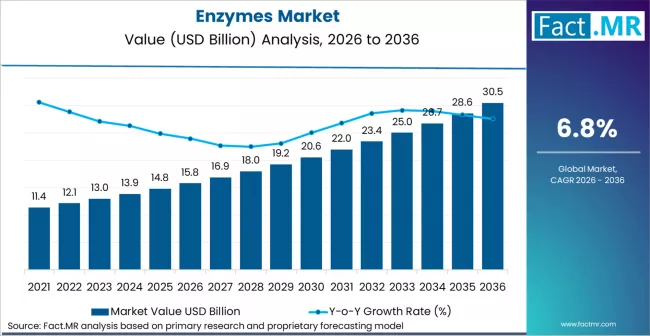
The enzymes market is poised for substantial growth as industries continue to embrace sustainable and efficient solutions. With advancements in biotechnology and increasing awareness about environmental conservation, enzymes are becoming indispensable across multiple sectors. Their ability to improve process efficiency while reducing ecological footprint makes them a key component of future industrial innovation.
As demand continues to expand, access to comprehensive market insights and research can help businesses understand emerging trends, identify growth opportunities, and implement effective strategies. The enzymes market not only reflects the progress of modern biotechnology but also underscores the global commitment to a more sustainable and responsible future.
Browse Full Report – https://www.factmr.com/report/enzymes-market