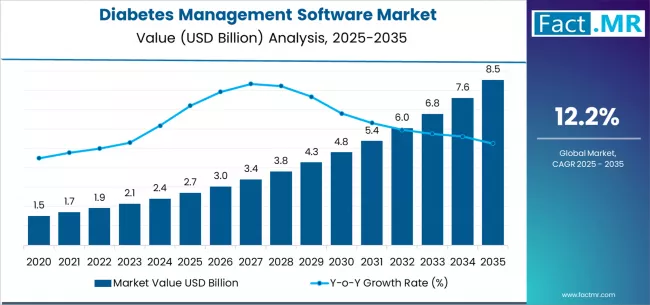
The diabetes management software market is emerging as a critical pillar in the global shift toward digital healthcare and value-based care models. As diabetes continues to pose long-term clinical, economic, and lifestyle challenges, healthcare systems are increasingly relying on software-driven solutions to support continuous monitoring, treatment optimization, and patient engagement. Diabetes management software enables individuals and healthcare providers to track glucose levels, manage medications, analyze trends, and make informed clinical decisions in real time.
The growing adoption of connected medical devices, mobile health applications, and cloud-based healthcare platforms is accelerating the integration of digital tools into diabetes care. These software solutions play a vital role in improving disease outcomes, reducing complications, and empowering patients to take an active role in managing their condition.
Market Overview
Diabetes management software includes platforms designed to support glucose monitoring, insulin dosing, lifestyle tracking, data analytics, and clinical decision support. These solutions are commonly integrated with devices such as continuous glucose monitors, insulin pumps, smart pens, and wearable sensors. Software platforms serve both patients and healthcare professionals by enabling seamless data sharing, automated alerts, and personalized care pathways.
The market spans standalone mobile applications, enterprise-level clinical software, and integrated digital ecosystems offered by medical device manufacturers, health IT companies, and digital health startups. Hospitals, clinics, homecare settings, and individual patients are key end users, reflecting the growing importance of remote and self-managed care in chronic disease management.
Regional Insights
North America remains at the forefront of diabetes management software adoption, driven by advanced digital health infrastructure, high penetration of connected devices, and strong emphasis on remote patient monitoring. Widespread acceptance of telehealth and reimbursement support for digital care solutions further strengthen regional growth.
Europe follows closely, supported by increasing focus on preventive care, chronic disease management programs, and interoperability standards across healthcare systems. Regulatory initiatives promoting data protection and patient-centric digital health solutions are shaping software development and adoption across the region.
Asia-Pacific is emerging as a high-growth region, fueled by rising diabetes prevalence, expanding smartphone usage, and growing investments in digital health innovation. Governments and healthcare providers are increasingly exploring software-based solutions to improve access to diabetes care in both urban and rural populations.
Other regions, including Latin America and the Middle East & Africa, are gradually adopting diabetes management software as healthcare digitization efforts expand and awareness of chronic disease management improves.
Key Trends and Market Outlook
One of the most prominent trends in the diabetes management software market is the integration of artificial intelligence and data analytics. Advanced algorithms are being used to identify glucose patterns, predict risks, and provide personalized treatment recommendations, enhancing clinical decision-making and patient outcomes.
Interoperability and ecosystem integration are also gaining importance. Software platforms are increasingly designed to connect with multiple devices, electronic health records, and telemedicine systems, enabling a more holistic and coordinated approach to diabetes care.
Patient-centric design is another key trend shaping the market. User-friendly interfaces, real-time feedback, and behavioral coaching features are improving patient adherence and engagement. Gamification and lifestyle tracking tools are being incorporated to support long-term disease management.
Cybersecurity and data privacy are becoming central considerations as software solutions handle sensitive health data. Developers are prioritizing secure cloud architectures and compliance with data protection regulations to build trust among users and healthcare providers.
Applications and End-Use Outlook
Hospitals and clinics use diabetes management software to streamline workflows, monitor patient progress, and support evidence-based treatment decisions. These platforms help clinicians manage large patient populations more efficiently while maintaining personalized care.
Homecare and remote monitoring applications represent a rapidly expanding use case. Software solutions enable patients to manage diabetes outside traditional clinical settings, reducing hospital visits and supporting continuous care. This approach is particularly valuable for elderly patients and those with limited access to healthcare facilities.
Payers and healthcare systems are also leveraging diabetes management software to improve population health management, reduce long-term complications, and control healthcare costs. Data-driven insights support preventive interventions and outcome-based care models.
Pharmaceutical and medical device companies increasingly integrate software into their product offerings, creating comprehensive digital therapeutics and connected care solutions that extend beyond traditional treatment approaches.
Challenges and Constraints
Despite strong growth potential, the diabetes management software market faces several challenges. Data interoperability issues can limit seamless integration across devices and healthcare systems. Variations in regulatory requirements across regions may also slow market entry for software providers.
Patient adoption barriers, such as digital literacy gaps and concerns over data privacy, can affect usage rates. Additionally, clinicians may face workflow disruptions or training requirements when adopting new digital tools.
Reimbursement uncertainty and lack of standardized evaluation frameworks for digital health solutions may further impact adoption, particularly in cost-sensitive healthcare environments.
Conclusion
The diabetes management software market is transforming the way chronic disease care is delivered by enabling continuous monitoring, personalized treatment, and data-driven decision-making. As healthcare systems prioritize digital transformation and patient-centered care, software solutions will play an increasingly important role in improving diabetes outcomes and quality of life.
Ongoing innovation in analytics, connectivity, and user experience, supported by favorable policy environments and growing digital health adoption, will continue to shape market evolution. Access to comprehensive market research and strategic insights can help stakeholders navigate challenges, identify opportunities, and build sustainable solutions in the evolving diabetes management software landscape.
Browse Full Report – https://www.factmr.com/report/431/diabetes-management-software-market