Rapid urban redevelopment, infrastructure upgrades, and industrial restructuring are significantly driving demand in the Demolition Equipment Rental Market. As cities modernize and aging structures are replaced with sustainable developments, contractors increasingly rely on rental services to access advanced demolition machinery without heavy capital investment. The rental model provides flexibility, cost efficiency, and access to technologically advanced equipment, making it an attractive choice for construction and demolition companies worldwide.
Market Overview
The demolition equipment rental market revolves around leasing specialized machinery used to dismantle buildings, bridges, roads, and industrial structures. Equipment commonly rented includes excavators with demolition attachments, hydraulic breakers, crushers, shears, wrecking balls, and high-reach demolition machines.
Instead of purchasing expensive heavy equipment that may only be required for specific projects, contractors prefer rental solutions that reduce ownership costs, maintenance responsibilities, and storage challenges. Rental providers also offer technical support, operator training, and maintenance services, ensuring smooth project execution.
Growing focus on sustainability is another major factor shaping the market. Modern demolition projects emphasize material recovery, recycling, and controlled dismantling techniques. Rental companies are increasingly offering advanced, fuel-efficient, and low-emission machinery that meets environmental regulations while maintaining operational efficiency.
Key Growth Drivers
- Urbanization and Infrastructure Redevelopment
Ongoing infrastructure modernization and urban renewal projects are creating sustained demand for demolition services. Aging commercial complexes, residential buildings, and industrial facilities are being replaced with smart, energy-efficient structures, driving the need for high-performance demolition equipment. - Cost Efficiency and Financial Flexibility
Purchasing demolition machinery requires significant upfront investment and long-term maintenance expenses. Renting equipment allows contractors to manage project budgets more effectively, especially for short-term or specialized tasks. - Technological Advancements
Modern demolition equipment integrates remote-control operation, improved hydraulic systems, telematics, and enhanced safety features. Rental companies frequently upgrade their fleets, enabling contractors to access cutting-edge technology without direct ownership. - Strict Safety and Environmental Regulations
Demolition activities are subject to strict safety standards and environmental compliance rules. Rental providers ensure their equipment adheres to updated regulatory requirements, reducing liability risks for contractors.
Regional Insights
North America remains a dominant market due to large-scale redevelopment projects and strong infrastructure investment. The presence of established rental companies and strict safety regulations further supports market growth.
Europe follows closely, driven by sustainable construction initiatives and stringent environmental standards. Renovation of historic buildings and redevelopment of urban spaces contribute significantly to equipment rental demand.
The Asia-Pacific region is emerging as a high-growth market. Rapid urbanization, industrial expansion, and government-backed infrastructure projects are fueling demand for demolition services and rental machinery. Increasing awareness about cost optimization is also encouraging contractors to adopt rental models.
Meanwhile, regions such as Latin America and the Middle East are witnessing steady growth due to urban expansion and commercial infrastructure development.
Market Segmentation
The demolition equipment rental market can be segmented based on equipment type, end-use industry, and application.
By Equipment Type:
- Excavators with demolition attachments
- Hydraulic breakers
- Concrete crushers
- Shears and pulverizers
- High-reach demolition machines
Excavators represent a significant share due to their versatility and compatibility with multiple attachments, making them suitable for various demolition tasks.
By End-Use Industry:
- Construction and infrastructure
- Industrial facilities
- Commercial real estate
- Municipal projects
The construction and infrastructure segment accounts for a substantial portion of demand, driven by urban redevelopment and infrastructure replacement initiatives.
Emerging Trends
Digital Fleet Management
Rental providers are integrating telematics and digital monitoring systems to track equipment usage, fuel consumption, and maintenance needs. This enhances operational transparency and minimizes downtime.
Sustainable Demolition Practices
Growing emphasis on recycling construction waste and reducing carbon footprints is encouraging the use of energy-efficient and electric-powered demolition equipment.
Specialized Equipment Demand
As projects become more complex, demand for specialized demolition machinery such as high-reach excavators and robotic demolition machines is increasing.
Flexible Rental Contracts
Rental companies are offering customized contracts, including short-term, long-term, and project-based leasing options to meet diverse contractor requirements.
Applications & End-Use Outlook
Demolition equipment rentals are widely used in residential redevelopment, commercial building dismantling, road and bridge removal, industrial plant decommissioning, and disaster recovery operations.
The commercial sector is increasingly adopting rental services for redevelopment projects in urban centers. Industrial facilities undergoing modernization or relocation also rely heavily on rental machinery to ensure efficient and safe dismantling.
Municipal authorities use rented demolition equipment for public infrastructure upgrades, road expansions, and utility replacement projects. The rental model ensures timely access to machinery without burdening public budgets with ownership costs.
Competitive Landscape
The market features a mix of global rental companies and regional service providers. Leading players focus on fleet expansion, technological upgrades, and strategic partnerships to strengthen their market position. Companies are also investing in training programs and safety certifications to enhance customer trust and service reliability.
Mergers, acquisitions, and geographic expansion strategies are common as rental providers aim to increase their presence in high-growth regions. Additionally, digital platforms for equipment booking and real-time tracking are enhancing customer experience and operational efficiency.
Future Outlook
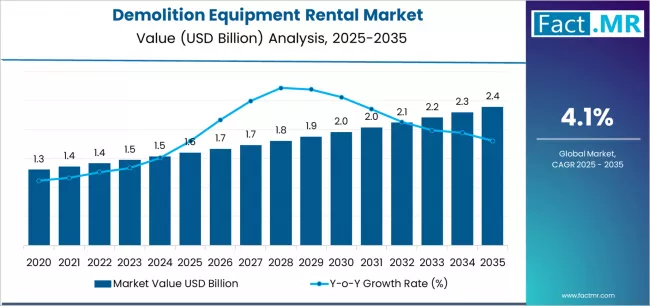
The Demolition Equipment Rental Market is expected to witness sustained growth over the coming decade. Urban redevelopment, smart city initiatives, and infrastructure modernization will remain primary demand drivers. Increasing focus on sustainability, cost optimization, and technological innovation will further shape market dynamics.
As construction projects become more specialized and environmentally regulated, rental services will continue to gain prominence. Companies that invest in advanced equipment, digital capabilities, and customer-centric service models are likely to capture significant opportunities in this evolving landscape.
Conclusion
The Demolition Equipment Rental Market plays a crucial role in supporting modern construction and redevelopment projects. By offering cost-effective access to advanced machinery, rental providers enable safe, efficient, and environmentally responsible demolition practices. As urban transformation accelerates globally, the market is positioned to expand steadily, driven by innovation, regulatory compliance, and growing demand for flexible equipment solutions.
Browse Full Report – https://www.factmr.com/report/demolition-equipment-rental-market