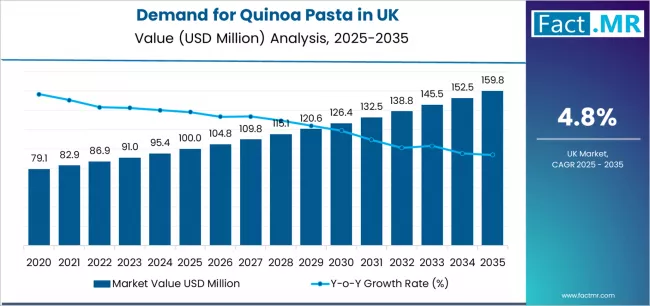
In the United Kingdom, the demand for quinoa pasta has been on an upward trajectory as more consumers shift toward healthier, gluten-free, and plant-based diets. With rising awareness about nutrition, wellness, and dietary restrictions like gluten intolerance or celiac disease, quinoa pasta is increasingly viewed as a viable alternative to conventional wheat-based pasta. Its nutritional profile, versatility in cooking, and suitability for diverse dietary needs have contributed to growing acceptance among health-conscious consumers, families, and specialty food buyers.
Market Overview
Quinoa pasta refers to pasta made fully or partially from quinoa flour or quinoa-based blends — offering higher protein content, often gluten-free status, and in many cases organic formulation. In the UK, this segment of the pasta market has seen consistent growth, driven by its positioning as a “health + convenience” food. This growth reflects a broader shift in consumer preferences — from traditional pasta to healthier, value-added alternatives — driven by lifestyle changes, growing wellness awareness, and demand for dietary diversity including gluten-free and high-protein foods.
Regional and Segment Insights
Across the UK, demand for quinoa pasta shows variation by region, with a strong uptake in England, followed by Scotland, Wales, and Northern Ireland. By product type, the organic segment holds a dominant share, suggesting that a significant portion of demand comes from consumers seeking organic, clean-label, and health-certified products. In terms of distribution, retail remains the primary channel, including supermarkets, health-food stores, and specialty retailers. These patterns highlight that quinoa pasta in the UK is largely consumed by end-consumers buying for home cooking, rather than being limited to restaurants or institutional kitchens.
Key Drivers Fueling Growth
- Health consciousness and dietary shifts: Growing public awareness about the benefits of a gluten-free diet has boosted demand for alternatives like quinoa pasta. Quinoa’s rich protein and nutrient profile, plus its gluten-free attribute, make it attractive to vegetarians, vegans, and health-focused consumers.
- Organic and premium product appeal: There is a clear preference among UK consumers for organic, non-GMO, clean-label food products. This reflects broader consumer trends favoring transparency, sustainability, and food safety.
- Convenience and retail penetration: Quinoa pasta is increasingly available in mainstream supermarkets, health-food stores, and online grocery channels — making it easy for consumers to access and try.
- Growing plant-based and gluten-free lifestyles: As more people adopt vegetarian, vegan, or flexitarian diets — or reduce gluten for health or lifestyle reasons — demand for pasta alternatives like quinoa pasta increases. The versatility of quinoa pasta helps it fit into conventional pasta dishes.
- Foodservice and specialty nutrition segments: While retail dominates, there is growing interest from cafés, health-food restaurants, and specialty eateries to offer gluten-free or high-protein pasta options — further driving demand beyond home cooking.
Trends & Future Outlook
The UK quinoa pasta market is expected to grow moderately but steadily over the coming years. During this period, the organic segment is expected to further consolidate its dominance. Improvements in manufacturing, quality certification, and supply-chain reliability will support this growth. Moreover, diversification in product shapes (spaghetti, penne, fusilli, others) and greater distribution through online and retail channels will make quinoa pasta more accessible.
Broader consumer trends — increasing urbanization, time-saving lifestyle choices, and rising interest in health- and wellness-oriented eating — support continued preference for convenient but nutritious meal options like quinoa pasta.
Challenges and Considerations
Despite positive growth prospects, some challenges may temper expansion:
- Price premium: Compared with conventional wheat pasta, quinoa pasta often comes at a higher price, especially organic or specialty variants, which may limit adoption among price-sensitive consumers.
- Taste and texture preferences: Some consumers accustomed to traditional pasta may find texture or taste differences in quinoa pasta, which could limit its appeal as a full substitute.
- Supply chain and raw material constraints: As demand grows, sourcing sufficient quinoa (especially organic) and ensuring consistent supply can be a bottleneck, possibly affecting availability or price stability.
- Competition from other gluten-free alternatives: Other gluten-free or high-protein pasta options (chickpea, lentil, rice, etc.) compete in the same health-conscious market segment, potentially diluting demand for quinoa pasta.
Conclusion
The demand for quinoa pasta in the UK is on a steady growth path — driven by rising health consciousness, preference for gluten-free and plant-based diets, retail availability, and organic product appeal. With steady growth projected over the next decade, there is significant opportunity for food producers, health-food retailers, and specialty brands to capture the expanding consumer base.
For consumers, quinoa pasta offers a nutritious, versatile, and often gluten-free alternative to traditional pasta — aligning well with modern dietary trends around wellness, convenience, and sustainability. As product availability increases and prices stabilize, quinoa pasta is likely to become a more mainstream staple in British kitchens over the coming years.
Browse Full Report – https://www.factmr.com/report/united-kingdom-quinoa-pasta-market