Containment tanks play a crucial role in modern industrial infrastructure by providing secure storage solutions for liquids, chemicals, fuels, and wastewater. These tanks are specifically designed to prevent leaks, spills, and environmental contamination, ensuring safe handling of hazardous and non-hazardous materials across various industries. As environmental awareness and industrial safety standards continue to strengthen worldwide, the demand for reliable containment systems is steadily increasing.
Industries such as oil and gas, chemicals, pharmaceuticals, water treatment, and food processing rely heavily on containment tanks for safe material storage and operational efficiency. With the expansion of industrial activities and stricter environmental regulations, the containment tanks market is gaining strong momentum. Organizations are increasingly investing in advanced storage technologies that enhance safety, improve monitoring capabilities, and reduce environmental risks.
Market Overview
Containment tanks are specialized storage systems designed to safely hold liquids, gases, or hazardous materials while preventing leakage or contamination. These tanks are available in different configurations, sizes, and materials to suit specific industrial requirements. Common materials used in manufacturing containment tanks include steel, polyethylene, fiberglass, and composite materials, each offering advantages such as durability, corrosion resistance, and long operational life.
These tanks are widely used for storing chemicals, fuels, wastewater, and other industrial substances under controlled conditions. They are built to withstand varying pressure levels, temperature fluctuations, and harsh operating environments. Advanced containment tanks may also incorporate monitoring systems that help track storage levels, temperature changes, and potential leakages.
The increasing focus on environmental protection has further highlighted the importance of containment tanks in preventing hazardous material spills and safeguarding ecosystems. Governments and regulatory authorities worldwide are enforcing strict compliance standards, encouraging industries to adopt modern containment technologies.
Regional Insights
The containment tanks market demonstrates varied growth patterns across different regions due to differences in industrialization, regulatory frameworks, and infrastructure development.
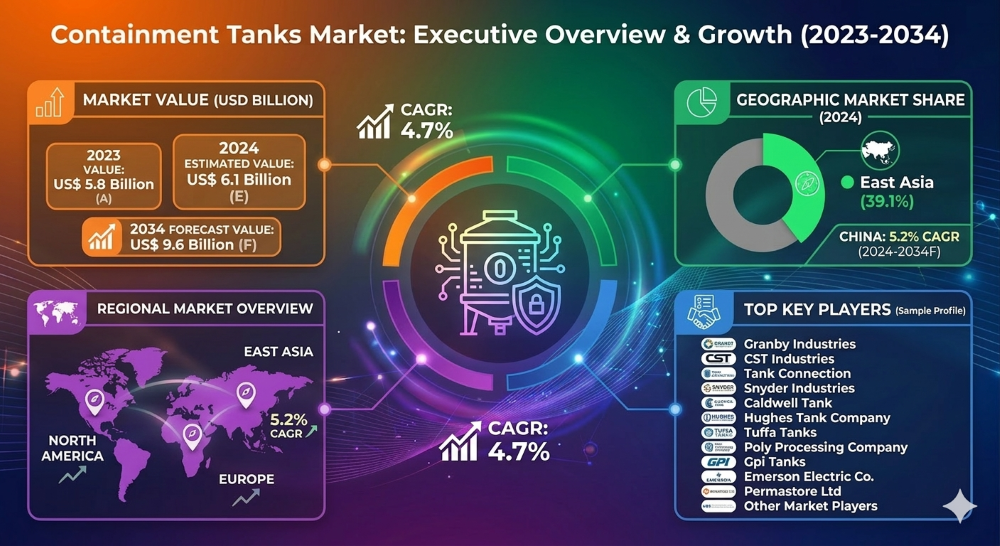
North America remains a prominent market for containment tanks due to strict environmental regulations and well-established industrial sectors. Industries in this region are adopting advanced storage solutions to comply with safety standards and environmental guidelines.
Europe also represents a significant market, driven by strong environmental policies and sustainability initiatives. Companies across the region are investing in improved containment systems to reduce environmental risks and enhance operational efficiency.
Meanwhile, the Asia-Pacific region is emerging as a rapidly growing market. Expanding manufacturing industries, infrastructure development, and increasing demand for wastewater management solutions are contributing to the rising adoption of containment tanks in countries such as China and India. Industrial expansion in these economies requires reliable storage systems that support safety and regulatory compliance.
Key Market Trends
Several technological and industrial trends are shaping the future of the containment tanks market.
One of the major trends is the integration of smart monitoring technologies. Modern containment tanks increasingly incorporate sensors and Internet of Things (IoT) solutions that provide real-time data about tank conditions. These technologies help monitor fill levels, pressure, and temperature while detecting potential leaks early, thereby improving operational safety.
Another important trend is the development of sustainable tank materials. Manufacturers are exploring recyclable and corrosion-resistant materials to reduce environmental impact and extend product lifespan. Sustainable manufacturing practices are becoming a priority as industries aim to meet environmental goals and regulatory standards.
The adoption of double-wall containment tanks is also increasing across industries. These tanks provide an additional protective layer that prevents hazardous substances from leaking into the environment. Such designs are particularly important in industries dealing with chemicals, fuels, and toxic materials where safety is a top priority.
Applications and End-Use Industries
Containment tanks are widely used across multiple industrial sectors due to their versatility and safety benefits.
The oil and gas industry is one of the largest users of containment tanks. These tanks are used to store fuels, petroleum products, and other hazardous liquids safely. As energy infrastructure expands globally, the need for reliable storage systems continues to grow.
The chemical and petrochemical industry also relies heavily on containment tanks to store reactive and potentially hazardous substances. Proper containment ensures safe handling and prevents accidental spills that could lead to environmental damage.
Water and wastewater treatment facilities use containment tanks to manage industrial and municipal wastewater. These tanks help store and process large volumes of water safely before treatment and discharge.
Other sectors such as pharmaceuticals, agriculture, and food processing also utilize containment tanks for storing raw materials, liquids, and waste products. The versatility of these tanks makes them essential components of industrial supply chains and operational processes.
Competitive Landscape
The containment tanks market includes several global and regional manufacturers focusing on innovation, product expansion, and strategic partnerships. Companies are continuously investing in research and development to create advanced storage solutions that offer higher durability, safety, and efficiency.
Key players are also expanding their production capacities and strengthening distribution networks to meet the growing global demand. Strategic acquisitions and facility expansions are common strategies used by manufacturers to enhance their market presence and improve manufacturing capabilities.
Competition within the industry is driven by technological advancements, product reliability, and the ability to meet evolving regulatory standards. Companies that prioritize sustainable designs, smart monitoring systems, and customized tank solutions are expected to gain a competitive advantage in the coming years.
Conclusion
The containment tanks market is becoming increasingly important as industries focus on safety, environmental protection, and efficient storage solutions. With growing industrialization and stricter environmental regulations, containment tanks are playing a vital role in preventing hazardous material leaks and ensuring responsible resource management.
Technological advancements such as IoT-enabled monitoring systems, improved materials, and sustainable tank designs are expected to shape the future of the market. As industries continue to expand and regulatory frameworks evolve, the demand for advanced containment tanks will remain strong.
Organizations that invest in reliable containment systems will not only enhance operational efficiency but also contribute to environmental sustainability and industrial safety. The containment tanks market therefore represents a critical segment of the global industrial infrastructure landscape, supporting safer and more sustainable industrial operations worldwide.
Browse Full Report – https://www.factmr.com/report/containment-tanks-market