The rapid shift toward convenience, safety, and digital-first experiences has significantly accelerated the adoption of contactless delivery services across the globe. Initially driven by health concerns and changing consumer behavior, contactless delivery has now evolved into a standard expectation in modern logistics and e-commerce ecosystems. From food delivery to retail and healthcare, businesses are leveraging this model to enhance customer satisfaction while ensuring safety and efficiency. As digital infrastructure continues to improve, the contactless delivery services market is gaining strong momentum across industries.
Market Overview:
Contactless delivery services refer to the process of delivering goods to customers without direct physical interaction between delivery personnel and recipients. This is typically enabled through mobile applications, digital payment systems, GPS tracking, and secure drop-off mechanisms.
The market is being shaped by increasing smartphone penetration, the rise of e-commerce platforms, and growing demand for convenience-driven services. Companies are investing in advanced logistics technologies such as route optimization software, automated notifications, and digital verification systems to streamline delivery processes.
Additionally, the integration of emerging technologies like artificial intelligence, robotics, and drones is further revolutionizing the contactless delivery landscape, making operations faster, more reliable, and cost-efficient.
Regional Insights:
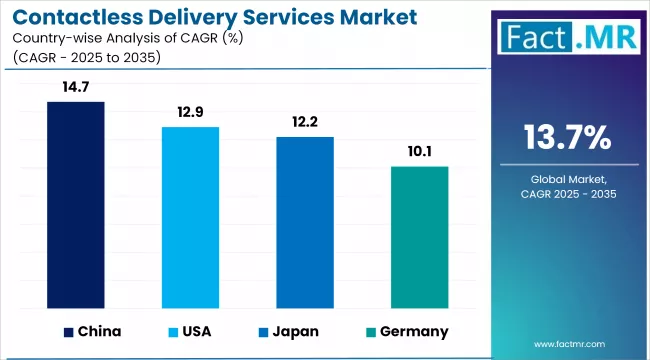
North America continues to lead the contactless delivery services market, supported by a mature e-commerce ecosystem and high adoption of digital technologies. Consumers in the region prioritize convenience and speed, driving demand for innovative delivery solutions.
Europe is also witnessing steady growth, fueled by strong regulatory frameworks and increasing emphasis on sustainability and digital transformation. Businesses are focusing on eco-friendly delivery models while maintaining contactless operations.
Asia-Pacific is emerging as a dynamic and fast-growing market, driven by rapid urbanization, expanding middle-class population, and increasing reliance on online shopping platforms. Countries in this region are experiencing a surge in demand for food delivery and last-mile logistics services, further boosting the adoption of contactless delivery solutions.
Key Trends & Forecast:
The contactless delivery services market is evolving rapidly, influenced by several key trends:
- Rise of Autonomous Delivery Solutions: The use of drones and autonomous vehicles is gaining traction, enabling faster and more efficient deliveries without human intervention.
- Expansion of Digital Payment Systems: Contactless payments, including mobile wallets and QR codes, are becoming integral to the delivery process, ensuring seamless transactions.
- Focus on Last-Mile Innovation: Companies are investing in advanced last-mile delivery solutions to reduce delivery times and improve customer experience.
- Integration of Smart Technologies: AI-driven analytics and IoT-enabled tracking systems are enhancing visibility and operational efficiency.
- Growing Consumer Preference for Convenience: Customers increasingly prefer flexible delivery options such as scheduled drop-offs and real-time tracking.
Applications & End-Use Outlook:
Contactless delivery services are widely adopted across multiple sectors, with e-commerce and food delivery leading the market. Online retailers are utilizing contactless delivery to enhance customer trust and streamline operations, while restaurants and food delivery platforms are leveraging it to provide safe and efficient services.
Beyond these sectors, contactless delivery is gaining traction in:
- Healthcare: For delivering medicines and medical supplies safely.
- Grocery Retail: For doorstep delivery of essential goods.
- Logistics and Courier Services: For efficient parcel distribution.
- Retail Chains: For enabling seamless omnichannel shopping experiences.
The growing versatility of contactless delivery services is expanding their applications, making them a critical component of modern supply chains.
Competitive Landscape:
The contactless delivery services market is highly competitive, with both established logistics providers and emerging startups striving to capture market share. Companies are focusing on technological innovation, strategic partnerships, and service diversification to stay ahead in the market.
Major players are investing in automation, robotics, and digital platforms to enhance operational efficiency and reduce delivery times. Collaborations between e-commerce companies, logistics providers, and technology firms are also driving the development of integrated delivery solutions.
Startups are playing a crucial role by introducing innovative business models and niche services, further intensifying competition and encouraging continuous improvement in service quality.
Challenges and Opportunities:
Despite its rapid growth, the contactless delivery services market faces several challenges. Infrastructure limitations, especially in developing regions, can impact delivery efficiency. Additionally, concerns related to data security and privacy may hinder widespread adoption.
However, these challenges also create opportunities for innovation and growth. Investments in smart infrastructure, secure digital payment systems, and advanced logistics technologies can address these issues effectively. The increasing focus on sustainability is also opening new avenues for eco-friendly delivery solutions, such as electric vehicles and optimized delivery routes.
Conclusion:
The contactless delivery services market is redefining the logistics and delivery landscape by prioritizing safety, convenience, and efficiency. As consumer expectations continue to evolve, businesses must adopt innovative and technology-driven solutions to remain competitive.
With ongoing advancements in automation, digitalization, and last-mile delivery technologies, the market is poised for sustained growth. Organizations that invest in robust contactless delivery systems and embrace emerging trends will be well-positioned to capitalize on future opportunities and meet the demands of a rapidly changing marketplace.
Browse Full Report – https://www.factmr.com/report/contactless-delivery-services-market