The global focus on sustainability, resource recovery, and clean water access is reshaping the wastewater treatment landscape. Conventional treatment technologies, while effective, often require high energy inputs and generate secondary waste streams. In response, bioelectrochemical systems (BES) are gaining increasing attention as an innovative and environmentally friendly solution. By combining biological processes with electrochemical reactions, these systems enable efficient wastewater treatment while simultaneously supporting energy recovery and nutrient management. As environmental regulations tighten and industries seek greener treatment alternatives, the bioelectrochemical systems for wastewater treatment market is emerging as a promising frontier in water technology.
Market Overview
Bioelectrochemical systems for wastewater treatment utilize electroactive microorganisms to break down organic pollutants and convert chemical energy into electrical or electrochemical energy. These systems include technologies such as microbial fuel cells, microbial electrolysis cells, and related hybrid configurations. Unlike traditional treatment methods, BES platforms offer the dual advantage of wastewater purification and resource recovery, making them attractive for sustainable infrastructure development.
The market encompasses system components, reactors, electrodes, control units, and supporting software used across municipal and industrial wastewater treatment facilities. Growing awareness of circular economy principles has further strengthened interest in BES technologies, as they align with goals of energy efficiency, reduced sludge production, and lower carbon footprints.
Key Drivers Influencing Market Expansion
One of the primary drivers of the bioelectrochemical systems market is the rising global emphasis on sustainable wastewater treatment solutions. Increasing water scarcity and pollution concerns are pushing governments and industries to adopt advanced treatment technologies that go beyond basic contaminant removal. BES technologies offer a pathway to treat wastewater while recovering valuable by-products such as electricity, hydrogen, or nutrients.
Industrial wastewater management is another key growth factor. Sectors such as food processing, pharmaceuticals, chemicals, and breweries generate high-strength organic effluents that are well-suited for bioelectrochemical treatment. Additionally, growing investments in research and pilot-scale projects are accelerating the transition of BES technologies from laboratory settings to real-world applications.
Technological Developments and Innovation Trends
Continuous innovation is shaping the evolution of bioelectrochemical systems. Advances in electrode materials, reactor design, and microbial engineering are improving system efficiency and scalability. Researchers and technology providers are focusing on enhancing electron transfer mechanisms and optimizing microbial communities to improve treatment performance.
Integration with complementary technologies such as anaerobic digestion, membrane filtration, and smart monitoring systems is another notable trend. Digital control platforms and sensors are increasingly being incorporated to enable real-time performance monitoring and predictive maintenance. These innovations are helping address traditional challenges related to system stability and operational complexity.
Regional Insights
Europe has emerged as a prominent region for bioelectrochemical systems adoption, driven by strong environmental policies, water reuse initiatives, and funding support for sustainable technologies. Research institutions and pilot projects across the region are playing a critical role in advancing BES commercialization.
North America is also witnessing growing interest, particularly in industrial wastewater treatment and decentralized water systems. The region’s focus on clean energy integration and innovation-driven water infrastructure supports the adoption of bioelectrochemical solutions. Meanwhile, Asia-Pacific is gradually gaining traction due to rapid urbanization, industrial expansion, and increasing investments in wastewater treatment infrastructure, especially in water-stressed economies.
Key Trends and Market Outlook
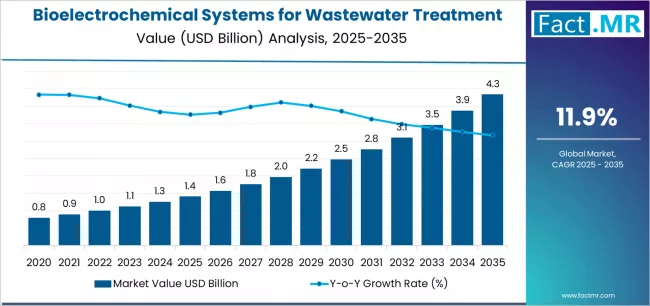
Several trends are shaping the future outlook of the bioelectrochemical systems for wastewater treatment market. One major trend is the shift toward energy-neutral or energy-positive treatment plants, where wastewater is viewed as a resource rather than waste. BES technologies align well with this paradigm by enabling energy recovery during treatment.
Another important trend is the growing focus on decentralized and modular treatment systems. Bioelectrochemical platforms can be adapted for small-scale or remote applications, making them suitable for rural communities and industrial facilities with localized treatment needs. Collaboration between academic institutions, technology developers, and utilities is also accelerating the refinement and validation of BES solutions.
Applications and End-Use Outlook
Bioelectrochemical systems are finding applications across both municipal and industrial wastewater treatment segments. In municipal settings, BES technologies are being explored for secondary and tertiary treatment stages, particularly where energy efficiency and nutrient removal are priorities. For industrial users, these systems offer an effective solution for treating high-organic-load effluents while reducing operational costs.
Other emerging applications include sludge reduction, desalination support, and integration with water reuse systems. End users range from municipal water authorities and industrial manufacturers to research institutions and environmental technology providers. As awareness grows, adoption is expected to expand across diverse wastewater management scenarios.
Challenges and Adoption Barriers
Despite their potential, bioelectrochemical systems face challenges related to scalability, capital costs, and long-term operational stability. Performance variability under different wastewater compositions and environmental conditions can impact adoption decisions. Additionally, the need for specialized expertise in system design and maintenance may limit widespread deployment in the short term.
However, ongoing research, standardization efforts, and demonstration projects are steadily addressing these barriers. As technological maturity improves, these challenges are expected to diminish, paving the way for broader commercialization.
Conclusion
Bioelectrochemical systems represent a transformative approach to wastewater treatment, combining environmental sustainability with resource recovery. As global priorities shift toward cleaner water, energy efficiency, and circular economy models, the role of BES technologies is set to expand. Comprehensive market intelligence and industry insights, such as those provided by Fact.MR, can help stakeholders understand technological developments, competitive dynamics, and adoption trends. By embracing bioelectrochemical systems, wastewater treatment providers can move closer to a more resilient and sustainable water future.
Browse Full Report – https://www.factmr.com/report/bioelectrochemical-systems-for-wastewater-treatment-market