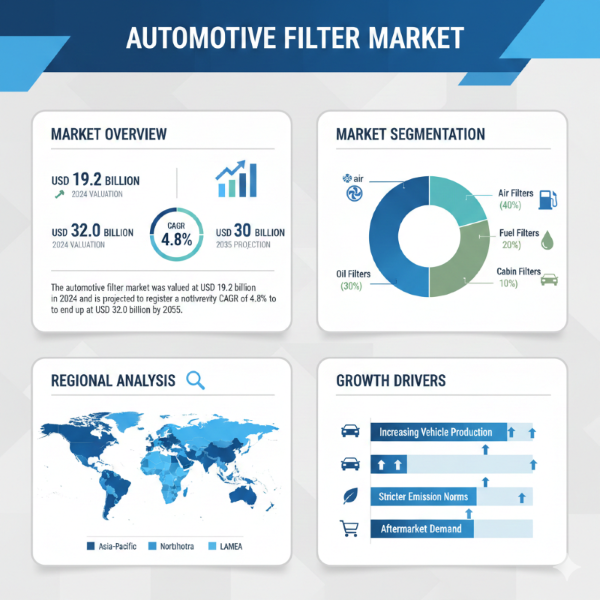
Theautomotive filter market is a crucial segment of the automotive industry, playing a key role in vehicle performance, safety, and environmental sustainability. Filters are essential components that protect engines, cabin environments, fuel systems, and exhaust systems from contaminants, dust, and pollutants. By improving air quality and ensuring clean fuel and oil circulation, automotive filters enhance engine efficiency, reduce emissions, and extend vehicle life. Increasing consumer demand for high-performance vehicles, stricter environmental regulations, and rising awareness about vehicle maintenance are fueling the growth of the automotive filter market. This article delves into the market dynamics, regional insights, technological trends, and future outlook for automotive filters.
Market Overview:
Automotive filters encompass a wide range of products, including air filters, oil filters, fuel filters, and cabin filters. Air filters remove dust, pollen, and other contaminants from the air entering the engine, ensuring optimal combustion and engine performance. Oil filters clean engine oil by trapping dirt, metal particles, and other impurities, reducing engine wear and tear. Fuel filters remove sediment, rust, and other particles from fuel, protecting injectors and enhancing fuel efficiency. Cabin filters ensure clean air inside the vehicle, improving passenger comfort and health.
These filters are vital for maintaining vehicle performance, complying with environmental regulations, and providing a safe and comfortable driving experience. With the rising adoption of advanced vehicles equipped with turbocharged engines, hybrid systems, and electric powertrains, automotive filters are evolving to meet more stringent requirements.
Key Growth Drivers:
The automotive filter market is primarily driven by increasing vehicle production, rising awareness of vehicle maintenance, and stringent emission norms. Consumers are recognizing the importance of replacing filters regularly to ensure fuel efficiency, reduce engine damage, and improve air quality. Additionally, automotive manufacturers are integrating advanced filters into new vehicles to meet stricter emissions and air quality standards.
Environmental regulations across North America, Europe, and Asia-Pacific are enforcing limits on particulate emissions and engine pollutants, prompting manufacturers to adopt high-efficiency filters. The shift towards hybrid and electric vehicles is also creating demand for specialized filters that maintain clean powertrain components and enhance battery life.
Technological innovation is another key driver. Filters are now being designed using advanced materials, such as synthetic fibers, nanofibers, and high-efficiency membranes, offering superior filtration, longer service life, and better engine protection. Additionally, smart filter monitoring systems are gaining traction, allowing vehicle owners to track filter performance and schedule timely replacements.
Regional Insights:
North America is a prominent market for automotive filters, driven by stringent emission regulations, high vehicle ownership, and a focus on vehicle maintenance. Consumers and fleet operators are increasingly adopting high-performance and cabin air filters to improve safety, reduce emissions, and maintain vehicle efficiency.
Europe represents a mature automotive filter market, with countries like Germany, France, and the UK emphasizing environmental compliance and high-quality vehicle components. The growing adoption of premium vehicles with advanced engines and turbocharging systems is supporting demand for specialized filters.
Asia-Pacific is emerging as a high-growth region due to rapid vehicle production, urbanization, and rising disposable incomes. Countries such as China, India, and Japan are witnessing increased adoption of vehicles equipped with advanced filtration systems. Additionally, growing environmental awareness and government initiatives to reduce pollution are driving demand for efficient automotive filters in the region.
Technological Trends:
The automotive filter market is evolving rapidly with innovations in materials and designs. High-efficiency particulate air (HEPA) filters are increasingly used in cabin air systems to ensure cleaner air quality inside vehicles. Nanofiber and synthetic fiber technology is enhancing the performance of engine air filters and oil filters by improving contaminant trapping efficiency while maintaining airflow.
Electric and hybrid vehicles are influencing filter design, as these vehicles require filters optimized for battery cooling, thermal management, and reduced maintenance. Advanced monitoring and sensor technologies are being integrated into filter systems to provide real-time feedback to drivers and fleet managers, enabling proactive maintenance and improving vehicle reliability.
Sustainable and eco-friendly materials are also gaining attention in filter manufacturing. Manufacturers are developing biodegradable and recyclable filter media to reduce environmental impact and meet sustainability standards, aligning with global trends toward greener automotive technologies.
Challenges:
Despite growth opportunities, the automotive filter market faces certain challenges. High manufacturing costs for advanced filters may restrict adoption in cost-sensitive vehicle segments. Varying global standards for filtration efficiency and replacement intervals can create complexity for manufacturers and distributors. Additionally, the increasing adoption of electric vehicles, which may require fewer engine-related filters, could shift market dynamics and demand patterns over time.
Conclusion:
The automotive filter market is a vital component of the automotive ecosystem, supporting vehicle performance, safety, and environmental compliance. With rising vehicle production, stricter emission standards, and growing consumer awareness, the market is poised for sustained growth.
Innovations in filter technology, including advanced materials, smart monitoring systems, and sustainable designs, are enhancing the efficiency and lifespan of automotive filters while addressing environmental concerns. Manufacturers investing in high-performance, eco-friendly, and intelligent filtration solutions are well-positioned to capture market opportunities across established and emerging regions.
Browse Full Report – https://www.factmr.com/report/33/automotive-filter-market